My 1st Cousin, 3 Times Removed
Banner Image: Commercial Street, Full Length, Korumburra, Victoria, ca.1920,
Courtesy of State Library Victoria http://handle.slv.vic.gov.au/10381/60585
This post starts with another fantastic find from the Museum of History, New South Wales (MHNSW) website.
Discovering that amazing photo of Dr. Donald Alexander Macvean, the focus of my previous post, inspired me to see if his cousin, Dr. William Begg also had his photo lodged as part of his registration process. I returned to the site and look what appeared.

Figure 1: Courtesy of the Museum of History, New South Wales https://search.records.nsw.gov.au/primo-explore/fulldisplay?context=L&vid=61SRA&docid=ADLIB_RNSW112613810
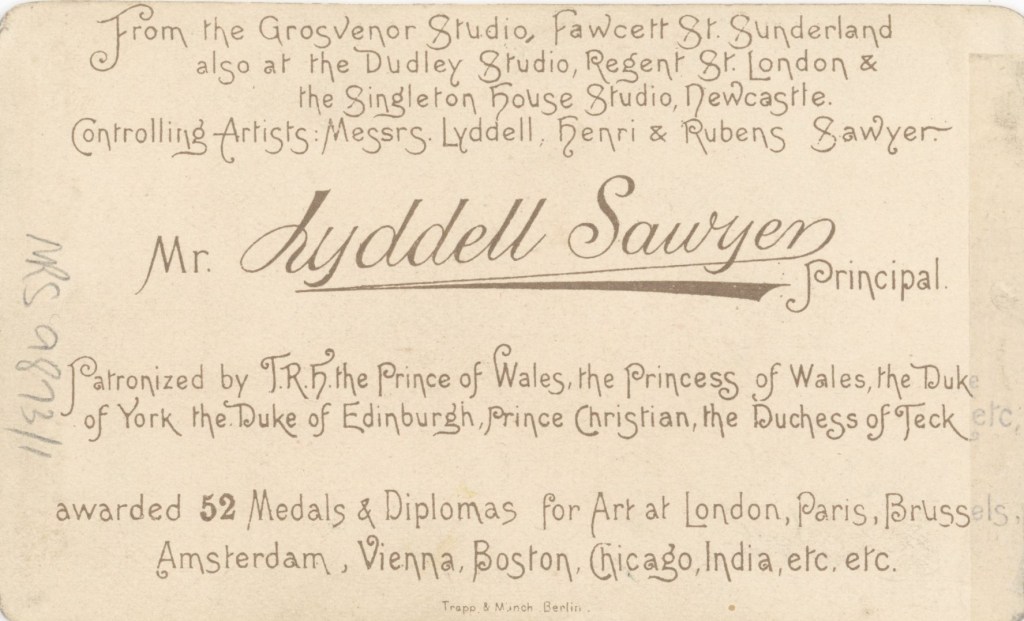
Figure 2: Courtesy of the Museum of History New South Wales https://search.records.nsw.gov.au/primo-explore/fulldisplay?context=L&vid=61SRA&docid=ADLIB_RNSW112613810
A photo of William! Wow, how lucky again and I know it is him as we have a photo of William in his old age and you can tell it is the same person.
We can be so specific on the circa dates of the photo as Mr Lyd Sawyer opened his Sunderland studio in 1893. http://historiccamera.com/cgi-bin/librarium2/pm.cgi?action=app_display&app=datasheet&app_id=2682
Then in 1895 he moved to London and opened the Regent Street Studio leaving his brothers to run the Sunderland operations. https://www.artworkarchive.com/profile/artalba/artist/lydell-sawyer
William’s portrait, which was taken in the Sunderland studio, has the Regent Street address printed on it, so we know that William was sitting for the portrait sometime after it opened in 1895.
As there is no street number given I can’t pinpoint an actual address for the Sunderland studio but it was somewhere along Fawcett Street, shown below.
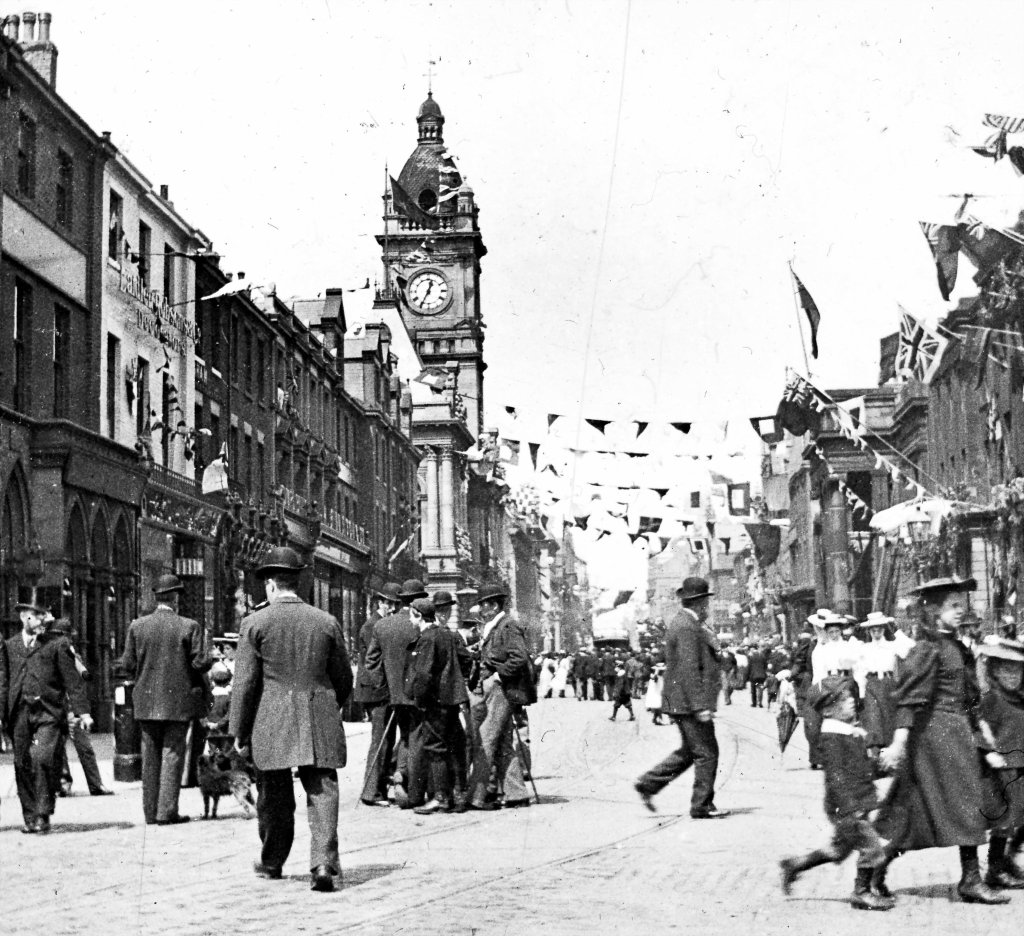
Figure 3: Courtesy of Sunderland Antiquarian Society Facebook Page https://www.facebook.com/photo.php?fbid=5654277061251390&id=350583321620817&set=a.353164034696079
We can be sure of the end date of the circa date for William’s photo as he was back in Australia, St Kilda to be more specific, by April 1900 to be married to Miss Maude Mary Daniell.
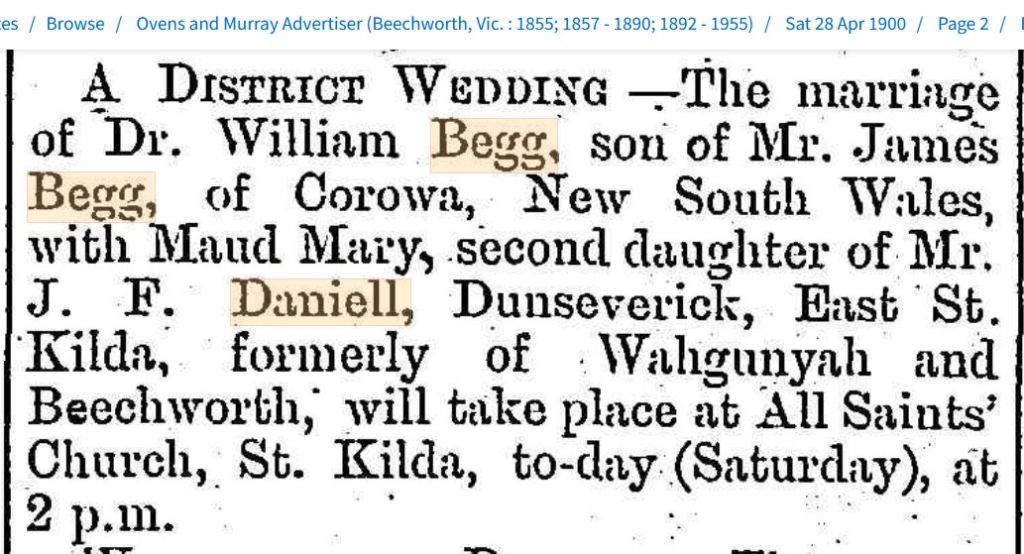

Figure 5: Courtesy of the State Library Victoria
http://handle.slv.vic.gov.au/10381/301312
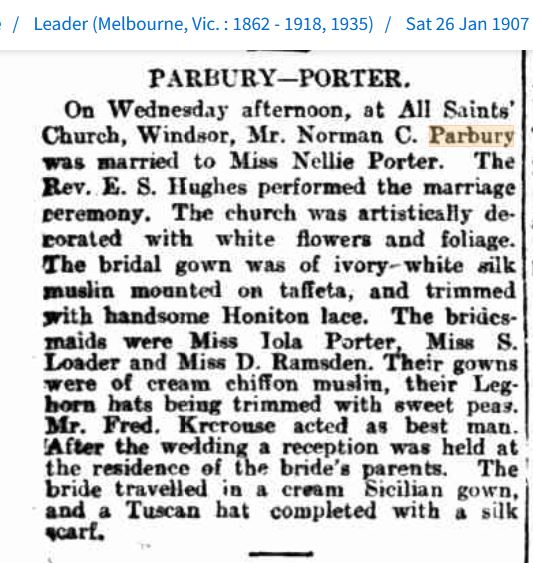
Theirs was not the only family wedding to occur in All Saints. Just seven years later, William’s second cousin, Nellie Porter, married Norman Parbury there as well.
Nellie’s grandfather, Rev. Allan Macvean, and William’s grandfather, John Hugh Macvean, were brothers.
William was the son of James Begg and Annie Macvean. He was born on the 30th of July 1868 at the family home in Duck Ponds.

I suspect that there were issues with his birth because just eight weeks later his mother Annie was dead.

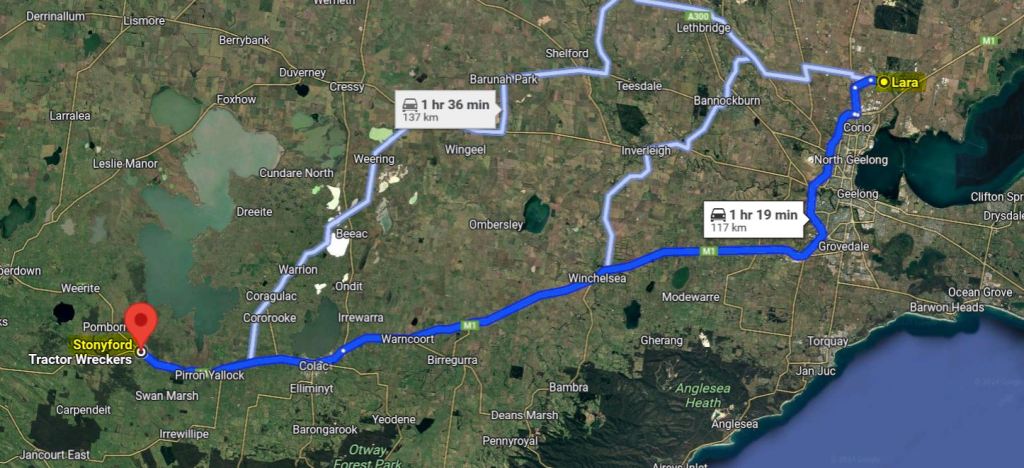
Duck Ponds was the original European name for a section of the traditional lands of the Wadawurrung People, sitting just 17 km north of Geelong. https://www.aboriginalheritagecouncil.vic.gov.au/wadawurrung-traditional-owners-aboriginal-corporation

Apart from William’s birth notice and his mother Annie’s death notice, “Millfield” appears nowhere else in Trove. Google even came up blank. I can only assume that it was the property’s name or the name of the house they were living in at that time.
Regarding Duck Ponds, I found an illustration from a historic map of the Victorian Railway system in 1870 showing where Duck Ponds was situated.

Andrew Waugh, 1999
Figure 10: Courtesy of Victoria Rail History
https://www.vrhistory.com/VRMaps/Vic1870.pdf
And then I came across this great little mention of when the station had its name upgraded in 1875.

I don’t know what happened to William after his mother’s death. He was only nine weeks old, did he stay with his father or did other members of the family step in and take him?
Annie’s parents, John Hugh and Hannah Macvean were well and truly still alive and only 120km away in Stonyford at the time.
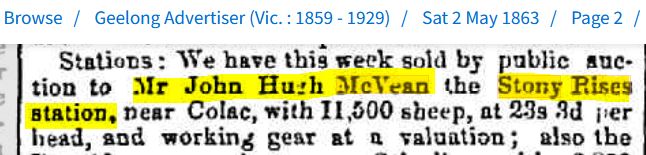
They lived at Stoney Rises Station, Stonyford, it is in fact the place where William’s parents were married.

Yes, that is John’s brother the Rev. Allan Macvean marrying his niece Annie to James Begg.
John and Hannah purchased the Stoney Rises Estate in 1863.
I managed to find a historic map of the estate. It was situated in the Parish of Pomborneit in the County of Heytesbury. I have outlined it in yellow highlighter below.

Parish of Pomborneit, County of Heytesbury, 1939
Figure 14: Courtesy of the State Library Victoria
http://handle.slv.vic.gov.au/10381/294114
The Stony Rises Estate was actually 5000 acres of traditional land belonging to the Eastern Maar People or more specifically the people of the Keerray-Woorronong clan. https://easternmaar.com.au/wp-content/uploads/2020/01/eastern-maar-country-plan.pdf
Perhaps William spent the first couple of years of his life with his grandparents at Stoney Rises or maybe he could have gone with the Rev. Allan and Catherine Macvean to reside with them in Brunswick until his father James settled somewhere.
What I do know is that James did in fact settle somewhere. Just two years later, in 1870 he is living in Hamilton, in Western Victoria.
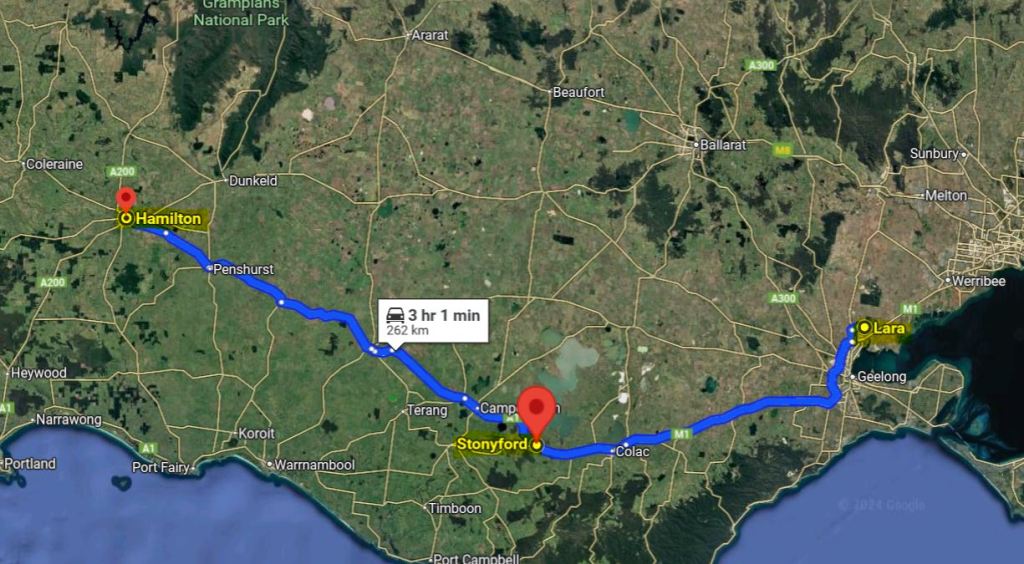
That is 262km west of Lara and about 150km west of Stony Rises and in those days riding either horse and buggy or on horseback, it would have been a damn long way.
The reason James was in Hamilton, he was opening an Academy for young men.

Obviously, it took some time to organise. Here is an article from April 1870, three months later, stating that the Academy was operational.

It looks like things were going well for James at the Academy if this next article is anything to go by.
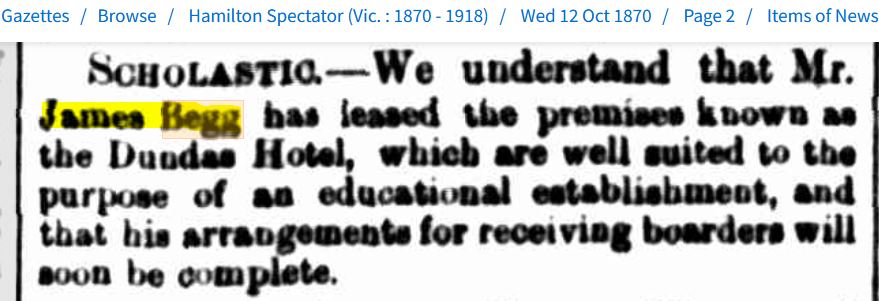
James remarried four years after William’s mother’s death, on the 30th of October 1872 to Margaret Morrison Hamilton. Obviously William is four years of age at the time.

Cairnlee was Margaret’s father’s, the Rev. William Hamilton, private farm on Mount Shadwell. https://www.moyne.vic.gov.au/files/assets/public/v/1/documents/your-property/planning/statutory-planning/incorporated-documents/mortlake-heritage-citations-2016.pdf
Here is a little back ground information that will help in relation to the next article coming up.
James had studied for four years at Glasgow University for his Master of Arts. He passed two of the three components of the degree, Classics and Mathematics but ill health stopped him from sitting the exam for the third, Mental Philosophy.
At some stage, his credentials were called into question by someone in the local community named Veritas.

Oh, I can only imagine there must have been some history behind this. Why advertise these concerns in the paper rather than taking them to James directly? This was done obviously to provoke a reaction and cause some bad press for the academy.
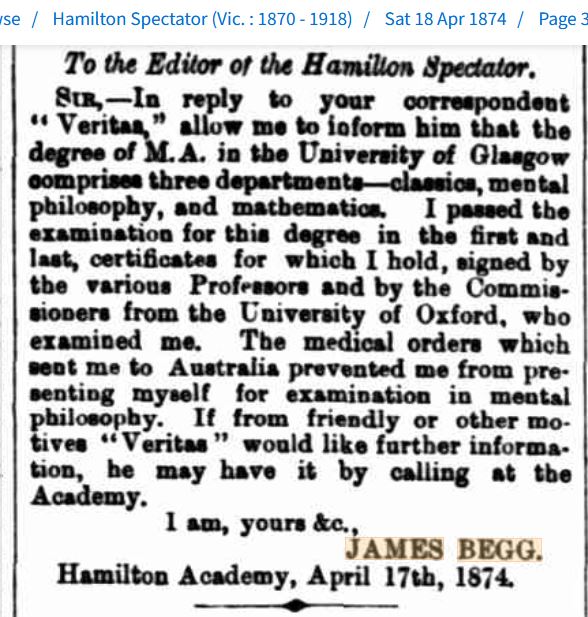
Good on you James! I love how he handled it. This feels like to me an early version of being trolled and something you might see on X (formerly Twitter) today.
Back to William, I can find no evidence that he was in Hamilton with his father from when he moved to the district, but also I cannot find anything that proves he wasn’t. I choose to believe that he was and these next couple of finds lends some support to that theory.
The first mention I find of William is from a yearly report on the Academy at the end of 1886 written by his father James. I know it is twelve years later but read on and it will make sense.

This obviously means that at some stage William joined his father and Margaret at the Academy as this article shows he was clearly studying there.
I then found this photo on Ancestry that Tony Begg (Cousin) shared, which I’m assuming was the prize that William was awarded for this achievement mentioned above.
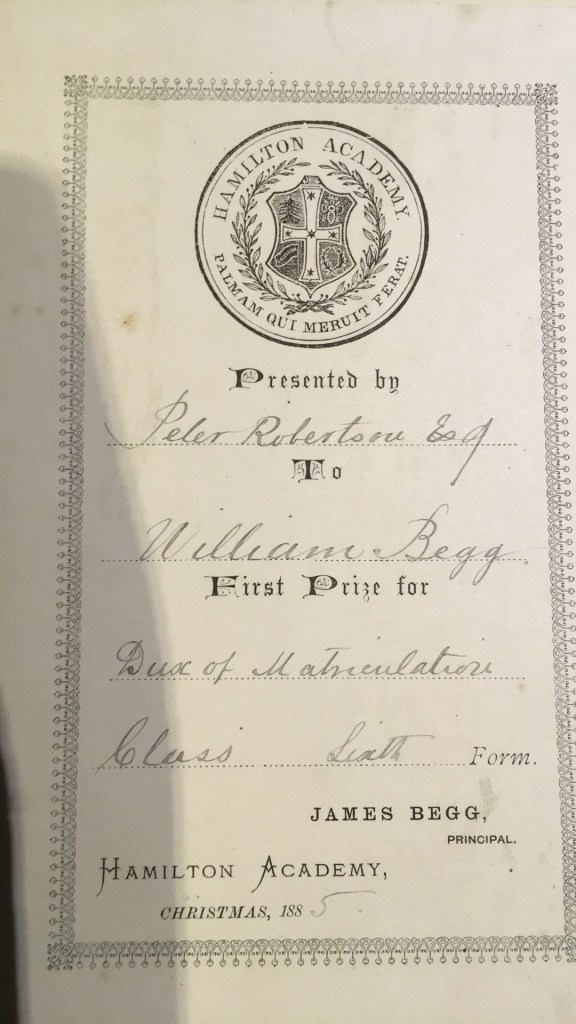
Generously shared by Tony Begg, (Cousin)
Now I can’t be sure of the exact site of the Dundas Hotel where James moved the Academy to after starting it in the Baptist Chapel but this next article confirms that it was on Pope Street somewhere.

And then this extraordinary photo below shows the actual building, built in 1874, where James and Margaret ran the Academy from right up until her death in 1896. It was situated on the corner of Pope and Collins Street, Hamilton. https://vhd.heritagecouncil.vic.gov.au/places/27211
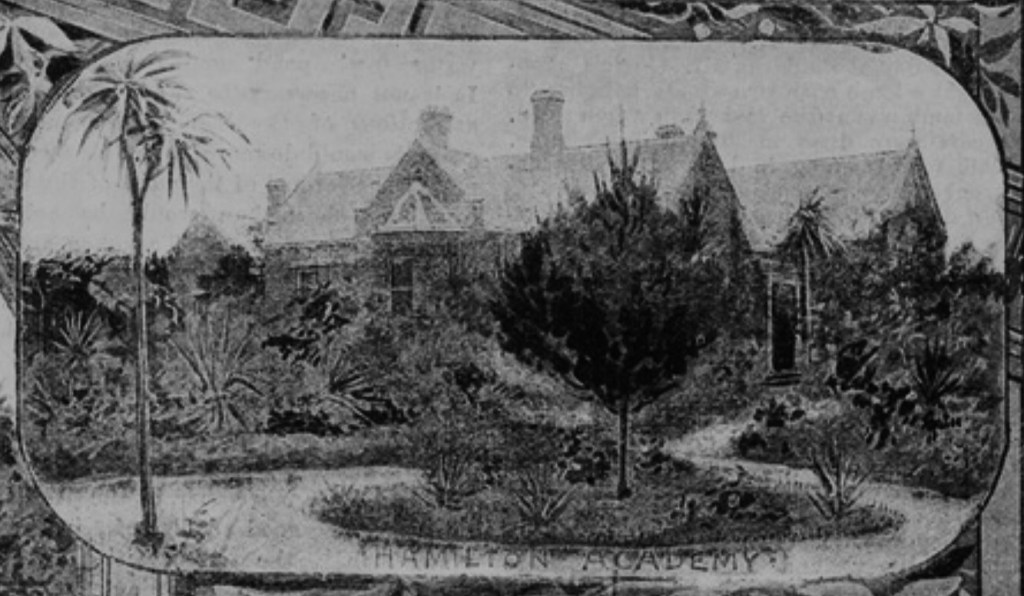
Figure 21b: Courtesy of State Library Victoria
https://find.slv.vic.gov.au/permalink/61SLV_INST/1sev8ar/alma9917715503607636
Could this be the site of the Dundas Hotel or did James and Margaret have this building commissioned especially for the Academy? What I do know is that this is the building that William probably lived in for the better part of 15 years of his childhood and Margaret and James for almost 25 years of their lives.
James still had a stake in the property after Margaret’s death in 1896 and was involved in its sale to a Mr J. W. Thomson in July 1900. Then in 1905 it was taken over by the Loreto Sisters and became a convent and school. https://collections.museumsvictoria.com.au/articles/2012
And here is a wonderfully clear photo of the building when it was with the Loreto Sisters.

Figure 21c: Courtesy of Loreto Australia & South East Asia https://www.loreto.org.au/records/records-relating-to-loreto-hamilton/
In 1925 it became known as St Mary’s and remained so right up until 2011 when the school moved to a new location in Hiller Lane. https://vhd.heritagecouncil.vic.gov.au/places/27211

Figure 21d: Courtesy of Google Maps
The buildings sat derelict for the next 13 years. This is the site today. Hopefully these historic old buildings will not be demolished.
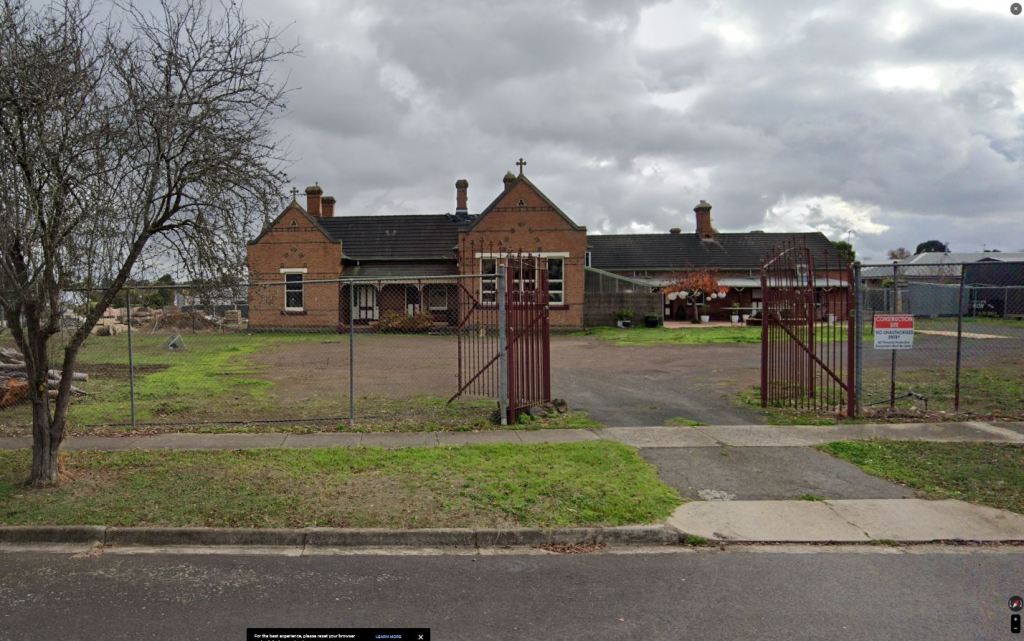
Figure 21e: Courtesy of Google Maps
I next picked William up at the end of 1889 with an announcement that he had successfully passed all his final exams and been awarded a BA from Melbourne University.

Then four years later we find William studying for a medical and surgical degree at Edinburgh University in Scotland.

This is of course was the same university that his cousin, Donald Alexander Macvean was studying at for his medical and surgical degree; what is interesting to note here is that they were there at the same time. Hopefully, they were supporting each other.
We jump ahead another two years with this next article which announces William’s completion of the degree.

This article also confirms the time frame for William having his portrait taken at Lyd Sawyer’s studio in Sunderland. Obviously, he had finished his studies in Edinburgh and then made his way to England probably in preparation for his return home to Australia and dropped in to Sunderland to have his portrait taken.
The next mention of William is indeed back in Australia but in March of 1900, five years later. It looks like the proposed visit, mentioned above turned into something more permanent.

William was in Corowa as this is where James his father had moved to after Margaret’s death. As I mentioned, it is five years after the article above (Figure 24) so he could have been anywhere in those years. I can’t find any other mention of William in this time but I wonder if it was love that might have kept him in Australia, perhaps courting Maude.
As I mentioned previously, William and Maude Daniell married in April 1900. They welcomed their first child Margaret Annie Macvean on the 2nd of May 1901 in Dudley, New South Wales.
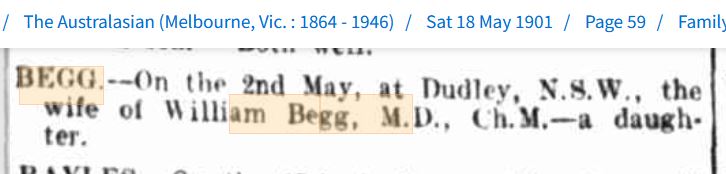
It is so nice to see that Annie, William’s mum, obviously meant so much to him that he and Maude named their first daughter after her.
I did find one article to show that they had moved to the Dudley area well before Margaret’s arrival.
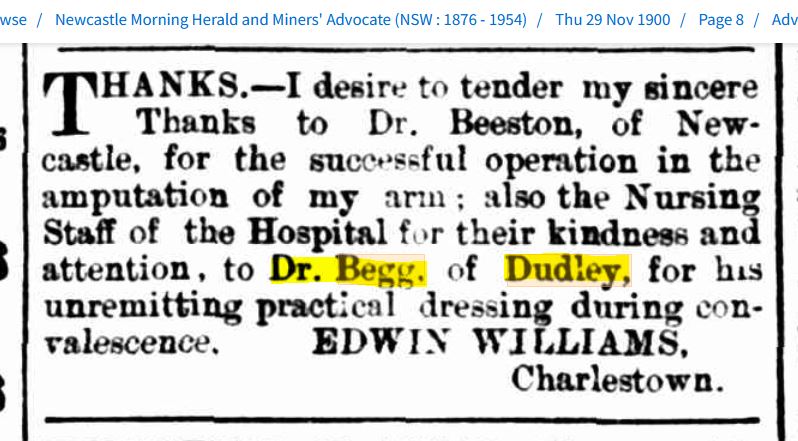
I managed to find an article in Trove describing what happened to Edwin but it looks like his original injury didn’t heal well, especially if it resulted in his whole arm being amputated.

I wonder what in the hell enticed Maude and William all the way out to Dudley. That is a damn long way from the help of family when you are newly married and expecting your first child.

St Kilda East is where Maude’s family were living at the time. Her parents, John and Sarah, brother, Eamond and sisters, Ethel and Mabel.

This next article is from the end of 1900 and William is giving evidence in a coronial enquiry.

I’m assuming the move to Dudley must have been a success for William and Maude, there is an array of articles that mention William and the work he was involved in. I have collated a few examples below.


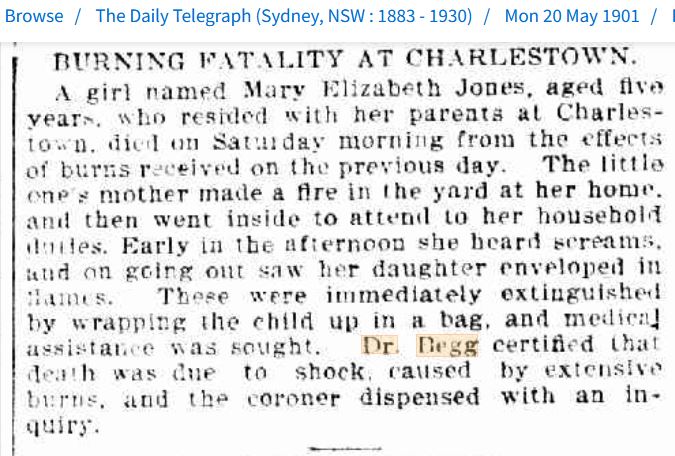


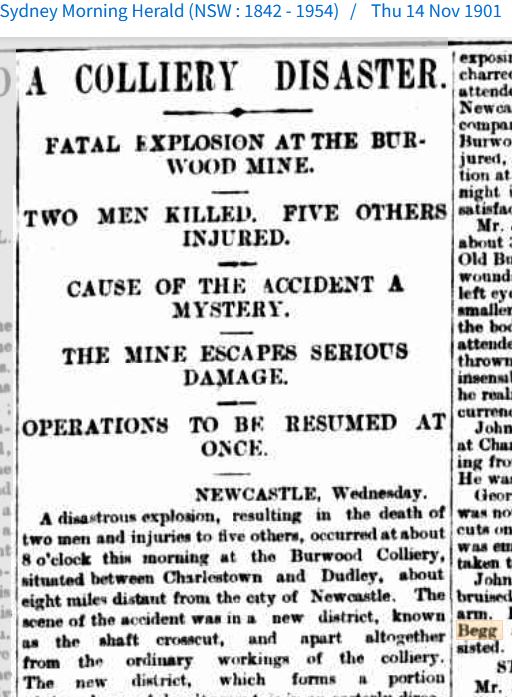


I managed to find a photo of the Colliery where William attended to the wounded miners. This photo is dated just nine days after the accident occurred.

from Sydney Mail, 23 November 1901
Figure 28a: Courtesy of The University of Newcastle Australia Living Histories
https://livinghistories.newcastle.edu.au/nodes/view/103883
I haven’t found a notification as yet stating that William had a practice somewhere in Dudley but I’m assuming he did and that these callouts above were in addition to the normal daily appointments in the community.
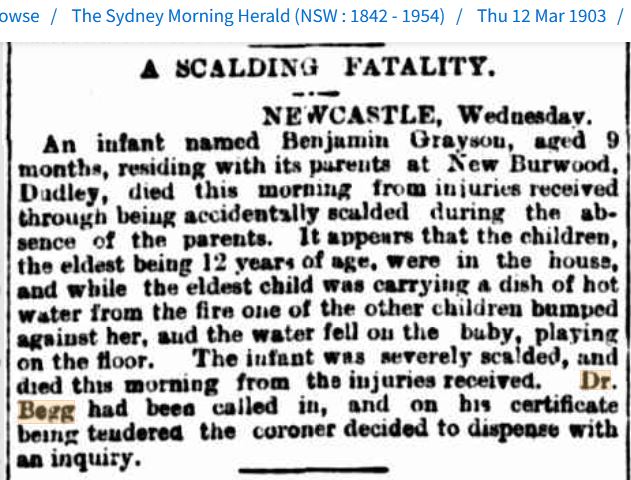
There are many press mentions for William in 1902 (a few examples below again) but the main news for Maude and William for this year was the birth of their second child in November, John Daniell Begg.

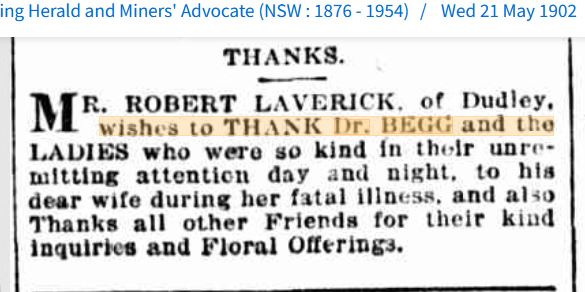
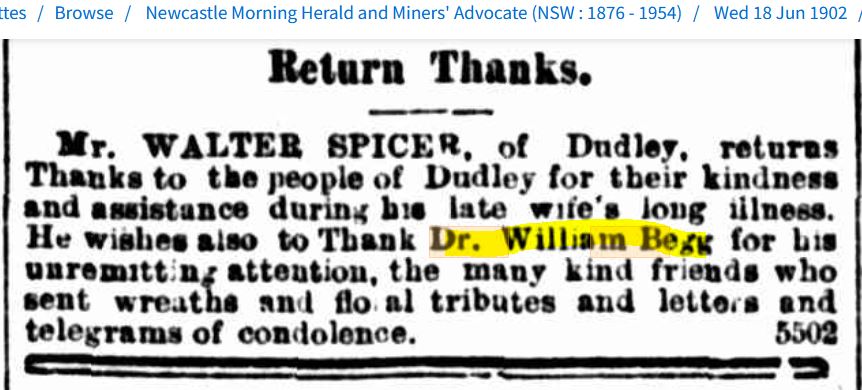


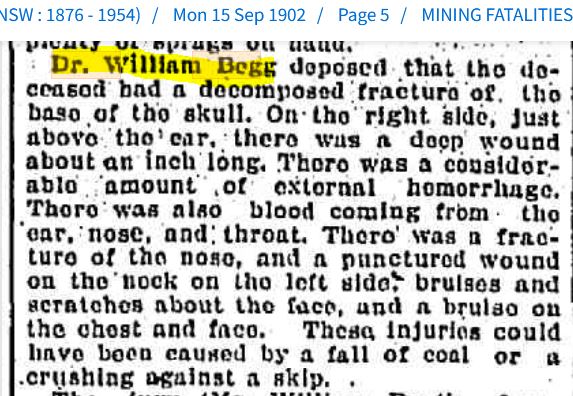
Collage 2: All articles courtesy of Trove, National Library of Australia
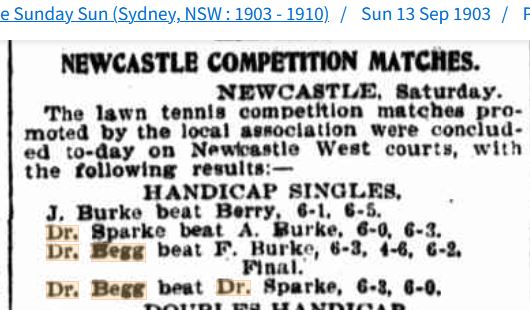
Apart from the work related mentions, there was one article indicating that William had other interests in the community, Tennis.

William and Maude’s small family of four remained in Dudley until mid-1905. There were further mentions in the local press for William but they started to thin out.
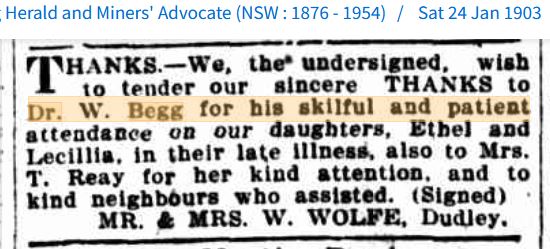


I also managed to find Maude in a few articles. They are what you would expect of the time, domestic and fundraising orientated.
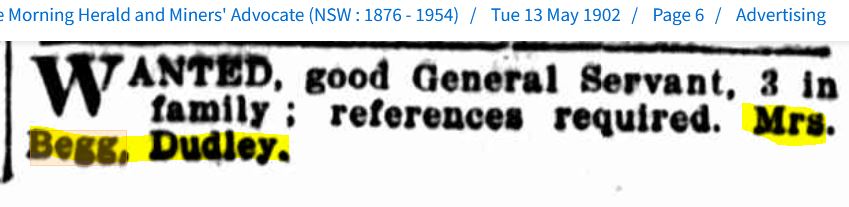

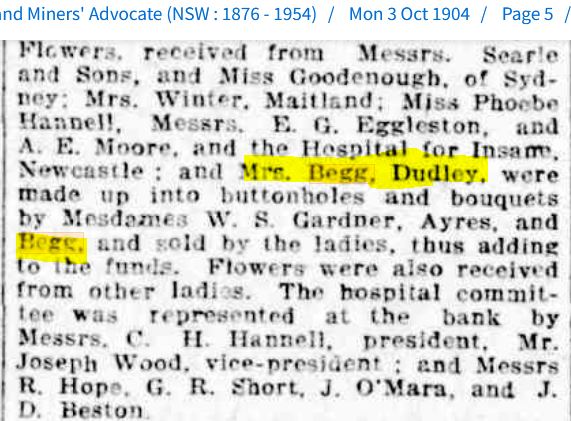

Collage 4: All articles courtesy of Trove, National Library of Australia
And then in July 1905, there was an article printed about a going away presentation that was given in William and Maude’s honour by the Dudley Lawn Tennis Club.


It is interesting to note that William was not only involved in the local tennis club but was given the honour of originating the game in the Dudley area.
A quick scan of Google confirms that Tennis was invented in 1874 in the UK. The first tournament in Australia was played in January 1880 at the Melbourne Cricket Club (MCC) and it is believed that tennis spread throughout the colonies pretty rapidly after this. https://www.tennisworldonline.com.au/the-history-of-australian-tennis/
Obviously, it took a while longer to get to the rural areas, such as Dudley. Mind you, William and Maude moved there just twenty years after that first tournament at the MCC.
I haven’t been able to find any details confirming what the illness was that William was suffering from that necessitated the move but I did manage to find where they moved to. They ended up in Korumburra, a small village at the time in south-eastern Victoria.
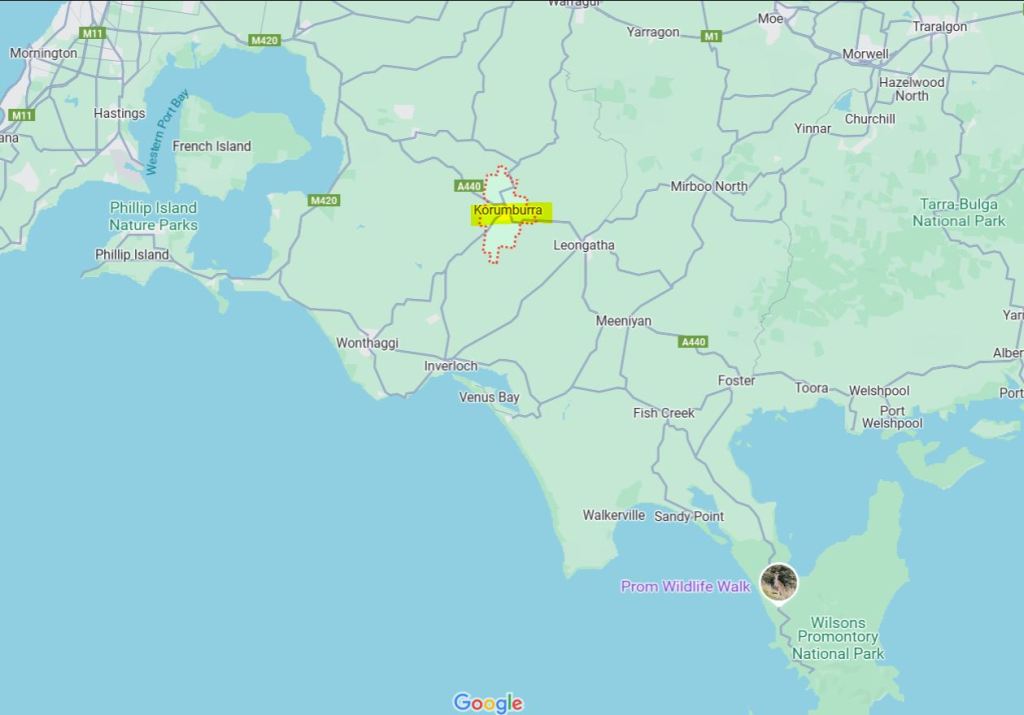
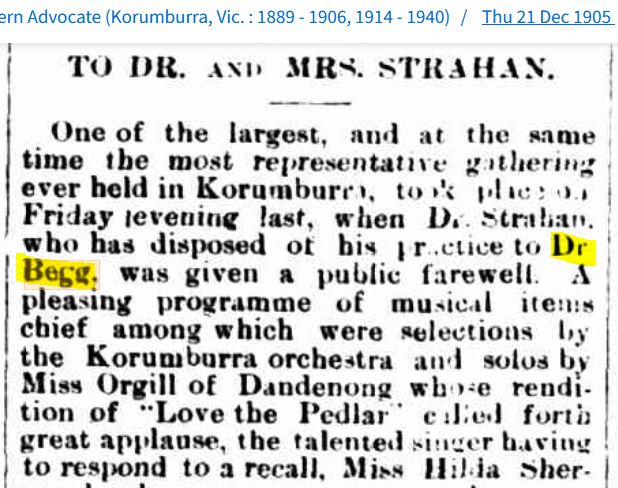
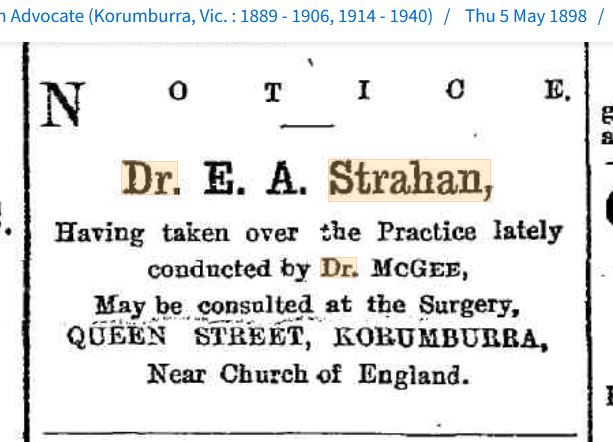
William and Maude purchased Dr. Strahan’s practice in Korumburra. The details were confirmed in a farewell notice for the Strahan’s printed in late December 1905.
It has been quite difficult trying to pin point exactly where the practice was. This next article places Dr Strahan in Queen Street.
I did find a wonderful photo of the actual Church of England and Queen Street runs along the boundary of this site shown below, so it could be that the practice was near here somewhere.
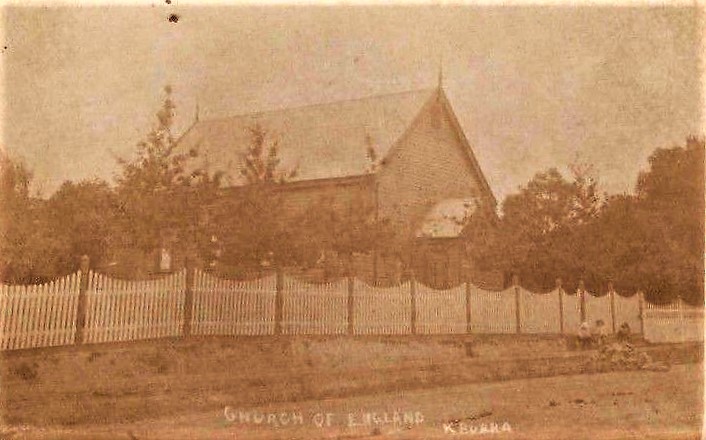
Figure 33a: Courtesy of Aussie Mobs, Flickr user https://www.flickr.com/photos/hwmobs/
The article above is eight years before William and Maude’s time and I can find no advertisement of them being at this address. I did however find them advertised at this one.

I initially thought the number was referring to the street number, this next photo shows No. 1 Station Street Korumburra today. It sits at the end of Station Street on the corner of Bridge Street.

But I then found this description of the palace in a for sale notice from 1895 which places it further up Station Street opposite the actual railway station.

There is no historical map of the area available online at the moment and trying to find a photo of the area has been quite difficult but then I stumbled on to this old postcard from 1895. One tiny section of the card shows the actual station and what I thought might be the Coffee Palace.

That is definitely a two-story building opposite the station that looks like it might have 20 odd rooms to it.
But then I found an actual titled photo of Station Street, this one is a little after William and Maude’s time but it still gives us a good indication of what the street might have looked like for them.

https://www.facebook.com/photo/?fbid=1016655159742034&set=a.754880075919545
This view above is looking up Station Street from Bridge Street towards the railway station on the left. The small section of fencing on the very right of the photo is the corner of No. 1. Station Street. This new station on the left was opened in 1910 and is shown below.

https://www.flickr.com/photos/liam_ryan/2227520933/in/photostream/
Mind you, I could be on the wrong track here, not the part about William and Maude being in Station Street, just about where their house was situated.
The Rose Series “Station Street” definitely looks like a residential street to me and not the “main street” look of shops as is depicted in (Figure 37).
Now look at what I found below that adds a bit of weight to this theory, a clear photo of the exact same area as shown in that small section of the postcard. Wow, let me tell you this took some digging to uncover but how lucky.

https://images.ehive.com/accounts/6420/objects/images/b8a77663ec614193961d9694fd4e9014_l.jpg
You can see there are more buildings and less bush. You will note that the A frame and the small goods shed next to the railway line all match up with the photo in (Image 37) I think here, we are looking at the other side of the railway tracks at Commercial Street and the photographer is actually standing at the top of Station Street.
Check out this next phenomenal photo from 1890 that confirms it for me.
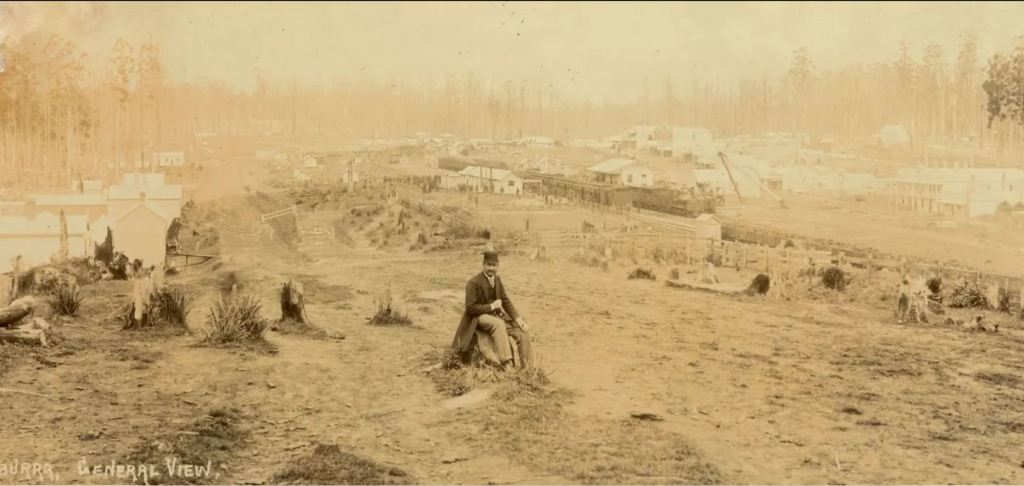
(Looking towards the station, with Station Street on the left
and Commercial Street on the right of the photo)
Figure 41: Courtesy of South Gippsland Voices
https://southgippslandvoices.com/korumburra-pictures/
There is the same A frame and goods shed pictured and then you can clearly see the Station opposite this, on the left of the photo, with all the people milling around.
That is Station Street on the left-hand side of the station. You might be able to notice where the white swing boom gate is hanging over Station Street, above, to the right of that is the raised driveway that runs along the station in (Figure 39). This is an extraordinary photo, considering I couldn’t find any images of the area when I started searching.
Here is roughly the same view as of last year, thanks to Google.

Figure 42: Courtesy of Google Maps
The white fence on the right-hand side of Station Street above is roughly where the white boom gate is in (Figure 41).
So somewhere along Station Street on the left there, is where No.1 Coffee Palace was and where William, Maude and family were living.
Just when I thought I had finished, I found another phenomenal shot of Korumburra, that I just had to include. This one is from the opposite direction as shown in (Figure 41). Commercial Street, which you can’t see is on the left and Station Street is now on the right.

(Looking towards the Station with Station Street on the right and Commercial Street on the left of the photo)
Figure 43: Courtesy of South Gippsland Voices
https://southgippslandvoices.com/korumburra-pictures/
I wonder if this two-storey building on the right might be the coffee palace where William and Maude were living.
And look at this, a tiny sliver of the historic is still standing, just. Here is a close-up of Mr P. E. Sparks General Store from a postcard created in 1893. This is on Commercial Street just down from the two-story building that I thought might have been the coffee palace in (Figure 37).
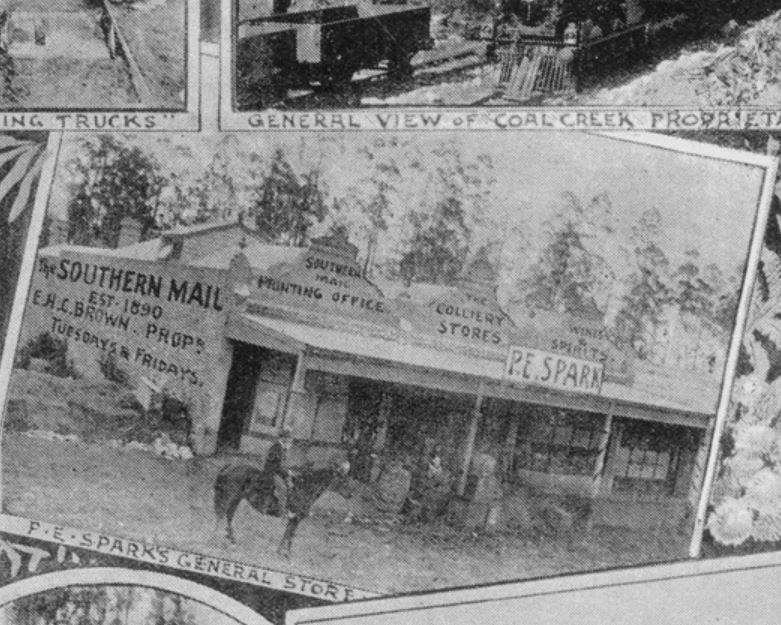
Figure 44: Courtesy of South Gippsland Voices
https://southgippslandvoices.com/korumburra-pictures/
And here is the site as of two years ago.

Figure 45: Courtesy of Google Maps
That one remaining facade of Mr Sparks’ store has been standing there for 129 years at the time of that photo above. William and Maude very likely shopped there. Wow! I know, I’m a nerd for that same spot different time stuff. Here it is one last time.

Figure 46: Courtesy of the State Library Victoria
http://handle.slv.vic.gov.au/10381/74928
There is Sparks General Store on the right, you can clearly see the three crowned facades. I discovered the two-story building to the left with the verandah was Radovick’s Hotel.

Figure 47: Courtesy of South Gippsland Voices
https://southgippslandvoices.com/korumburra-pictures/
The building to the right of Radovick’s Hotel was the National Bank of Australasia and the Post Office all clearly visible in this photo above but you will note that in (Figure 46) the bank and post office have gone and in its place is a new two-storey building.
Here is the same section of the road from 2017. It is still basically the same today. The two-story building at the end is Radovik’s Hotel built in 1888 just with a new cladding and now named the Middle pub.

From what I have uncovered so far on Maude and William’s lives, (thanks mainly to Trove and a couple of electoral rolls), they spent the next seven years building a life together and becoming part of the Korumburra community.
William becomes part of the local chapter of the Australian Natives Association.

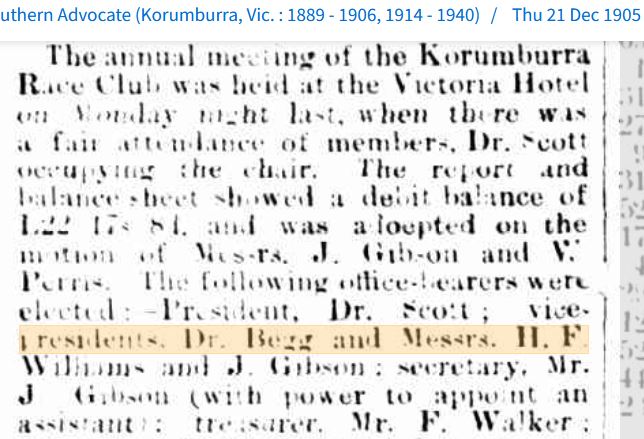
He then gets elected to the Racing Club Committee.
Maude and Mrs Dr Scott host an afternoon tea at Nurse Grants Private Hospital.

Then Maude gives birth to their third child, Elizabeth Mary (Betty) Begg.

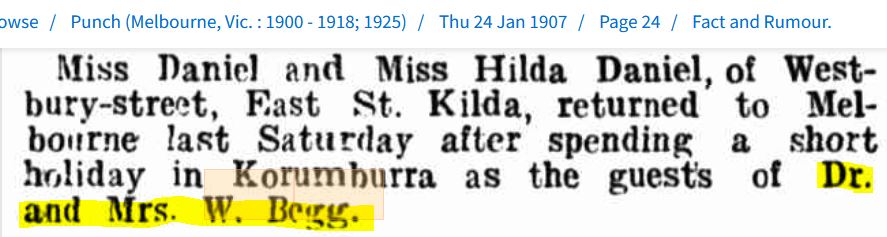
Next, we find Maude’s sisters, Ethel and Hilda visiting from East St Kilda. I wonder if this was to help out after Betty’s arrival?
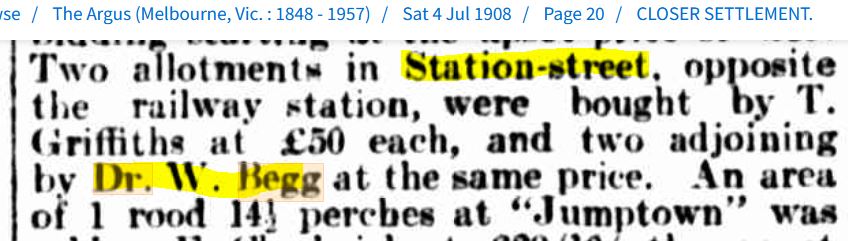
Maude and William even buy land in Station Street.
And of course, there is the same array of work articles appearing such as the ones that William had in Dudley. There are too many to list here, so I have once again provided a small selection below.
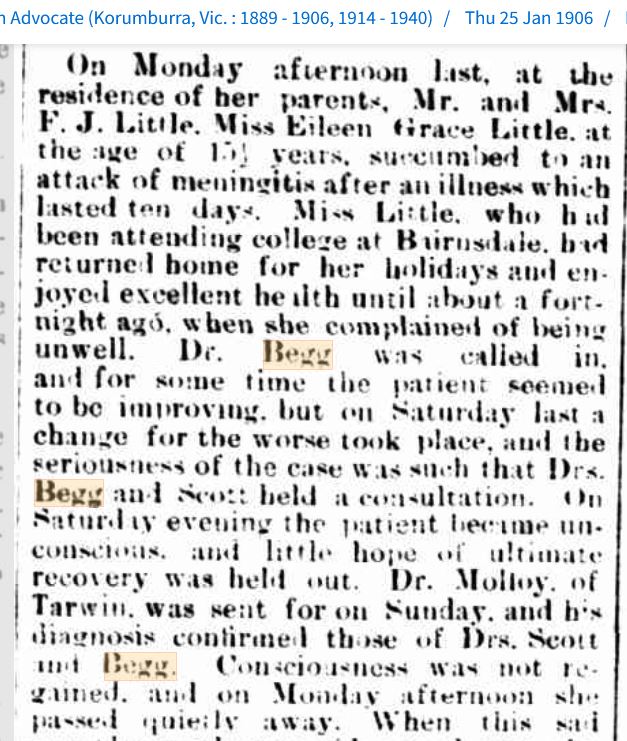


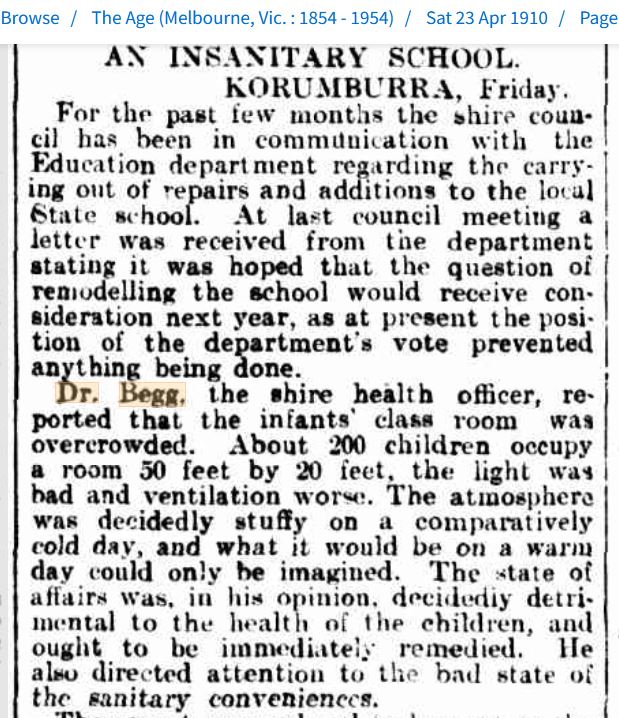


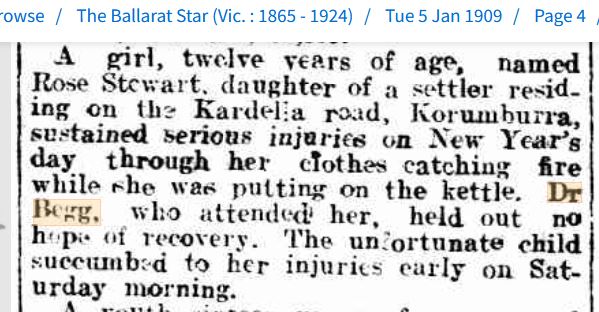

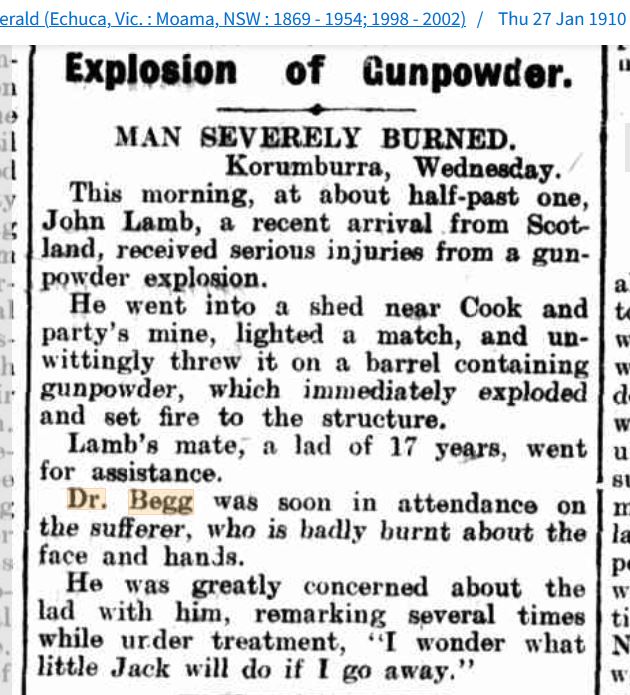
Collage 5: Courtesy of Trove, National Library of Australia
Tony Begg (Cousin) was again very generous, (he was the one who shared the photo of William’s father James Begg and his wife Bella Hose that I shared in my last blog post) this time he has shared a photo of Maude, William, the children and James, William’s father.

(L-R, John Daniel, James Begg (standing at back), Maude, Betty (seated on lap), Margaret and William)
Figure 53a: Courtesy of the Begg Family Archives (generously shared by Tony Begg)
Betty who is sitting on Maude’s lap is only a toddler so I think it is safe to assume that this was probably taken in Korumburra when James was visiting the family.
Then in the midst of all of this life happening around them I found this one small mention of William and something happening with his health again.

I can’t find any further details as to what might have been ailing William but it looks like whatever he was dealing with in Dudley still affected him.
There are four articles on Trove apart from William’s above that mention Nurse Samsing’s Hospital but that is it. It was situated on Lonsdale Street back in Melbourne. Here is an example below that confirms these details.

I can only imagine it would have been a real worry for Maude especially as they had three children under the age of ten at the time.
Luckily William was up on his feet and back to work by October of that year.

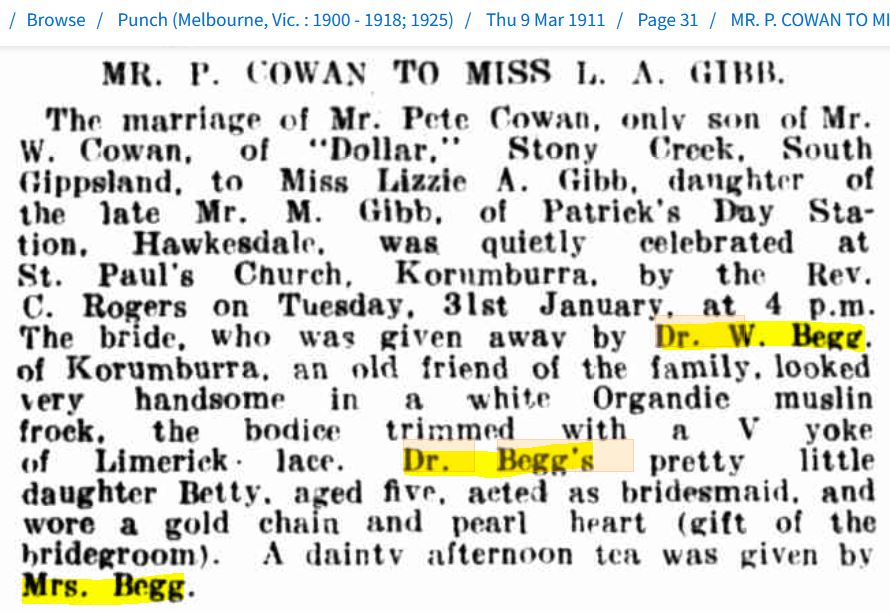


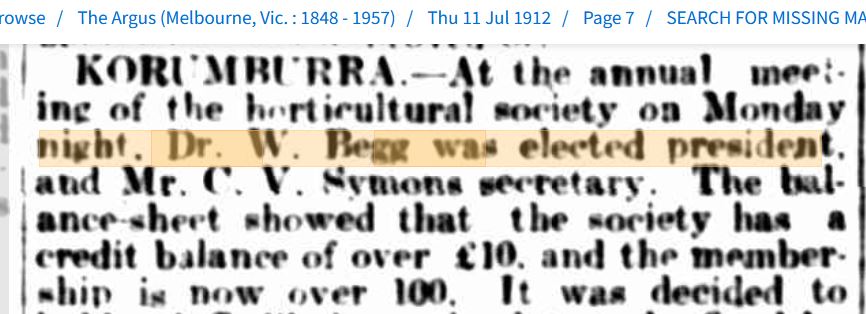
Collage 6: Courtesy of Trove, National Library of Australia
Then a notice printed on the 1st of January 1914 showed it was all over in Korumburra.


I found the most fantastic article on the Farewell and Presentation ceremony that was given to Maude and William. It is lengthy but I’m putting it all here as I think it is a wonderful insight into their world at Korumburra and too good not to share. (It reads from the left column all the way down and then back up to the top of the right column down to the end.)

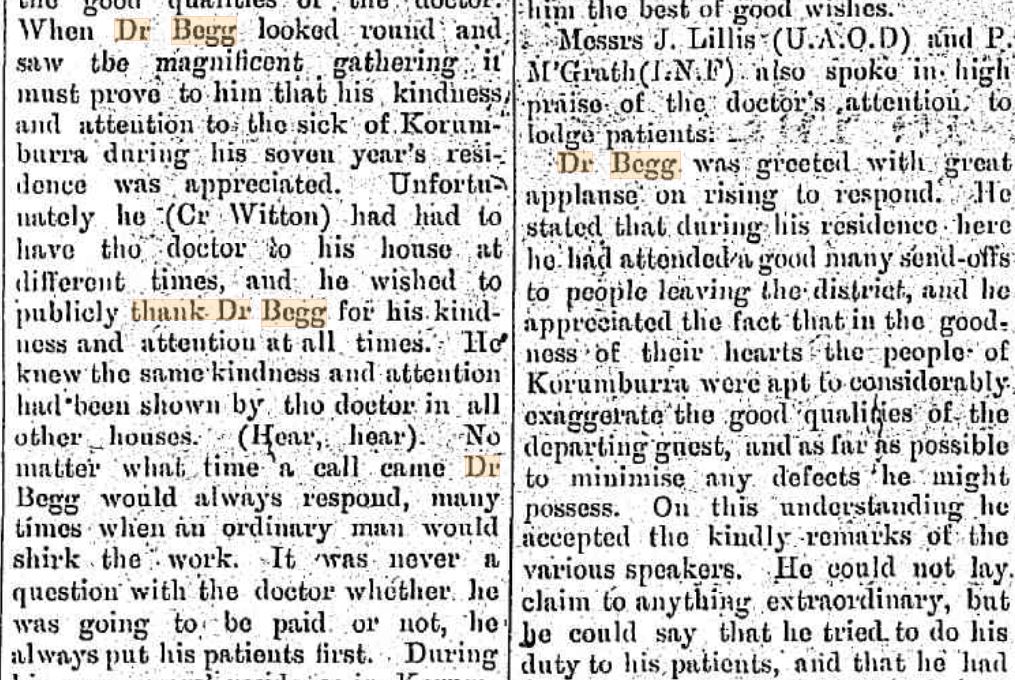
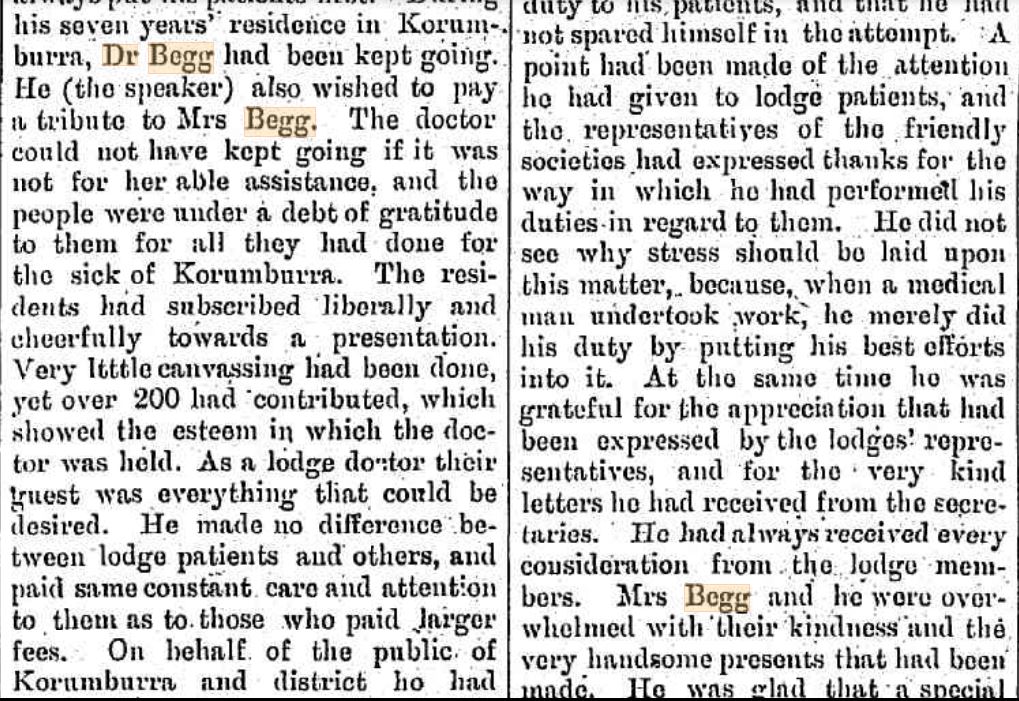
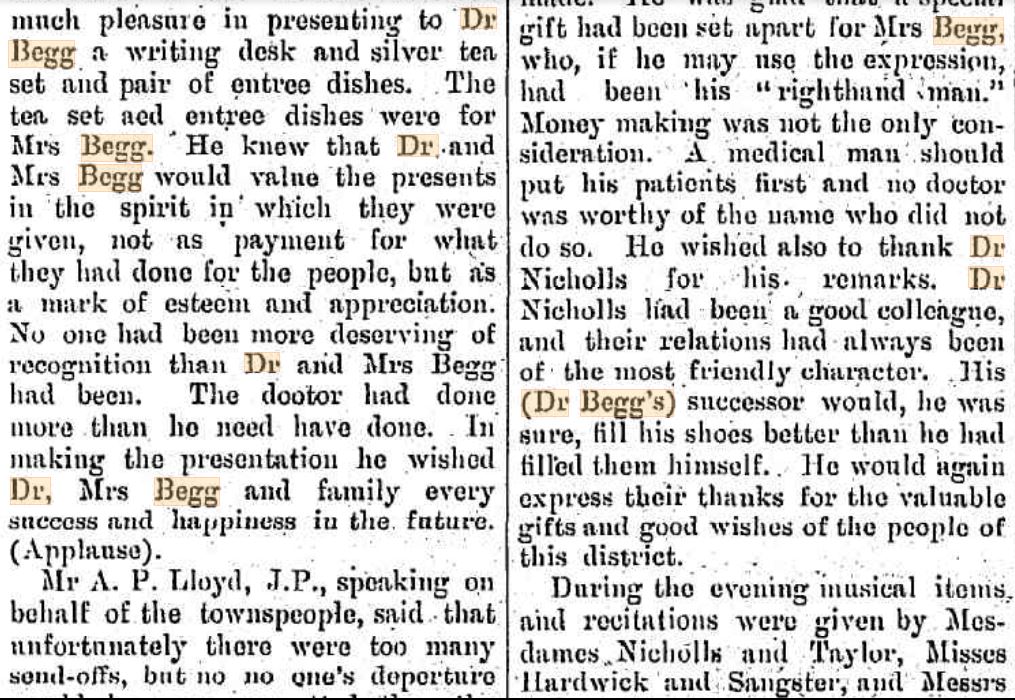
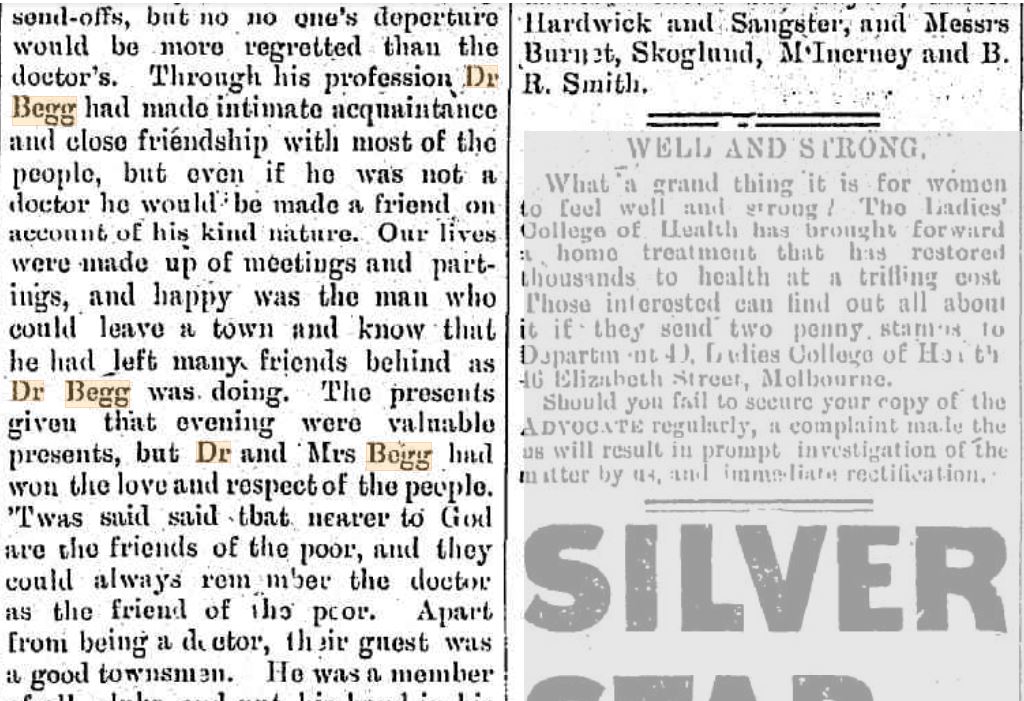


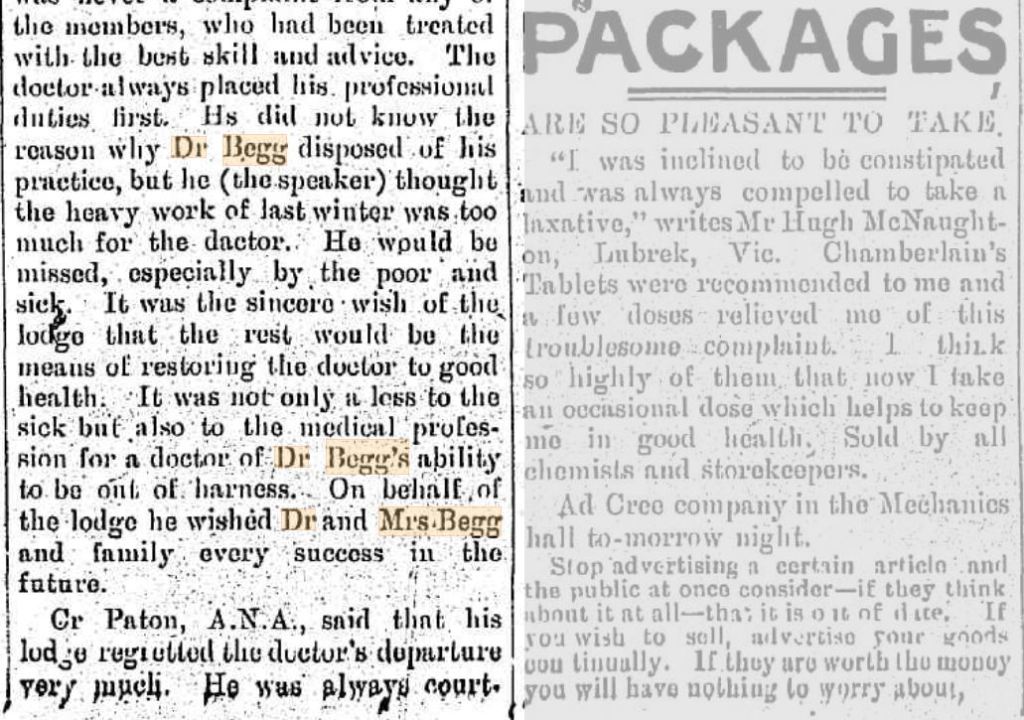
What an amazing article. I know it has that old-style rhythm that is so prevalent in personal articles of this time, especially the farewell ones and there are many examples. But there are so many insights into their lives which is quite rare and how wonderful to see Maude featuring so much, that is definitely rare.
It is interesting to note the reference to William’s health, the hard winter and being “…in harness.” Dictionary.com confirmed it is an old expression referring to being “…in the routine of daily work.” https://www.dictionary.com/browse/in-harness
So obviously whatever William was suffering from health-wise impacted on him and the family enough to warrant another move and in relation to that, I again was lucky enough to find where they ended up.

Hawthorn, Melbourne, Victoria and more specifically, Power Street. A search on Ancestry even provided the house number.

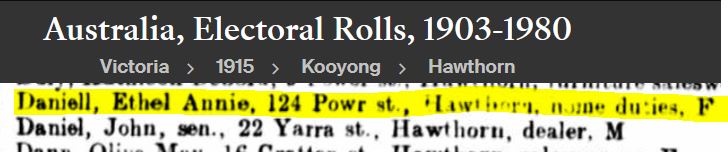
I happened to find someone else also living with them at 124 Power Street, Maude’s younger sister Ethel Annie Daniell who had visited them in Korumburra.
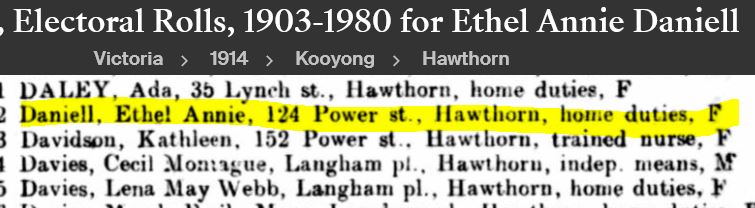
I went looking for 124 Power Street and this is what I found.

Figure 60: Courtesy of Google Maps
What a shame, a car park! My next thought was, that there might be a historic map somewhere online of the site. I turned to our old friend, the “Melbourne and Metropolitan Board of Works Plans” and something strange came up when I found the site on this map from 1901.

Excerpt from Melbourne and Metropolitan Board of Works, City of Hawthorn Plan no. 1091
Figure 61: Courtesy of State Library of Victoria
http://handle.slv.vic.gov.au/10381/96038
Number change! I can confirm from checking out Google Maps that this is the exact site of today’s 124 Power St, it sits between 88 and 90 on the map above. So I traced the maps back down the other end of the street to see if I could find 124 and we had some luck.
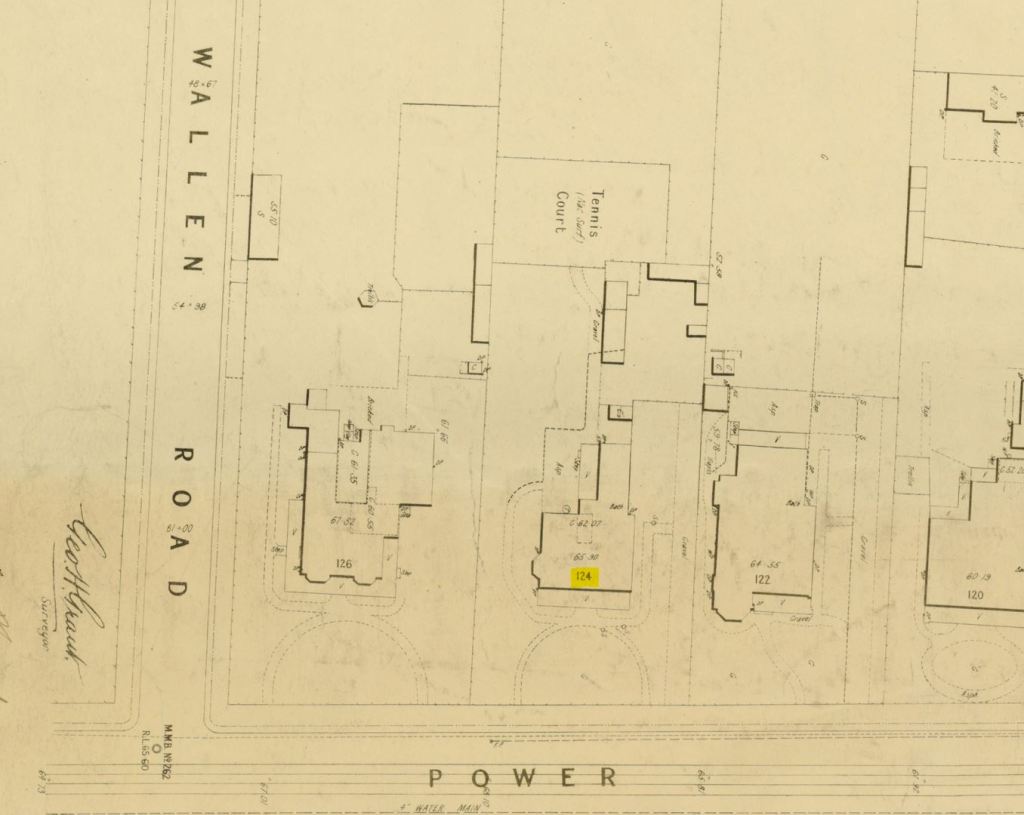
Excerpt from Melbourne and Metropolitan Board of Works, City of Hawthorn Plan no. 1092
Figure 62: Courtesy of State Library of Victoria
http://handle.slv.vic.gov.au/10381/120518
A property clearly numbered 124 Power Street and here below is this section of Power Street today on Google Maps.

Figure 63: Courtesy of Google Maps
124 is now number 182 Power Street and by some incredible luck, it looks like the original home that William, Maude and the family lived in is still standing.

(Formerly no. 124 Power Street)
Figure 64: Courtesy of Google Maps
You’ll remember from the sale notice above that William bought the practice from Dr Percy Brett. I started looking for information on Percy just to confirm that this was indeed the house. The first article I came across was a birth notice for Percy and his wife Amy’s first child and it mentions that the house had a name.

“Whoyenong“, is nice to know but of no use to us. This is the only article that mentions the name in Trove. I tried searching just “124 Power Street” and I found this next article from 1902 that I think helps confirm that this is indeed the house Maude and William moved to.
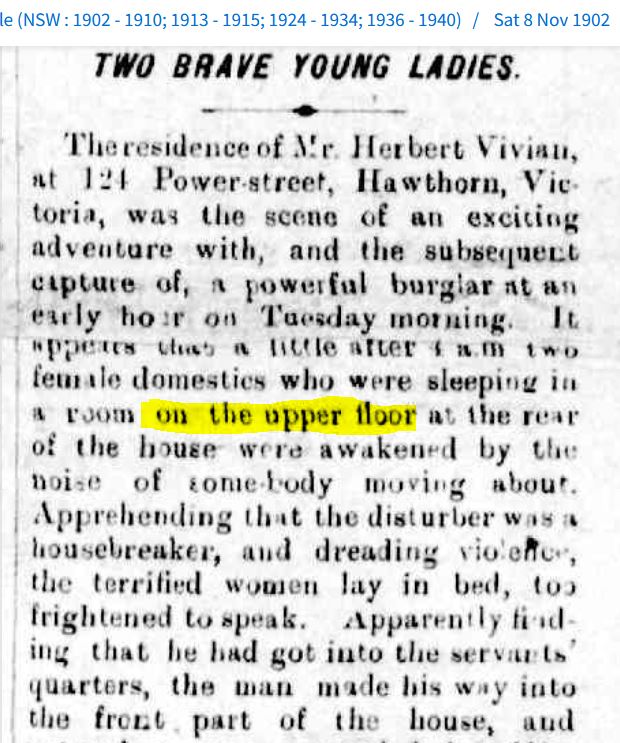

Article 2: Courtesy of Trove, National Library of Australia
It describes the house as having an upper floor and that the burglar climbed the back trellis to gain access and, on trying to leave the same way, fell 10 feet. It also describes the tennis court at the back of the property, which is clearly seen on the map above. These features all fit with the image of the house above now numbered 182 Power St.
I then found another article that adds more weight to the theory it is the house they moved to.
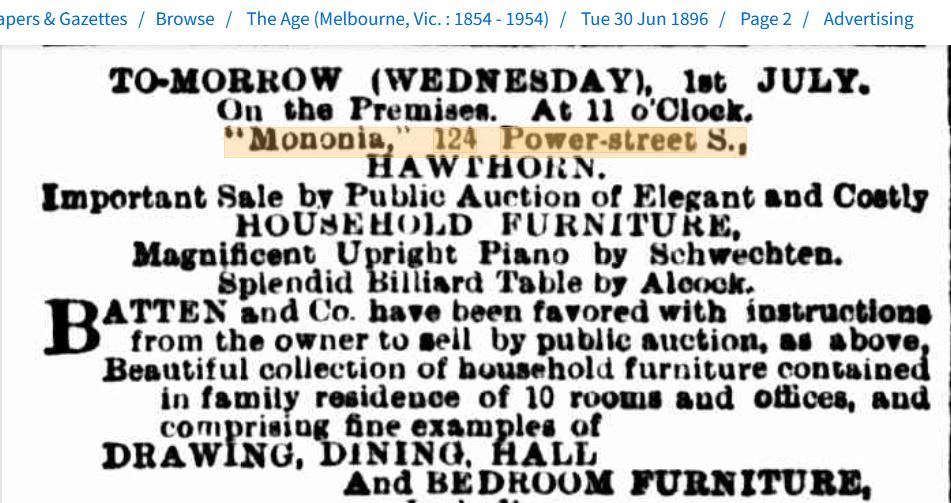
This for-sale notice was printed six years before our “Two Brave Ladies” article and shows the house had another name, “Mononia“. I discovered that the house had been named this for at least four years, from 1892 when it was listed as the address for a Mr Christopher Rowan Esq.

And I just found the reason that Mr Rowan was selling Mononia on the 1st of July.

Knowing this name for the house was the link that confirmed it was the house. It led me to this fantastic piece on the Victorian Heritage Council website, describing the buildings that now make up the Shrine of St Anthony Church complex. (Note the name of the church behind 182 Power Street in (Figure 63) I love it when information falls into place.)

https://vhd.heritagecouncil.vic.gov.au/places/208296
And another name for the house, “Rivo Torto“. So there it is 182 Power Street was Mononia and we now know that Mononia was 124 Power Street which confirms this is where Maude, William and the children lived.
In my search for information trying to confirm the site of 124, I found a photo of Dr Percy Brett, (thanks to the Museum of History once again) who sold the practice and house to William and Maude.

Figure 68: Courtesy of Museum of History New South Wales https://search.records.nsw.gov.au/permalink/f/si1pl2/ADLIB_RNSW112615561
Another interesting bit of information on the house, it had another name before Maude and William bought it. It was also known as “Carew” and the description of the property given here is fantastic.
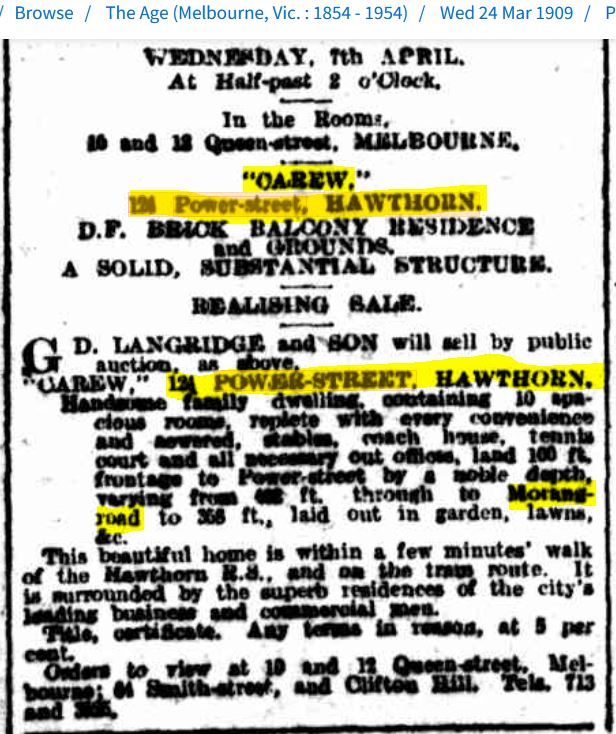
I think this is probably from when Dr Brett purchased the home. What is great about this article is that it too confirms that we have the correct 124 Power Street, as Morang Road the property goes through to, is the road on the other side of St Anthony’s. Shown below.
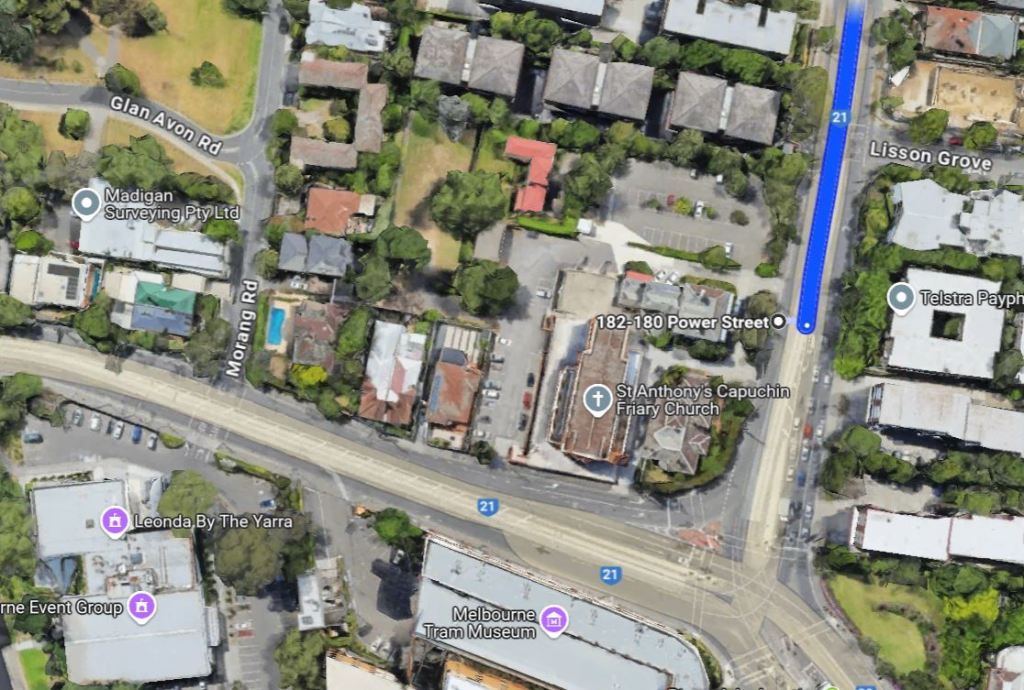
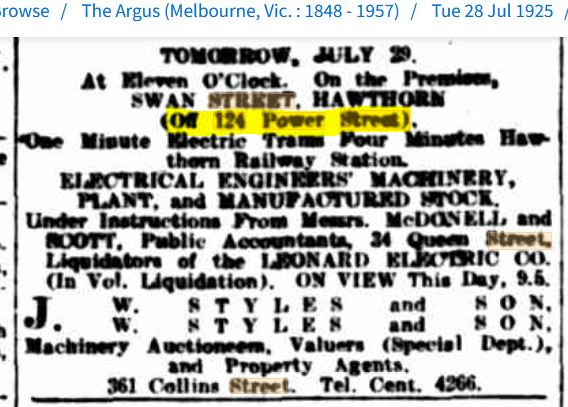
Having confirmed all these details, just one bit of confusion now comes to the fore. At some stage, the numbering changes go into effect and Carew becomes 182 and the property, which is the car park shown above in (Figure 60) becomes 124. I found a for-sale notice from 1925 confirming these details.
As shown below, Swan Street, as mentioned above, runs directly off the current 124 Power Street site.
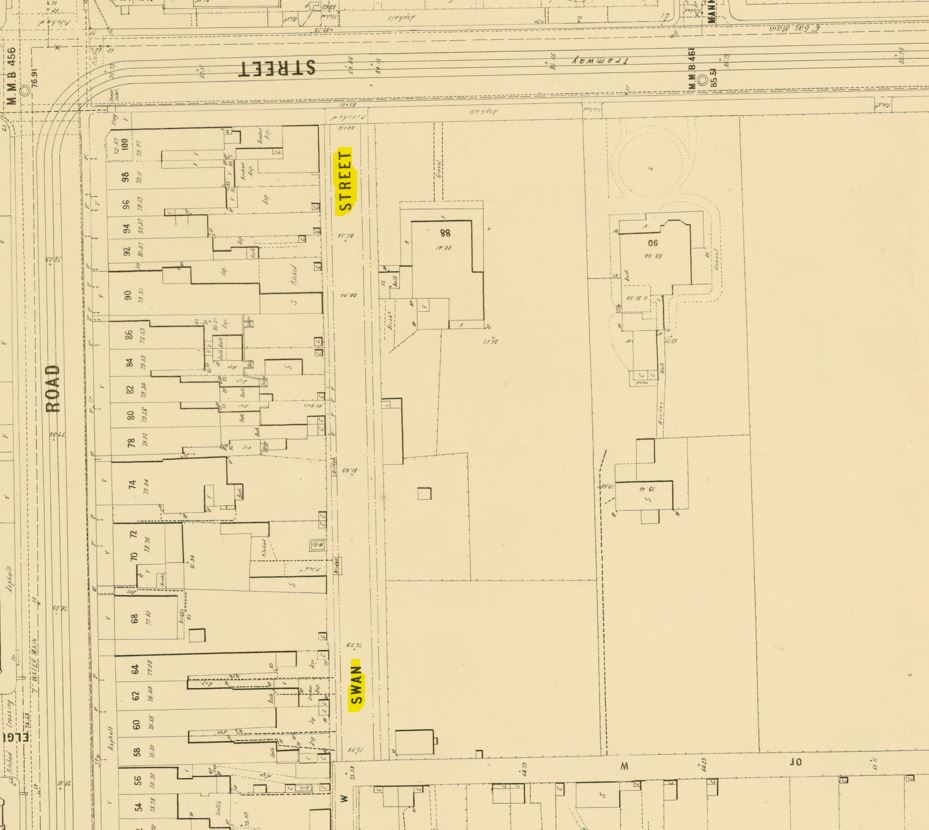
Figure 72: Courtesy of the State Library Victoria
The confusion? I have found many references after 1925 stating that William and Maude are still in residence at 124 Power Street. Did this mean they moved to the new site near Swan Street or did they just continue calling their old residence, Carew, 124? I’m thinking they stayed in this beautiful old Italianate but I’m afraid this will be another one of those questions that goes unanswered.
So, back to the family, remember William, Maude and the children moved to Hawthorn in early 1914. William starts appearing in the press at the end of the year.


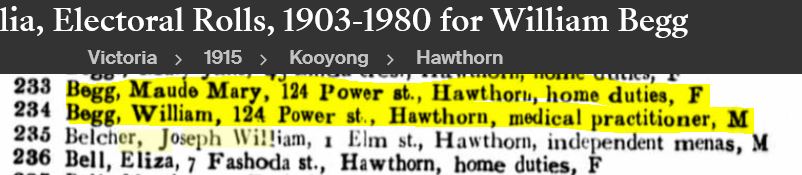
I found Maude and William in the Electoral roll for 1915, confirming their address. I can share now, as I have scoured the online rolls, Maude and William are here at 124 Power St for the next 28 years.
Don’t forget that Aunt Ethel is living with them and will in fact be with them for the next 17 years.
The next set of articles I found center around a disturbing incident that happened to the family at the beginning of 1915 where Aunt Ethel takes a lead role.


What shocking headlines for the time. Here is the full article below, read it from the top of the left column down and then top of the right column down.

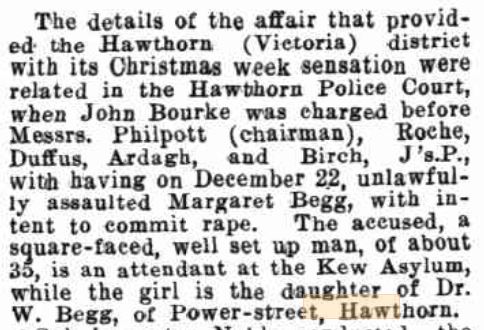
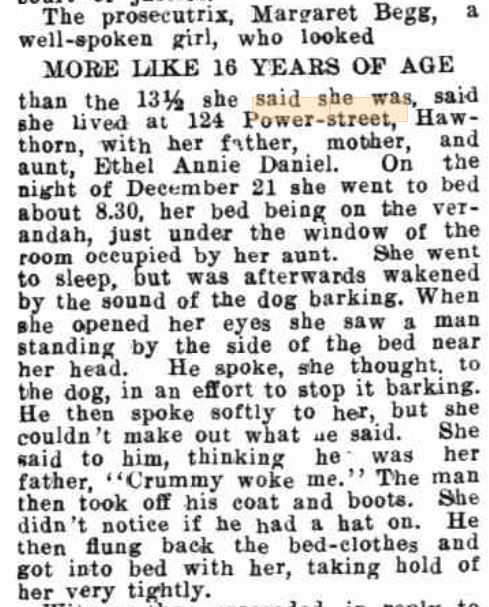
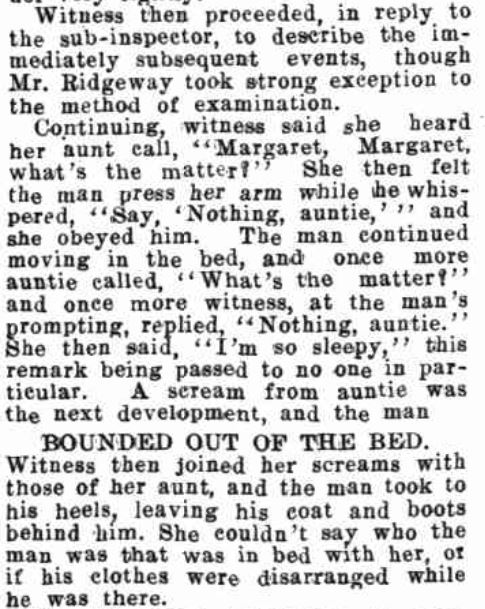


Article 3: Courtesy of Trove, National Library of Australia
The thing that sticks out for me the most is the tone, which suggests that Margaret might have done something wrong. I mean, even describing her as looking 16 years of age and then suggesting that there was something wrong with her doing what the man told her and saying that there was nothing wrong when Ethel called out. I mean she was a 14-year-old child. It was outrageous and no wonder William wanted to try and have Margaret’s name suppressed.
We are very lucky, in another version of this article it actually stated that Maude took to the stand as well and gave a summary of the incident.
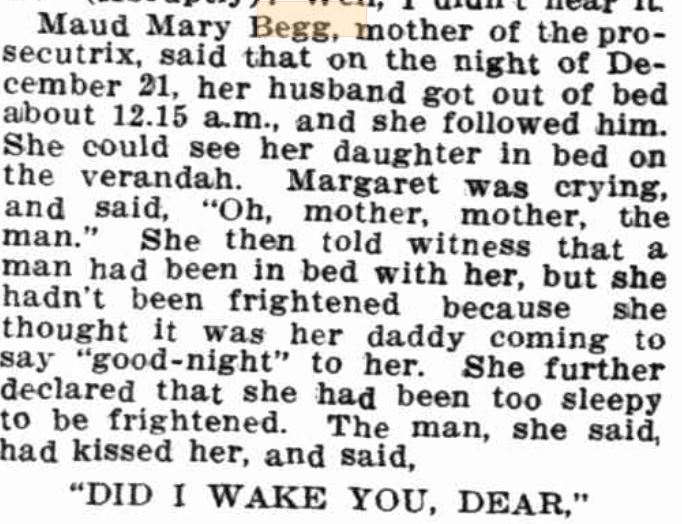
The article goes on to explain that a plain clothes constable from Hawthorn, Matthew Burke and a Senior Constable Roscrow attended the house. When they searched the coat the man had left behind, there were some slips of paper in the pockets that they were able to use to identify who it belonged to.
We pick up the article next when they attend John Bourke’s house in Connell Street at around 2am.


Article 4: Courtesy of Trove, National Library of Australia
John Bourke’s lawyer set out his defence.
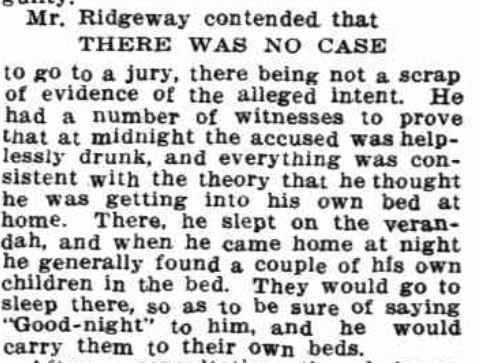
Bourke was found guilty at his trial on the 15th of February and sentenced to three years of hard labour. He appealed the sentence a month later in May saying that it was excessive as there had been no intent on his part to do anything inappropriate with Margaret, that it had all been a misunderstanding because he was drunk and thought that he was in his own home. The bench didn’t agree and upheld the original verdict. https://trove.nla.gov.au/newspaper/article/119776494?searchTerm=%22the%20hawthorn%20outrage%22
The article above also had an artist’s impression of John Bourke from his trial.

What a story and I can only imagine, it must have been quite terrifying for the whole family. Hopefully the rest of the year was not as eventful, there are no further mentions of Maude, Ethel or Margaret for 1915.
Interestingly the only other press mentions are of William and his work with the St John Ambulance Association in delivering their First Aid Course.


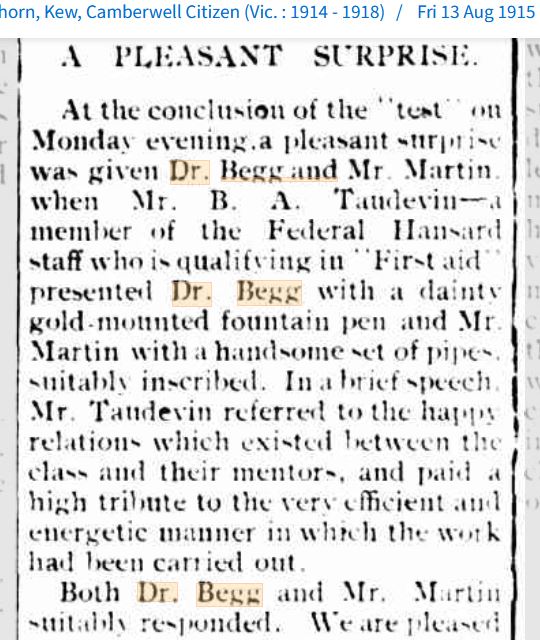
Collage 7: Courtesy of Trove, National Library of Australia
The press mentions start to pick up over the next couple of years for William. I have given a few examples below. It is interesting to note that William returned to Korumburra to visit in 1917. I wonder if Maude and the children accompanied him?


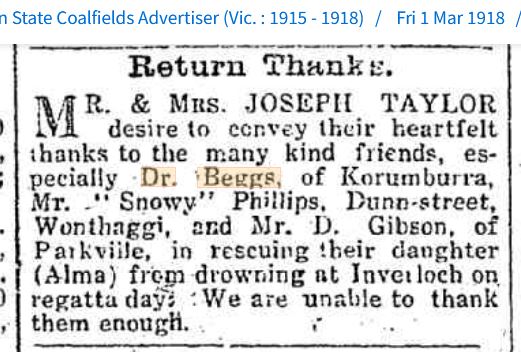



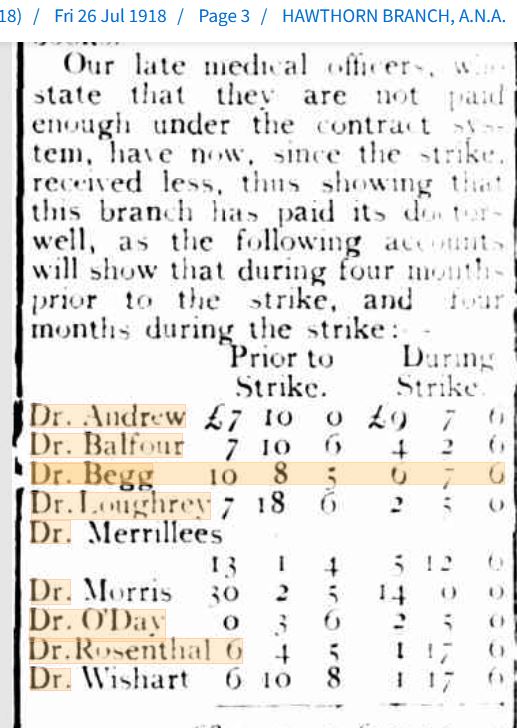
Collage 8: Courtesy of Trove, National Library of Australia
Life obviously kept rolling on which is confirmed in the Electoral Rolls again. Margaret makes her first appearance in 1922 at 21 years of age as does John when he turns 21 in 1924.



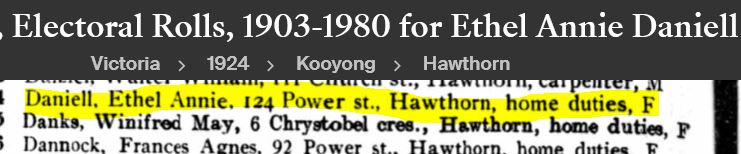
Our next find relates to another visit for William to Korumburra, seven years after the last one.


1924 also was a big year for Margaret, she left home. I found her listed in the electoral rolls working as a teacher at the Clyde Girl’s Grammar School out at Woodend, Victoria. About 85km to the northwest of Hawthorn.

Clyde Girls Grammar School was founded in 1910 by Isabel Henderson in St Kilda but she moved the school out to Woodend in 1919 when she took over the old Braemar House Guest Lodge. The reason for the move was to distance the girls from the social distractions of the city. https://www.theage.com.au/education/preserving-blue-blood-memories-20061113-ge3jpn.html
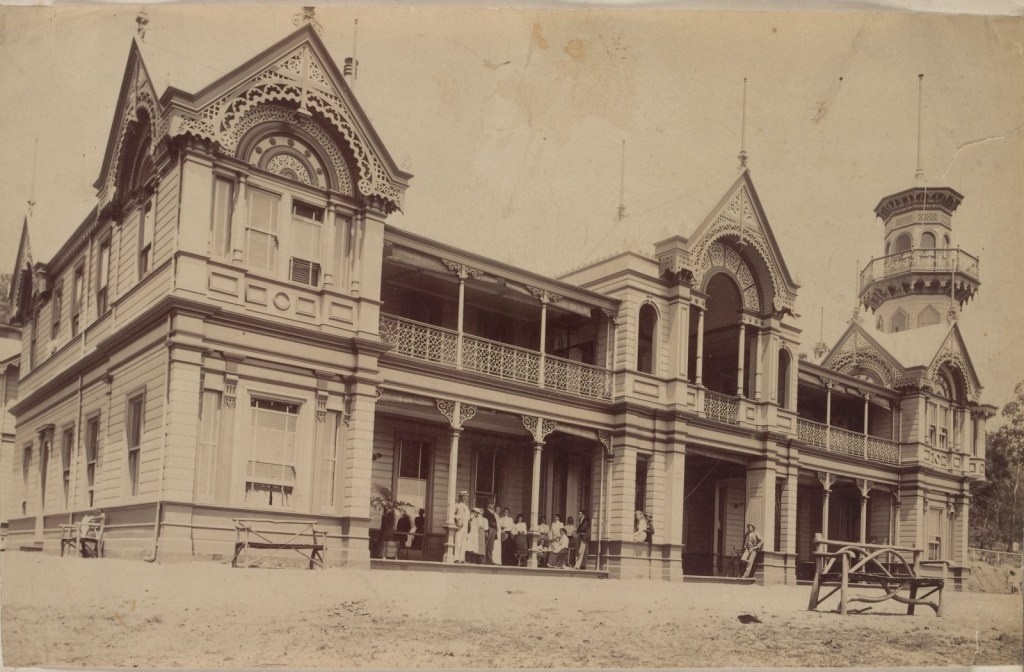
Figure 79a: Courtesy of the State Library Victoria
http://handle.slv.vic.gov.au/10381/296681
In a 2006 article for “The Age” newspaper, former students reminisced about their time at the school for a book on its history. They shared that it was an isolated boarding school on the side of a chilly mountain. It was always freezing cold, and could only be accessed by a rugged buggy ride over unmade roads. Parents very rarely visited but it gave students a tremendous freedom to roam the bush, often to the summit of Mt Macedon or nearby Hanging Rock. https://www.theage.com.au/education/preserving-blue-blood-memories-20061113-ge3jpn.html
Yes and for those of you who know the novel “Hanging Rock”, you won’t be surprised to learn that its author, Joan Lindsay was a former student and drew inspiration from the school for her story about three school girls who go missing at the rock. https://www.theage.com.au/education/preserving-blue-blood-memories-20061113-ge3jpn.html
The State Library Victoria had a wonderful aerial photo of the site from 1930 just six years after Margaret is listed as living and working there.

Figure 80: Courtesy of the State Library of Victoria
http://handle.slv.vic.gov.au/10381/451753
Funnily enough, Margaret does disappear herself, from the electoral listings. I can’t find another listing for her at the school so I’m unsure how long she was there. The archives of the school have been saved and are held by the Old Geelong Grammarians Association. It is a long shot but I have sent them an email asking if they might have any information on Margaret they would be able to share. Will keep you posted.
Who does appear in the press for the first time since Margaret’s dilemma nine years earlier, is Maude. She is noted as being an “hon. secretary” of the Mayoress of Hawthorn’s State War Council’s appeal.

It is a stark contrast to William’s press appearances but indicative of so many women of the time who were just leading their lives and didn’t rate a mention in the press of their extraordinary lives. (Just my thoughts on the matter.)
In 1925 we find John still studying and living at home, and Margaret is still missing from the official records.

Elizabeth Mary (Betty) Begg is 18 years of age at this stage so still not old enough to make an electoral roll appearance. I did however find this fantastic photo of her printed in “The Herald” from the 3rd of September 1925 just two months from her 19th birthday.

As you can see the caption under the photo states that Betty was appearing in, presumably a play, called “Alice Sit by the Fire” I did a bit of digging and it is a play and it was written by J.M. Barrie the author of “Peter Pan”. I even found a review of Betty’s performance. Check out the star-studded audience who attended the performance.

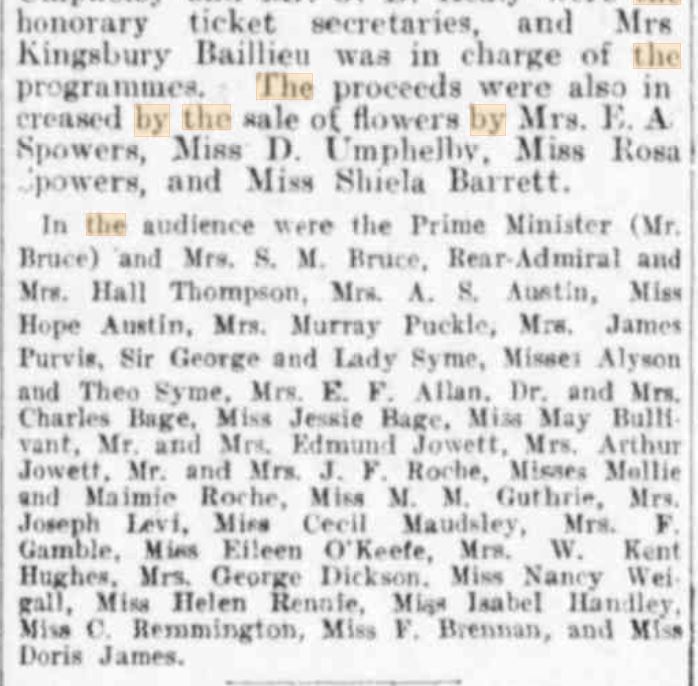

Article 6: Courtesy of Trove, National Library of Australia
The other gem of information in that caption below Betty’s photo above is that it mentions that she was an “…old Ruyton girl.”
Ruyton refers to Ruyton Girls School on Selbourne Road, Kew, Victoria. It initially opened on a’beckett Street in 1888 but moved in 1920 to the old Henty Family mansion named “Tarring” on Selbourne Road built in 1872. https://issuu.com/ruytongirlsschool/docs/11495_-_rgs20_reporter_autumn_issu/s/10517038
I found this amazingly clear photo of the house on the State Library Victoria site.

Figure 83a: Courtesy of the State Library Victoria
Photographed by Rowland Chubb
http://handle.slv.vic.gov.au/10381/105554
Betty graduated in 1924 from Ruyton as dux of the school and would you believe I found a collection of the old school yearly reports uploaded on the Victorian Collections site. Betty appears in a “What Old Girls Are Up To” list from 1925.

It is interesting to note (I know I say that a lot), that the first name there, Mollie Shannon is actually Betty’s future sister-in-law. Mollie marries Betty’s brother, John Daniell Begg in 1932, just seven years after they graduated.
There is another link with Ruyton and she appears in the next article I found from 1925.

Yes, Maude’s other sister, Hilda Young Daniell is the link. I found Hilda in the electoral rolls listed as living at 12 Selborne Road in Kew and mentioning that she was a teacher. Of course, this is Ruyton Girls School’s address.

I have just spent the last couple of days delving into Hilda’s life thanks to an abundance of information on her that has been shared online. Yes, Hilda was a big deal in the history of female education in Australia.
Her extraordinary contribution was recognised when she was awarded an MBE in 1952 and actually had the honour bestowed on her by the young Queen Elizabeth 11 herself when she made her first royal tour to Australia in 1954. https://victoriancollections.net.au/items/65a5b78186155393c34f1466
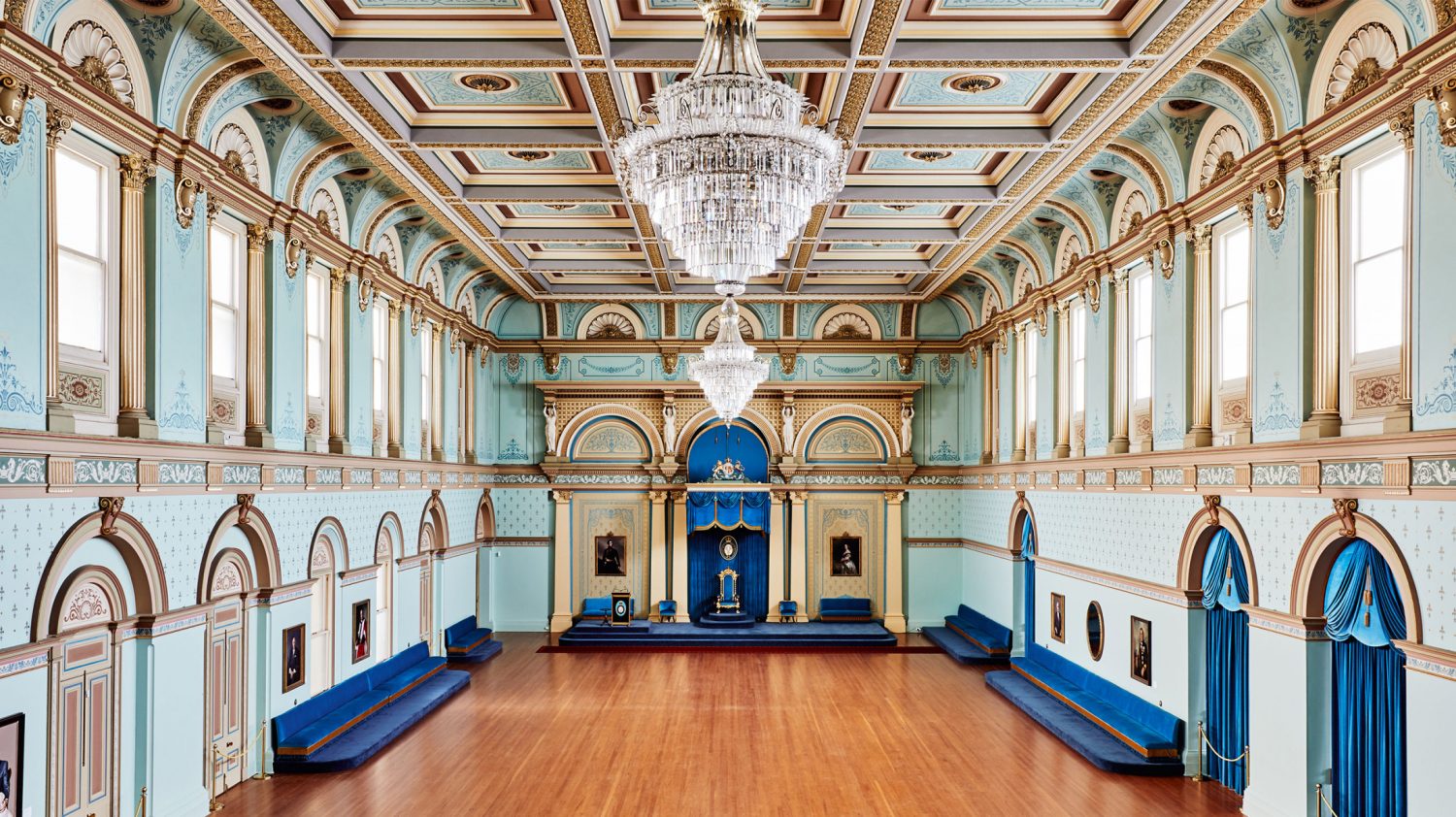
The Investiture Ceremony happened at 12.00 Noon on Thursday the 4th of March 1954 in the Government House ballroom.


I managed to find a photo of the Canopied Royal Dais, mentioned above, from about 10-15 years after Hilda was there.

Figure 86c: Courtesy of State Library Victoria http://handle.slv.vic.gov.au/10381/4124302
The State Chair, as it is known, standing on the dais above, is only used by the Monarch or their representative. It was constructed in 1859. https://www.governor.vic.gov.au/government-house/state-apartments
The distinctive blue colour scheme of the ballroom, which was originally implemented in 1889 was unceremoniously painted over in 1933 with stark white with no embellishments. This is how it would have appeared in 1954 when Hilda was being invested and hence the reason for the description in the article above. https://www.governor.vic.gov.au/government-house/state-apartments

Figure 86d: Courtesy of National Trust of Australia https://www.nationaltrust.org.au/wp-content/uploads/2021/08/Victoria-Government-House-tdf-1-2200×1235-1.jpg
Thankfully the blue made a return during restoration works in 1960 and have remained to this day as shown above.
I haven’t been able to track down a photo of Hilda receiving her award from the Queen but I got close.
This photo below, is of Lieut. General Sir Horace Robertson receiving his Knighthood from the Queen at the very same ceremony that Hilda received her OBE.

Hilda would have been sitting there watching as Sir Horace was being knighted.
Hilda actually started at Ruyton as a student in the 1890s. The first listing I can find for her stating that she was working there as a teacher is from 1903 when she was 23 years old.

This of course is when the school was at it’s original site in a’Beckett Street in Kew.

Figure 87a: Courtesy of Ruyton Girls School
https://issuu.com/ruytongirlsschool/docs/11495_-_rgs20_reporter_autumn_issu/s/10517038
This next phenomenal photo shows Hilda about seven years later at the age of 30 in 1910. She was actually head of the teaching staff at this stage and just about to set out for England where she would remain for three years teaching. She returned in 1913 to take up the position of headmistress of Ruyton. https://trove.nla.gov.au/newspaper/article/206090038#

Figure 88: Courtesy of Ruyton Girls School on Issuu https://issuu.com/ruytongirlsschool/docs/11495_-_rgs20_reporter_autumn_issu/s/10517038
The school today has a brilliant Facebook page that shares old photos of the school on some of its posts titled “Flashback Friday”. Here is a wonderful photo of Hilda pictured in her study in 1925.

Figure 89: Courtesy of Ruyton Girls School
https://www.facebook.com/profile/100063765352561/search/?q=hilda%20daniell
Hilda served as Principal of Ruyton for 40 years retiring in 1952 at the age of 74.

Figure 90: Courtesy of Victorian Collections https://victoriancollections.net.au/items/65a4b89eab006b88941a0420
I can only imagine Hilda must have been a real inspiration to her family and it just felt right to give her some recognition here of her extraordinary achievements.
Now back to the late 1920s and William and Maude. We find them still in residence at 124 Power Street, John is still with them and in the final two years of his medical training.
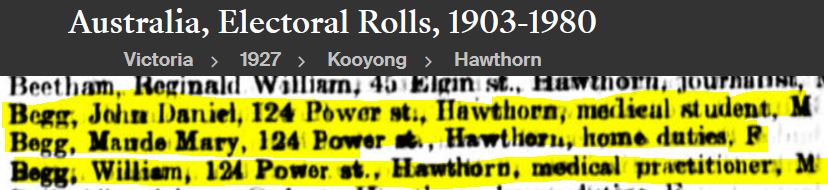
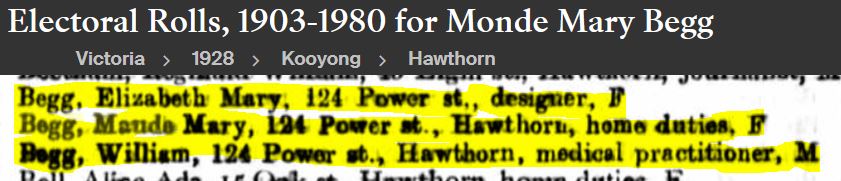
Betty made her first appearance the following year and was noted as working as a designer.
William is still getting the occasional mention in the press.
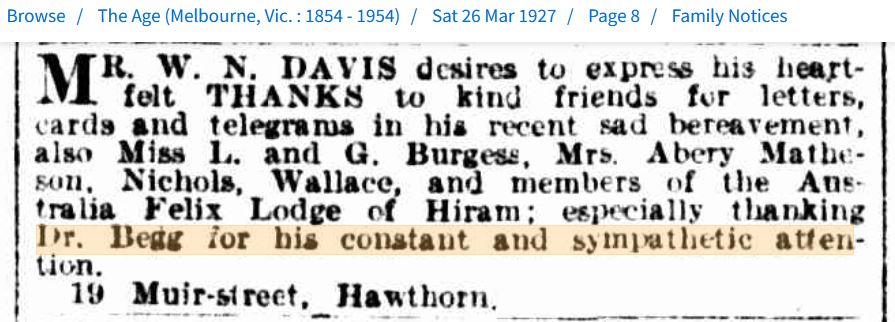
Mr Davis’s wife, Martha had passed away ten days earlier on the 16th March.

Then in 1928 William and John take a holiday together at the San Remo Hotel.

William then gets a note of thanks from members of the Stewart family.

They were mourning the passing of their brother, Kenneth Douglas Stewart.

And then the big news at the end of 1928, John, William and Maude’s son purchases his own medical practice and would you believe, it is in Korumburra the town he grew up in and left 23 years earlier.
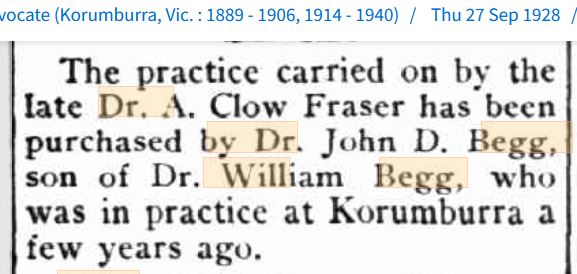

You might have noticed that the practice was on Station Street, the same street that William had the practice on. I wonder if John might have moved back to the same house that he grew up in?
I found an obituary for Dr Fraser, I have posted a few paragraphs from the article below. If you are interested checkout the full article on Trove. Another unsung, forgotten ANZAC hero.
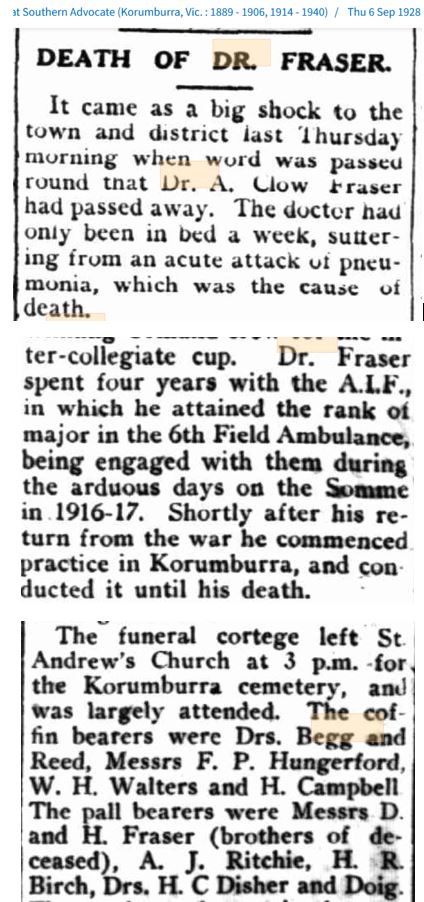
There was no photo of Major Fraser coming up anywhere. Then I remembered the Museum of History NSW site for Doctor registration photos and just like the ones I found for William, his cousin Donald, and Dr Percy, I found one for Major Fraser.
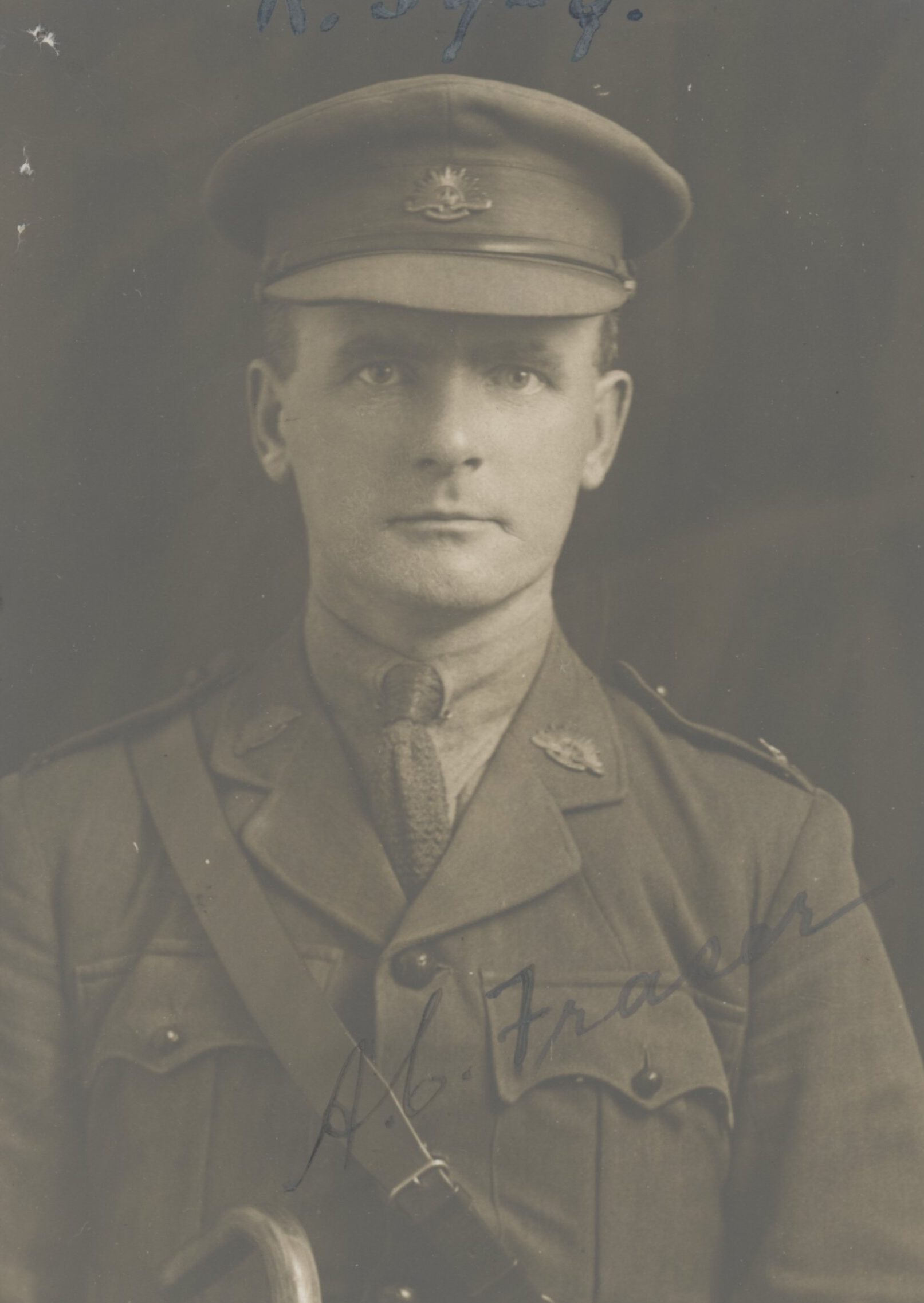
Figure 96: Courtesy of the Museum of History New South Wales https://search.records.nsw.gov.au/permalink/f/1ebnd1l/ADLIB_RNSW112620732
By 1929 it is John who has taken over the mantle from his father William with the newspaper mentions.
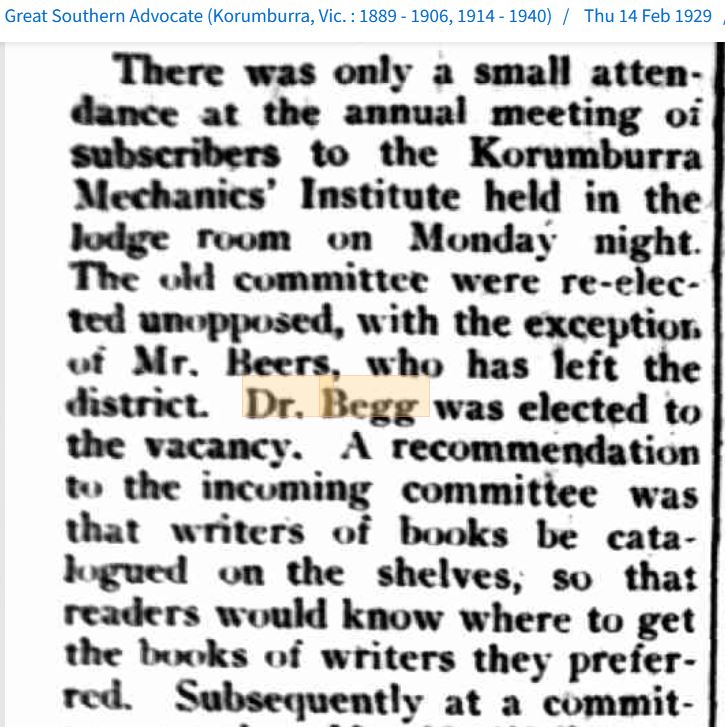
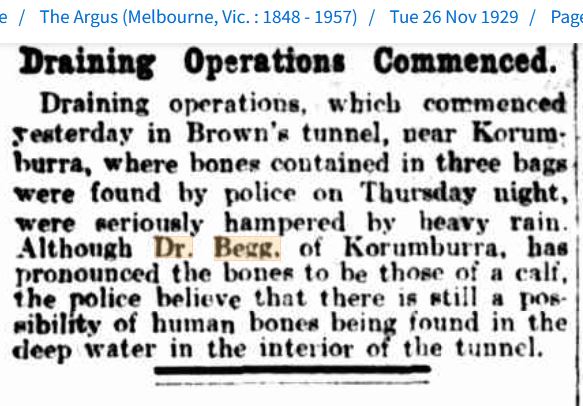


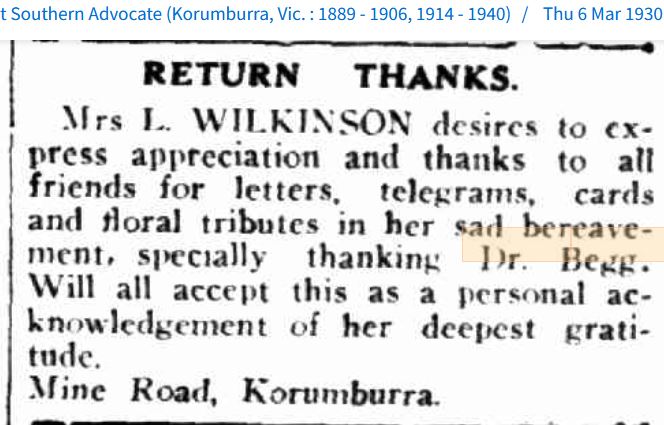

Collage 10: Courtesy of Trove, National Library of Australia
There are no electoral roll records online for 1929 or 1930. The next set of listings comes up for 1931 and shows John is still in Korumburra.

Here are the 1931 listings for the rest of the family.


Did you notice? After seven years absence Margaret reappears. You might recall we discovered she was working at Clyde Girls School out at Woodend in 1924 (Figure 79).
As I mentioned I could find no other listings for her at that address or anywhere else in the intervening years. Margaret obviously left and made the move back home at some stage because we now know thanks to this listing above that she was back at 124 Power Street by 1931.
I then found more press mentions of John but none for William. He is 63 years old at this stage so probably leaving the emergency call-outs to the younger medico’s who have appeared in the community.


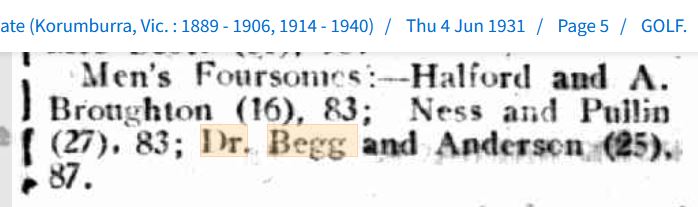

If these articles are anything to go by, John was certainly making himself known in the social circles of Korumburra. The library committee, rifle shooting, golfing and competition dancing all appear as his interests.
This next article was a nice little find containing some specific information on the family.

“Margot” I’m pretty sure is referring to Margaret and I think we can make another big assumption here, that Margot was probably working at Ruyton with her aunt Hilda.
Now from what I have discovered so far, the next couple of years were jam-packed for the family. We start off with the passing of Maude and Hilda’s sister, Ethel Annie who had been living with Maude and the family at Power Street for the past eighteen years.
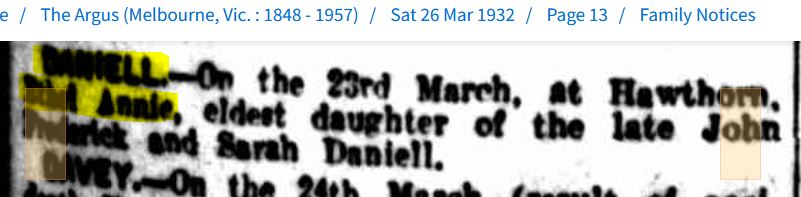
For me, there is a real tinge of sadness here. Apart from that one mention back in (Figure 52) that Ethel and her sister Hilda were visiting the family in Korumburra, and her role in Margaret’s ordeal with John Bourke getting into her bed, this is Ethel’s only other mention in the press for the entirety of her life.
What a contrast to her sister Hilda, who went into the teaching profession and had a multitude of appearances as a result. That is a whole vibrant life just lost to us for good. What a shame but I’m sure this would have been the case for so many of the unmarried women of the time.
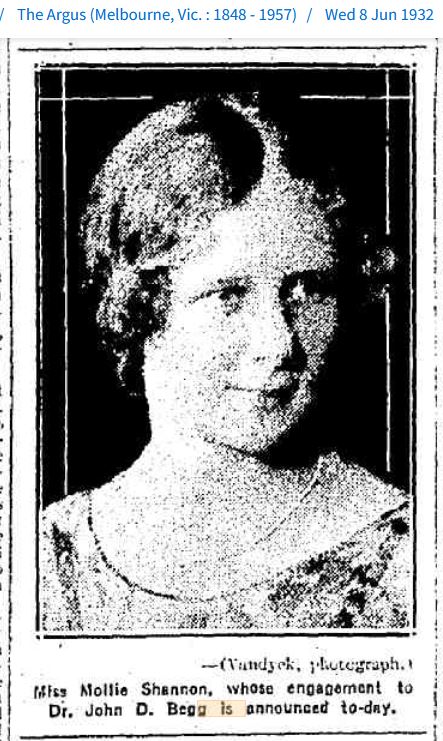
Next we have the engagement notice for John and Mollie Shannon who you might recall was attending Ruyton with John’s sister Betty.
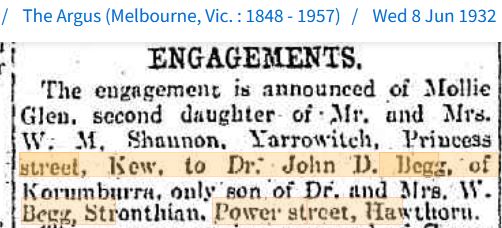
And how incredibly lucky are we? I know it is grainy but there was even a photo printed of Mollie with the notice.
Not only did Mollie and Betty attend Ruyton together but it also mentioned in that notice (Figure 84) that they were studying horticulture. This led me to discover that they also worked together.
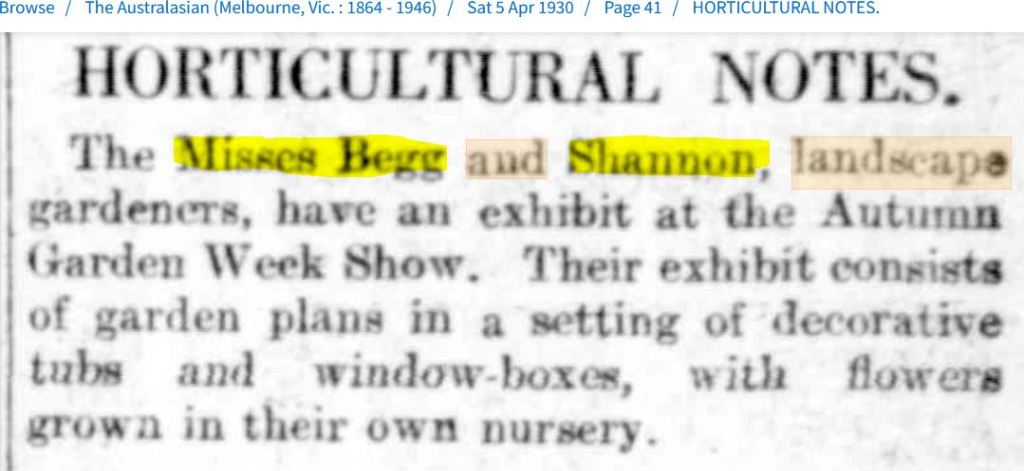
I wonder how unusual this would have been for the time, two single women not only working in horticulture but also setting up their own business?
Mollie and John were married on November 4, 1932, in the West Hawthorn Presbyterian Church.
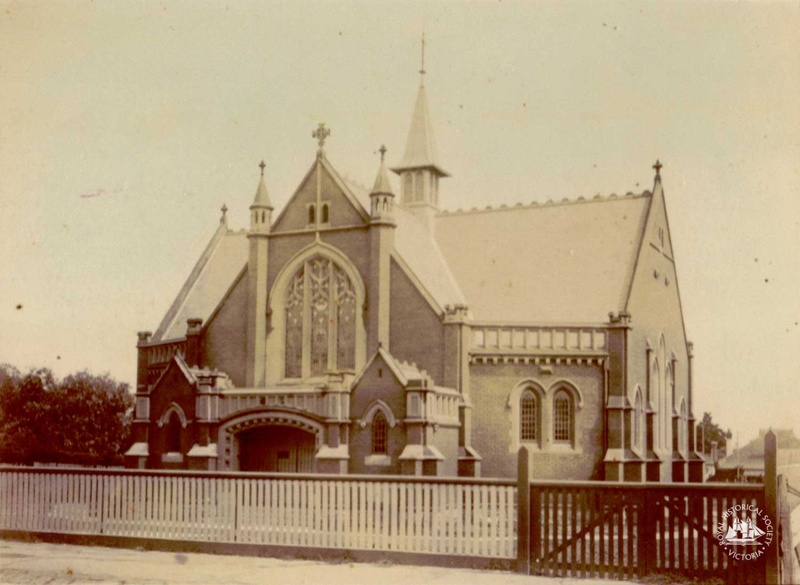
Figure 104: Courtesy of the Royal Historical Society of Victoria
https://www.historyvictoria.org.au/ehive-object-details/1869017/
The church which opened in 1895 still stands today but closed its doors to worship in April 2021. https://www.churchesaustralia.org/list-of-churches/locations/victoria/f-k-towns/directory/8847-west-hawthorn-uniting-church

Figure 105: Courtesy of Google Maps
Again, they are grainy, but what luck, we have another couple of photos, this time of Mollie and John’s wedding party.

From left to right, Miss Joy Shannon (Mollie’s sister), Miss Betty Begg (John’s sister), Miss Mollie Shannon (Bride), Dr John Daniell Begg (Groom), Dr R. Long (Best Man) and Mr Huntley Grant.

From left to right: Mollie, Betty and Joy.
Just over a month later, it was Betty’s turn. Below is a wonderful photo of Betty and an announcement of her engagement to Ernest Edward Backhouse.
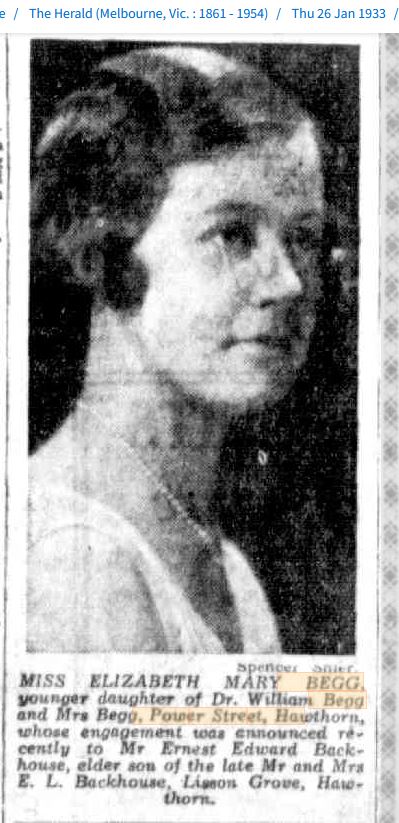
I then found this mention of Mollie’s parents, Kitty and William Shannon visiting her and John in Korumburra.

It is great that they got to catch up to see where Mollie and John were making their lives as William passed away just five months later.
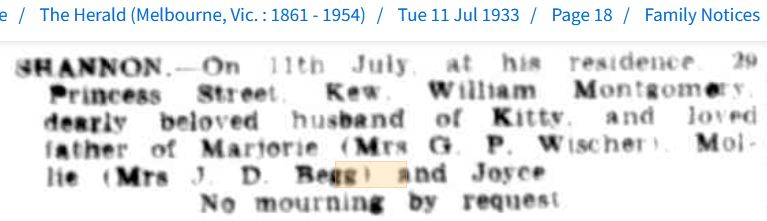
William worked in the Victorian Railways service for 52 years, working his way up to Chief Mechanical Engineer and then, for the last 13 years of his working life, as the Victorian Railways Commissioner. He was responsible for organising the electrification of the Melbourne suburban railways. https://www.eoas.info/biogs/P006455b.htm

Next, I found an article about Betty and Ernest attending a military dance hosted by the Australian Corps of Signals.


Then we find Mollie involved in the social life of her new hometown, Korumburra, she is noted as serving on the Ladies’ Hospital Auxiliary as the Treasurer.

Now I didn’t have to wait too long to find an answer to the whole women gardeners question I posed. Checkout what I just stumbled upon.
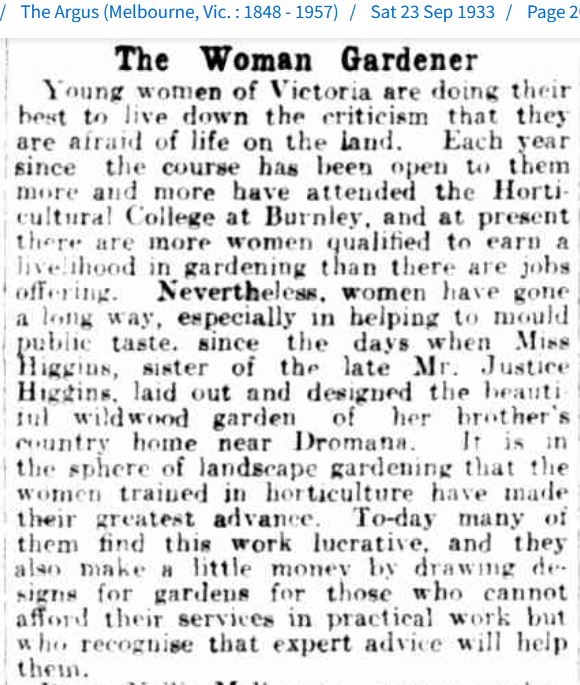


What a phenomenal insight into the question I posed about Women in Gardening and to find Betty mentioned within it, wow!
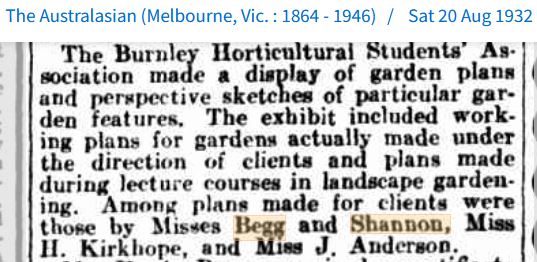
My search for Begg and Shannon brought up the name of “Sylvan”. It wasn’t long before I could confirm that it was the name of Betty and Mollie’s business and they were operating it from the grounds of their old school, Ruyton.

Then, incredibly, I just happened to check Ancestry, and my cousin Tony had this amazing photo of Mollie and Betty working together, presumably in their nursery.
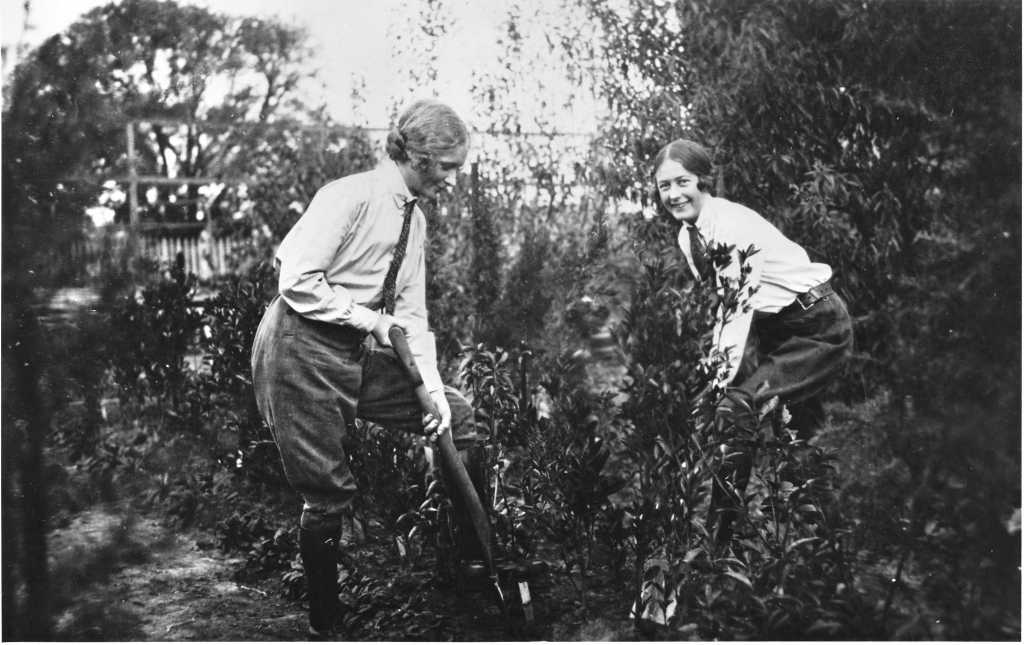
Figure 115: Courtesy of Ancestry.com.au, Begg & Reilly Family Tree
Generously shared by Tony Begg, (Cousin)
Betty and Mollie are pictured here in the unofficial uniform of the 1920s and 30s that female students were wearing at Burnley, jodhpurs, shirts and boots. https://gardendrum.com/2016/01/18/strewth-women-gardeners-with-no-chaperone/
This link above is to a really interesting article by Sandi Pullman titled, “Strewth, Women Gardeners, with no Chaperone!” It is a great read and gives even more insight into the subject of women trying to break through that male dominated professional ceiling at the time.
Our next discovery relates to Maude and shows she was still hard at work for the Children’s Hospital auxiliary.

Wow, another name for the house. “Strontian“. There is a family link here that I have discovered but it is a bit of a brain teaser.
So Strontian is the town in Scotland where William’s, aunt, Helen Macvean, née Begg (his father’s sister) lived with her husband, the Rev. Duncan Cameron Macvean. The Rev. Duncan was the minister of the Presbyterian church there.
Now here is where the brain teaser comes into play, the Rev. Duncan is brother to John Hugh Macvean, father to Annie Begg, née Macvean, William’s mother. This means that William and Annie his mother, share the same Aunt and Uncle, Helen and the Rev. Duncan just from different branches of the family. Are you still with me?
Next, I managed to find another article for William too.
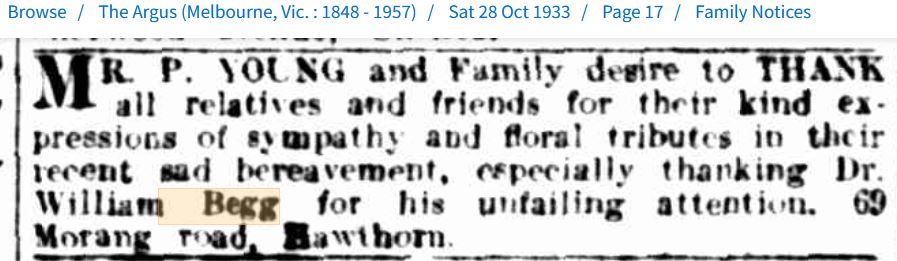
Mr P. Young was mourning the loss of his wife, Elizabeth.

The next article I came across for 1933 was a note announcing a new home and surgery for John and Mollie in Korumburra.

I found the intersection on Google Maps, but it is impossible to know which corner was theirs without a number. Only two options remain from the look of this photo.

Figure 119: Courtesy of Google Maps
William gets another press mention in December but they seem to be getting less frequent. He is in his early 60s by this stage so was probably slowing down his work with the practice.

Mrs Stevens was mourning the loss of her husband, Thomas Stevens.

We end the year with the big news for the family, Betty and Ernest’s wedding at Scots Church in Collins Street in the heart of Melbourne. There are no wedding photos provided for them unfortunately.
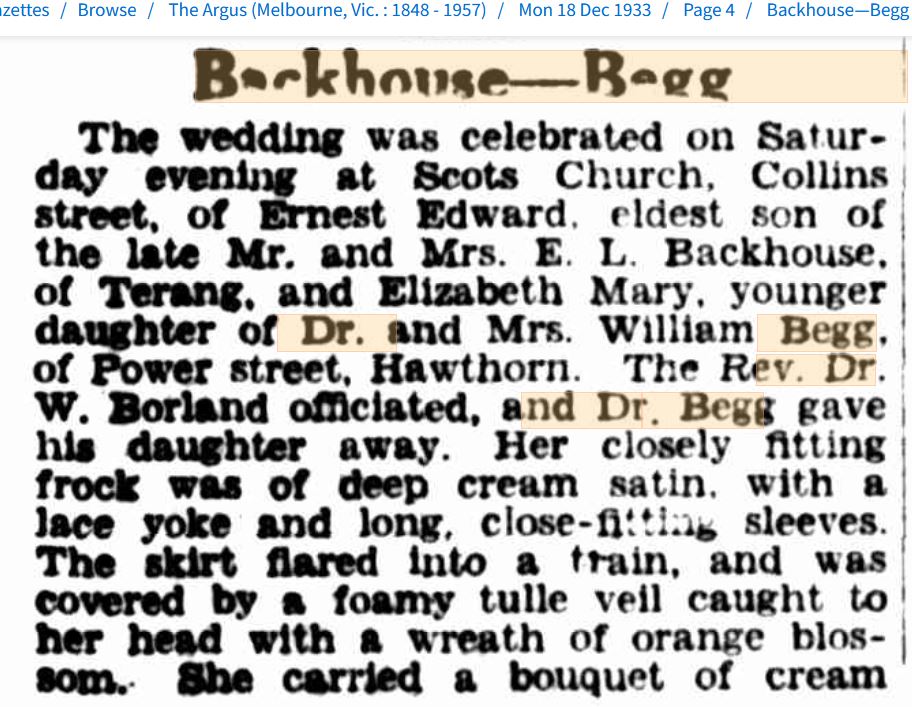

Below is the church pictured the year after their wedding in 1934, so this is what they would have seen for their big day.
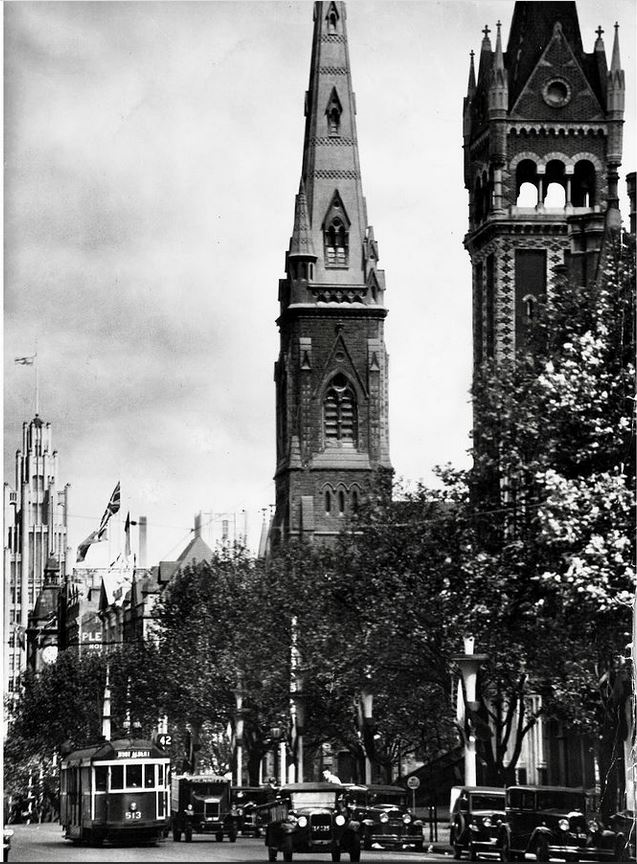
Figure 122: Courtesy of Instagram
https://www.instagram.com/heraldsunphoto_retro/p/C6nmjDYPQjX/
How lucky for us, thanks to Tony Begg, once again, we get to see a photo of Betty and Ernest together. He had a photo shared in his tree which is actually a still taken of them from an old home movie.

Figure 122a: Courtesy of Ancestry.com.au, Begg & Reilly Family Tree
Generously shared by Tony Begg, (Cousin)
And then in a completely random find, Ernest makes an appearance on an old Commonwealth Government sign for “The Maribyrnong Explosives Factory”.
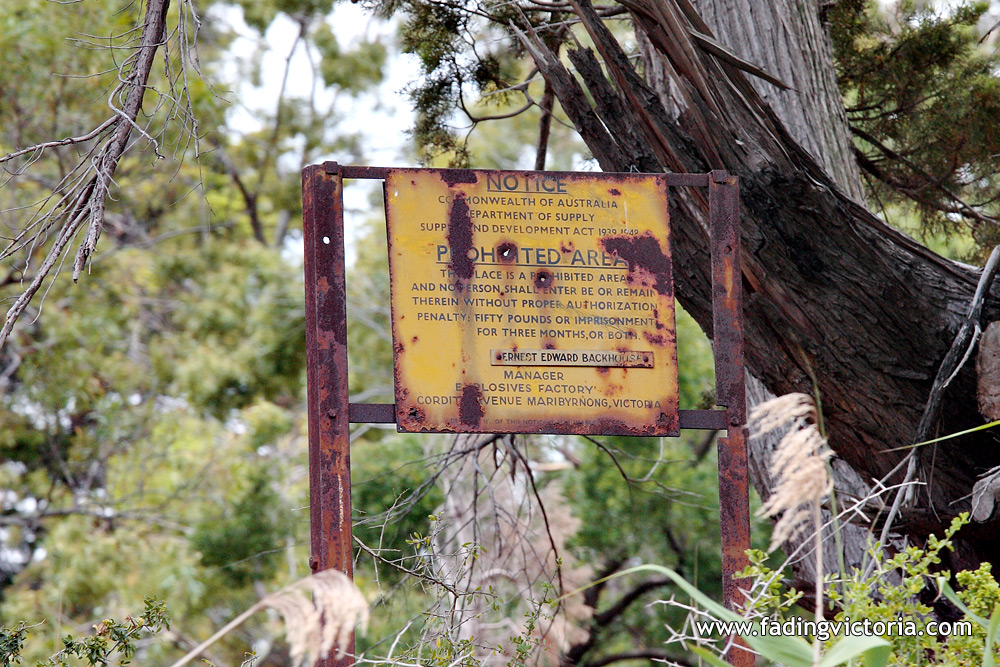
http://www.fadingvictoria.com/image/20131123XF9N4515/
The heritage-listed factory was established between 1909 and 1912 and was the first Australian Government explosives factory responsible for manufacturing cordite for ammunition shells and explosives. https://vhd.heritagecouncil.vic.gov.au/places/125567/download-report
I can only assume that Ernest’s military background placed him in a good position to take on the role of manager of the site.
My next find relates to Maude again, noting that she had been ill at the beginning of 1934.
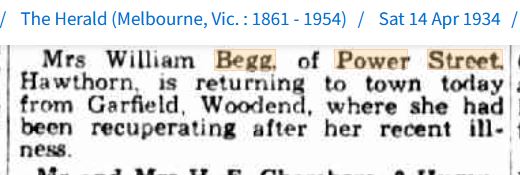
There are numerous mentions in Trove of people attending “Garfield” at Woodend in the 1920s and 1930s for a holiday or to recuperate from some ailment. I found one mention on Trove printed in 1944 giving a brief history of Garfield. No photo again, unfortunately.

William gets another mention this time from the Rosenthal family.

I found the details of their son, Eric’s accident. He was spending the Easter holidays in the rural town of Toora when this happened.

Our next find is from 12 months later and is what I suspect today would be considered, bizarre as all hell. Results from a poll on what was the favourite Gilbert and Sullivan opera at the time.
Luckily for us, it allows us to hear William’s voice as he shared his votes in a letter sent to “The Argus”.
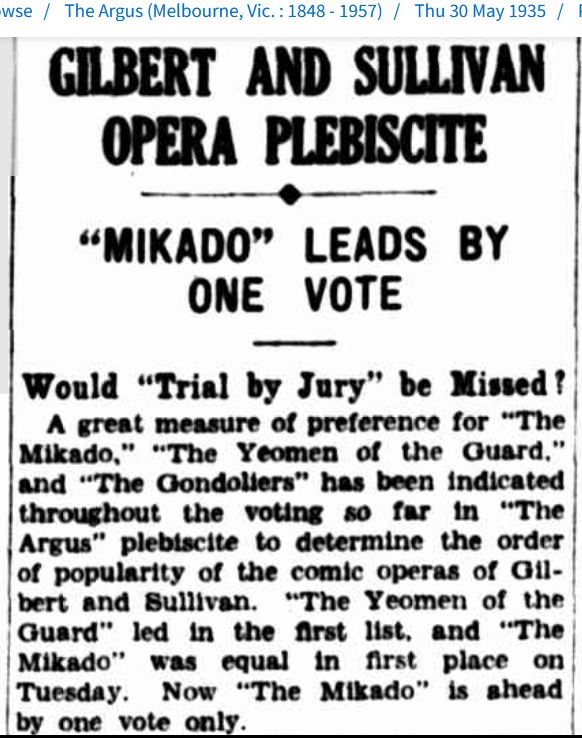

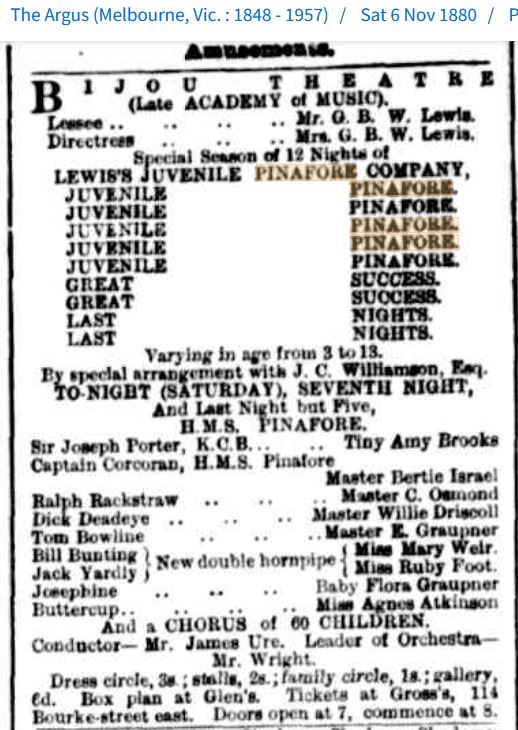
I couldn’t help myself but I went looking and I’m fairly sure that I found a couple of notices about the juvenile production of “Pinafore” that William mentions he saw when he was a child.
I mean what a time we live in. This is a memory that William had of a show he saw 50 years earlier from the time of his reminiscing, which itself, is almost 90 years ago and I found it online within 20 minutes of searching. How lucky and like I always say, thank you Trove!
And here is a mention of the production in the local press of Hamilton where William was living and it looks like it might have toured there. Maybe this might be how William was able to see it.

We next pick up the family in the 1937 Electoral Roll listing. Maude and William are still at 124 Power Street and Margot makes an appearance again and is still listed as working as a teacher. Again I’m wondering if it was Ruyton she was working at.
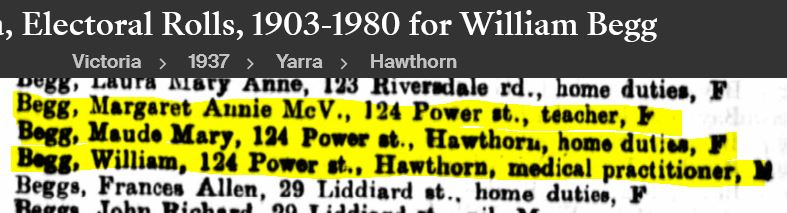
John and Mollie are now going on five years at their new house in Radovick Street.

This next article is the very last professional mention that I can find of William in Trove.

It was Mrs Attenborough’s husband, Rippon who had passed away.
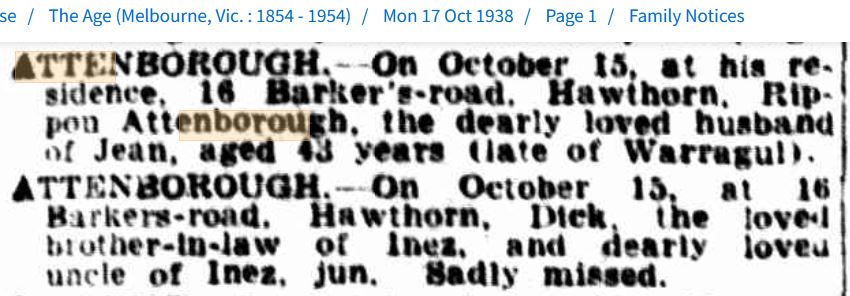
Then after ten years in Korumburra and for the second time in his life, John moves back to Hawthorn. I’m presuming it was with Mollie as well even though she isn’t mentioned.
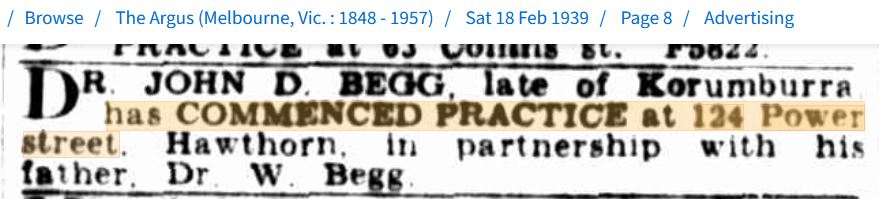
I wonder what necessitated the move? Was William’s functioning deteriorating or could he just not keep up with the rigors of a city practice anymore. William was 71 years of age at this time and Maude was 66.
Perhaps it was that there just wasn’t enough work for John in Korumburra or that he and Mollie were sick of being away from Melbourne, their family and friends.
We next jump to 1942, Margot, Maude and William are still at 124 Power Street and William is still listed as working as a doctor. He is now 74 years of age and Maude was 69.
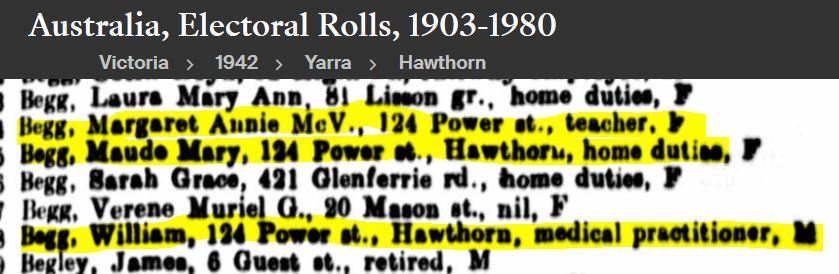
It is interesting to note that John and Mollie were not living with them, they were living in Glenferrie Road. They had two young sons by this stage under 10 years of age, Simon and Andrew.

This is 64 Glenferrie Road in 2022. I can’t be sure that it is the same property that Mollie and John lived in as this end of Glenferrie Road is in Malvern and not Kew. I suspect that Kew was a collective name for the Municipal district at that time and it is in actual fact their house.

Figure 131a: Courtesy of Google Maps
Trove also has many examples of the mundane. I wonder what the purpose of listing newspaper subscriptions was for?
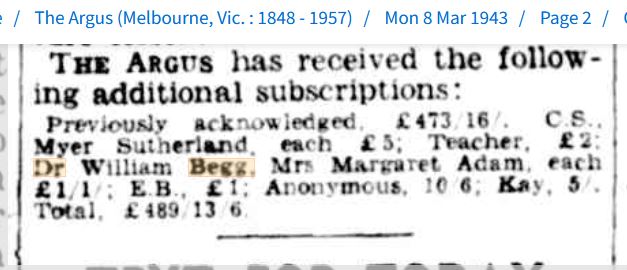
Then just a few days short of reaching her 44th birthday, Margot passes away. I don’t have a death certificate and there is no note of the cause of her death that I can find so far, so I’m uncertain as to what she actually died of.
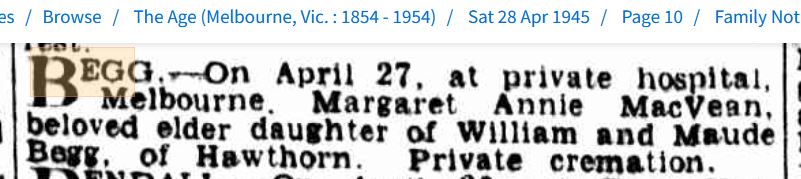
I can only imagine that it must have been devastating for Maude and William to lose their daughter at such a young age. I did a quick scan of the Ruyton yearly handbooks and can find no mention of Margot’s passing, so I’m thinking now that perhaps she didn’t work at Ruyton with her aunt Hilda.
We next jump to 1949 and after 35 years we find Maude and William are no longer living at 124 Power Street. Wow, the end of an era for the family. They were listed as living at 13 Wrixon Street in North Kew.

William is noted as still working as a doctor despite the fact that he is now 80 years of age.
Also, It looks like the house that Maude and William moved to is still standing. This shot below is from 2019, it gives the best view of the house out of the ones available on Google. It still looked like this in 2021.

Figure 134a: Courtesy of Google Maps
Here is a map below to show where everyone was in relation to each other. You will note how close 13 Wrixon Street is to Ruyton. Perhaps the move was so that Maude and William could be closer to Hilda in case they needed assistance. Mind you Hilda herself is in her early 70s and just about to retire from Ruyton.

64 Glenferrie Road where Mollie and John were living is the bottom pin marked in yellow.
Then thirteen days short of their 50th wedding anniversary, the worst thing happened for William, Maude passed away.

Maude’s funeral was held two days after her death on the 17th of April.
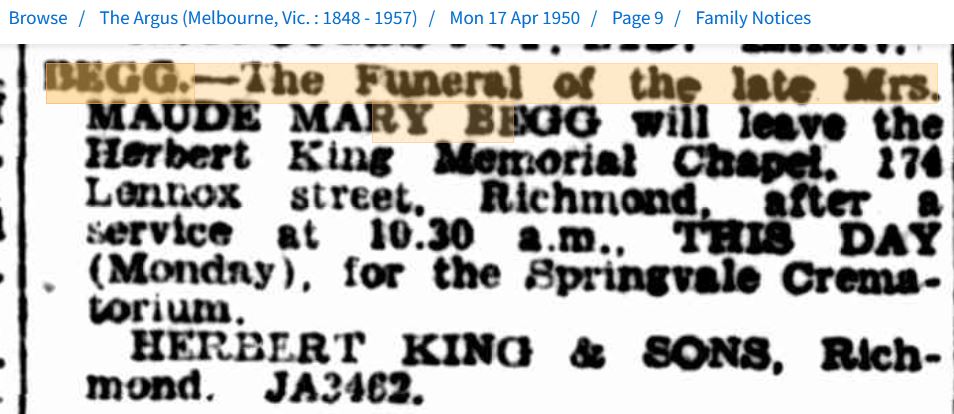
The Richmond and Burnley Historical Society had one photo of the chapel online. This is where the family and Maude’s friends would have gathered that Monday morning to send her off.

Figure 137: Courtesy of the Richmond and Burnley Historical Society https://www.facebook.com/RichmondBurnleyHistoricalSociety
The facade of this great old building still stands but now houses a block of luxury apartments within it.

Figure 137a: Courtesy of Urban.com.au
https://www.urban.com.au/buildings/herbert-king-172-lennox-street-richmond
On our visit to Victoria in November 2023 I had the opportunity to visit Springvale Crematorium where Maude was headed for after the funeral. Unfortunately, I wasn’t aware that Maude’s ashes were resting there at the time. I did find out, though, it would have made no difference knowing this. Maude’s listing in the “Find A Grave” database explains why.

https://www.findagrave.com
Maude’s remains were scattered at the cemetery. The Crematorium staff informed me, that at the time Maude passed away, they didn’t inter the ashes in walls and that they had several garden sites throughout the property where people’s remains were just scattered. No records were kept of where the scatterings took place so it is impossible to say where Maude’s remains are.
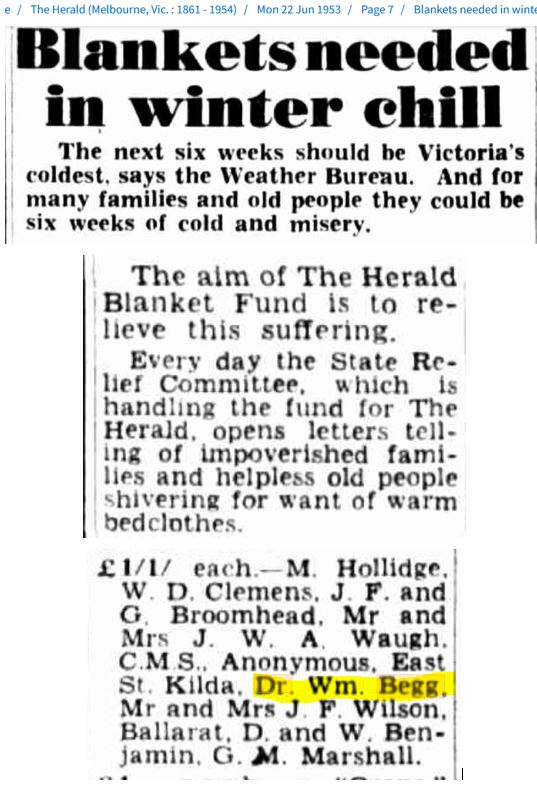
This article following is the very last mention I can find of William in the press. It is from 1953 and he is noted as donating money to “The Herald” blanket appeal.
The next find is the Electoral roll listing for 1954 and William’s last official appearance.
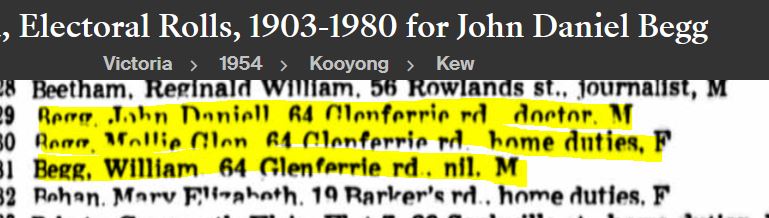
William, who was 86 years old at the time, has moved in with Mollie and John and is obviously retired. There are no electoral roll listings for 1950-1953, so I’m uncertain as to when William moved, but I think we can assume that he needed help taking care of himself.
Hilda is still kicking on and I found her in the electoral roll listings. Interestingly even though it is two years since she has retired from her position as headmistress at Ruyton she is still living on-site.

Unfortunately, there are no further records in Trove that mention William but details shared on Ancestry.com.au confirm for us the next part of William’s story, his death.

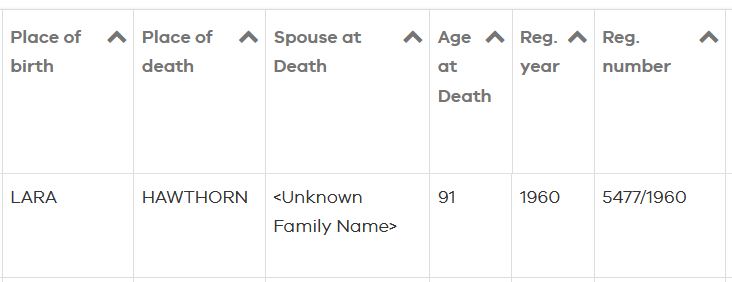
At the impressive age of 91, William passed away on the 29th of April 1960. There is no mention of his death, his funeral or even an obituary that I can find at this stage.
I was able to find his death registration on Births Deaths and Marriages Victoria at least.

And then the “Find A Grave” site, once again confirmed what happened next.
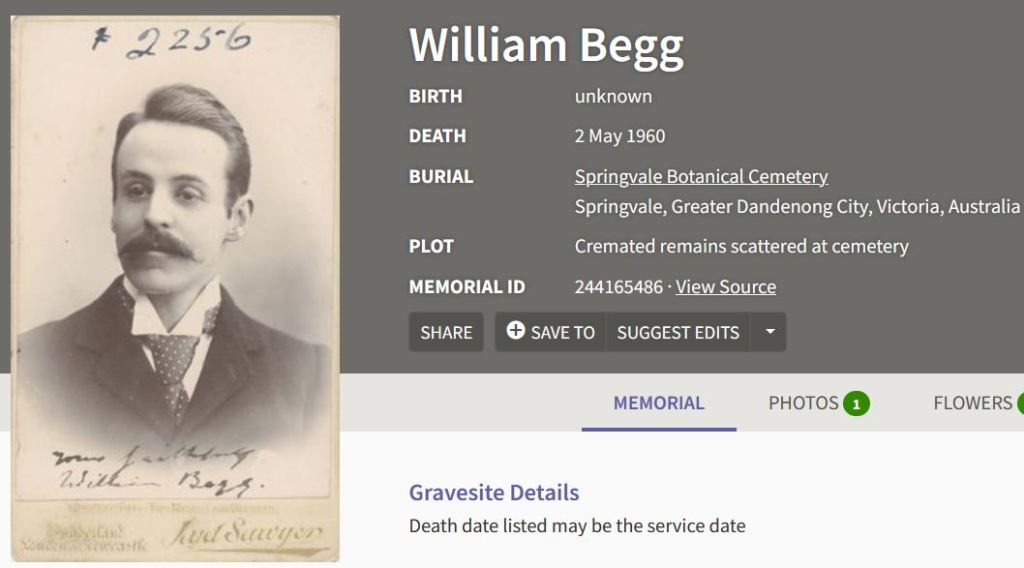
https://www.findagrave.com
William’s remains were scattered at Springvale Cemetery just like Maude’s. It was ten years after Maude’s passing but hopefully, they were scattered in the same place.
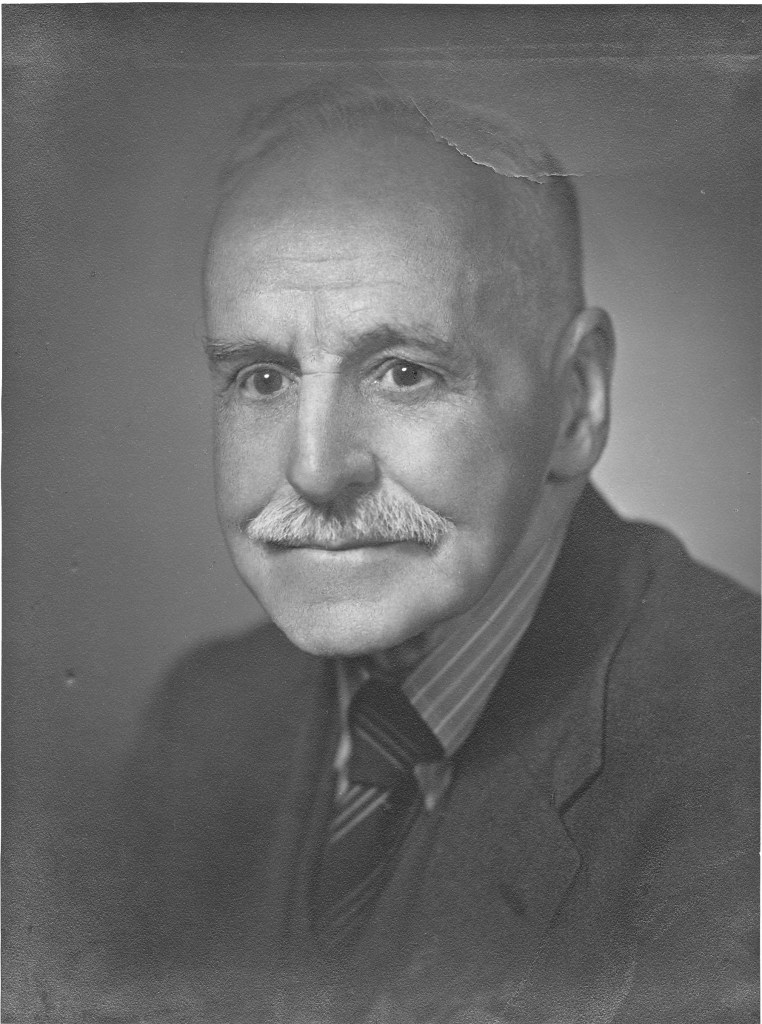
Figure 145: Courtesy of Ancestry.com.au, Begg & Reilly Family Tree
Generously shared by Tony Begg, (Cousin)
I know we have come to the end of William’s life story but just as I was about to finish proofreading and editing this post, this next gem of an article appeared in Trove. I say gem as it shows a direct link between William and my branch of the family, not just a hoped-for connection.
This article was not saved in any of my lists on Trove so I know I had never seen it before. It describes the wedding of my great aunt, Margaret Ann Macvean (William’s first cousin) to Mr John Smith Barnet in 1904.
It also includes a list of guests and the gifts that they gave to the couple and it is a who’s who of my family. My 2x great-grandparents, my great-grandparents, my 3x great-grandmother and all of my great aunts and uncles from this branch of the family and look who else I found on it.

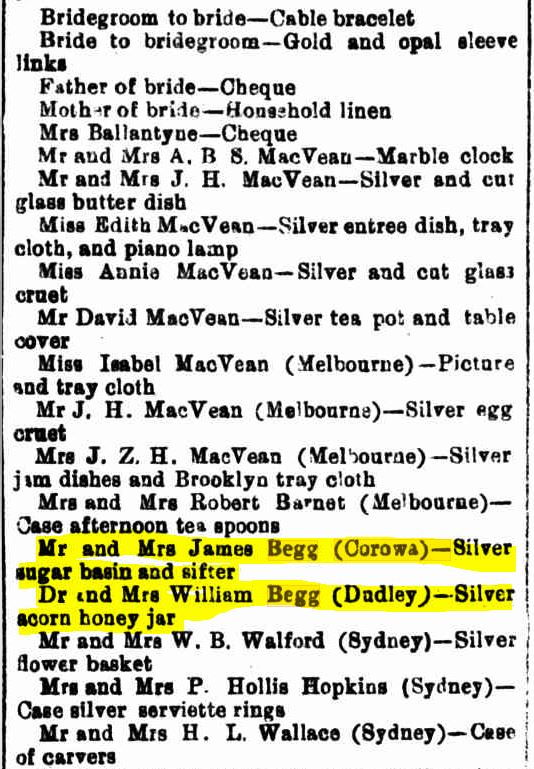
I so hope it means that James and Bella and William and Maude were actually at the wedding at Howlong but if not, at the very least it shows that they were still very much part of each other’s lives.
And thanks to another generous cousin, Tony Edwards, we have a photo of Margaret and John’s wedding party at Howlong. This is a photo of William’s aunt, uncle and cousins apart from the best man, John McPhee but he does go on to marry one of William and Margaret’s other cousins, Isobel.

Figure 147: Courtesy of Ancestry.com.au, tonyedwards57 Family Tree
Generously shared by Tony (Cousin)
Pictured left to right: Miss Edith Macvean (Sister of the Bride), Mr John Claude Mc’Phee (Best Man), Mrs Jessie Macvean (Mother of the Bride), Miss Jessie Macvean (Niece), Mr John Smith Burnet (Groom), Mrs Margaret Ann Burnet, née Macvean (Bride), Mr David Hunter Macvean (Brother of Bride), Master Colin Cameron (Nephew), Mr Alexander Macvean (Father of Bride) and Miss Amy Davina Macvean (Sister of the Bride)
Perhaps William, Maude, James and Ella are standing behind the photographer with the other guests watching the wedding party sit for this very photo.

 JOHN'S FAMILY HISTORY