
Still Exploring the Victorian Connections
The tour continues. It is still Thursday the 2nd of November 2023, we have just finished at Springvale Crematorium and now moving on to Cheltenham Cemetery.
I had two family members to visit here. My 2x great-grandaunt, Maud Mary Russell Brookman. Maud was my 2x great-grandmother’s sister and aunt to the Cox sister’s we discussed in Part 3 of these posts.
The other person was my 2x great-grandaunt by marriage, Alice Victoria Maude Parsons. Alice was married to my 2x great-granduncle, James MacMillan Ballantyne, brother to my 2x great-grandmother, Jessie Davina Ballantyne who married Alexander Macvean. You might recall that Jessie and Alex are the subjects of the Korringal posts on this blog.
The staff were incredibly helpful here as well. They provided me with a map marking out the rows that both were resting in.

They even provided me with a list of names of the other people that were buried with them.
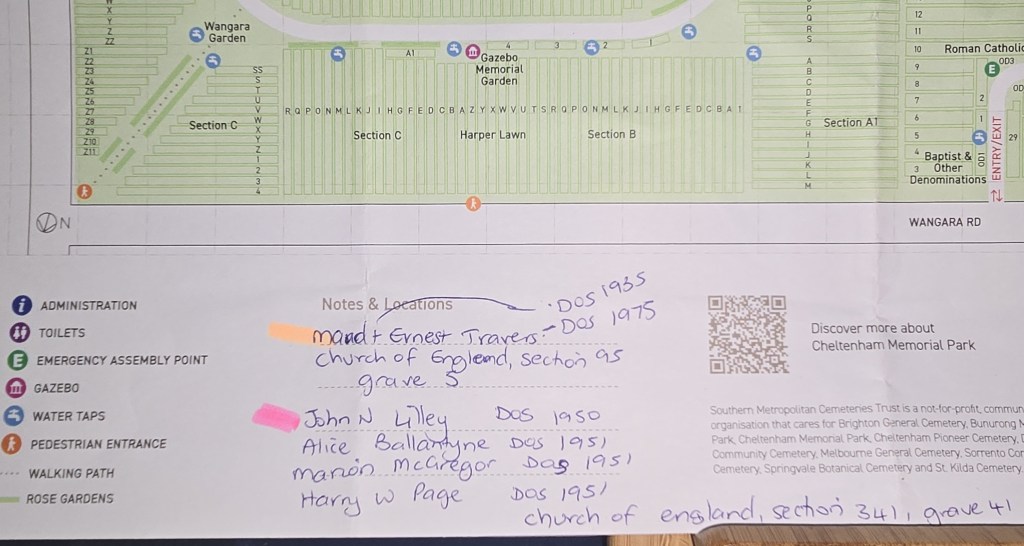
This is becoming a regular occurrence with me now: finding more people than expected in the one burial spot. Alice’s is a bit of a full house, by the looks of it. The DOS written next to the names above refers to the Date of Service for each burial.
I went off to find Maud and Ernest first. Below is a photo of the Church of England, Section 95 where they are buried.

Grave 5 was an absolute dream to find as it had a fantastically clear headstone beaming out at me.
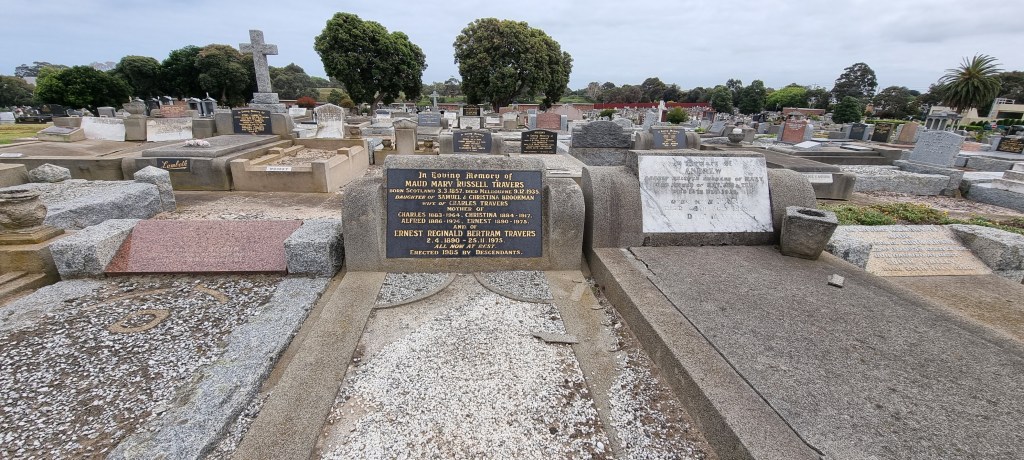
And the reason it had this wonderful headstone?Well it was all thanks to a group of descendants who organised it’s installation back in 1985.

And talk about jammed packed with family history information, what a find.
First, it confirms that Maud is buried here with her son Ernest. Next, it lists Maud’s marriage to Charles Travers and their children. Then, the absolute boon for me is that not only does it list Maud’s parents, Samuel and Christina Brookman, my 3x great-grandparents, but Maude’s second middle name is given, which confirms her mother’s maiden name, Russell.
I just couldn’t believe it when I stood there reading it. Thanks so much to those descendants, that is exactly what you want to see on a headstone, the only thing missing, a photo.

Now to Maud’s story which I have been able to piece together a little bit. First, her birth. Some family trees in Ancestry.com.au had her down as being born in Melbourne in 1860 but a quick search of the Victorian Births Deaths and Marriages confirms there is nothing registered.
Most of those trees also had a listing for another daughter of Christina and Samuel Brookman, named Mary who was born in Scotland in 1857, which matches with the date on the headstone above.
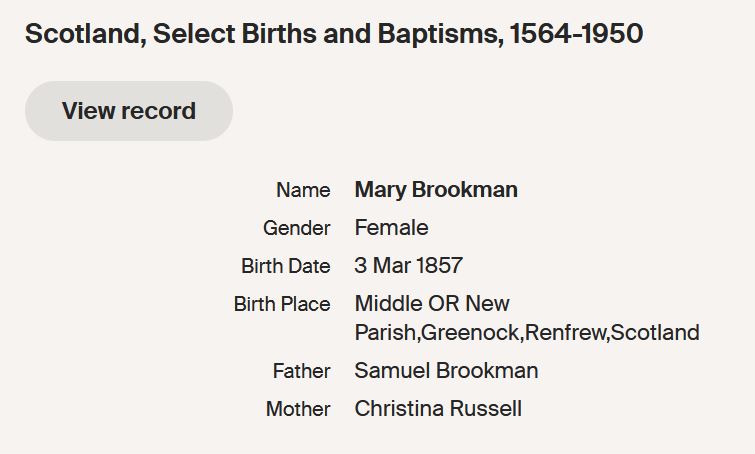
I suspect that this is actually Maud’s birth record as her full name is Maude Mary Russell and also, I can find no other details for a Mary Brookman in any of the family trees or in Trove.
If we take this as Maud’s birth date this means that she emigrated from Scotland somewhere between 1857 and 1860 as her mother Christina had her next baby, Christina, in Melbourne, Australia in 1860. Even though I don’t have a copy of Christina’s birth record we can be a bit more specific with the dating as Christina, the infant, passed away just 11 months after her birth, which means the family were here sometime between 1857 and January 1860.
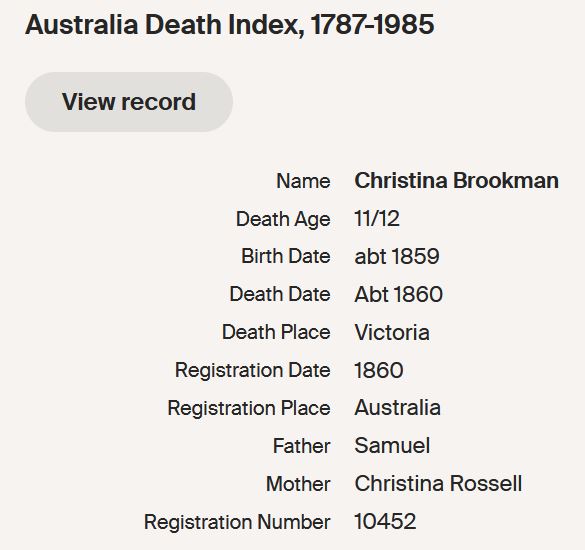
I can share that with what I have found out so far about Maud’s story, it was a pretty miserable and presumably frightening existence for her and the entire family.
I discovered when searching for information on Maud’s brother, William, some amazing history of the family that had been printed about them in regards to William being charged with Bush-ranging and being sentenced to be hanged. I know, bush-ranging and hanging?
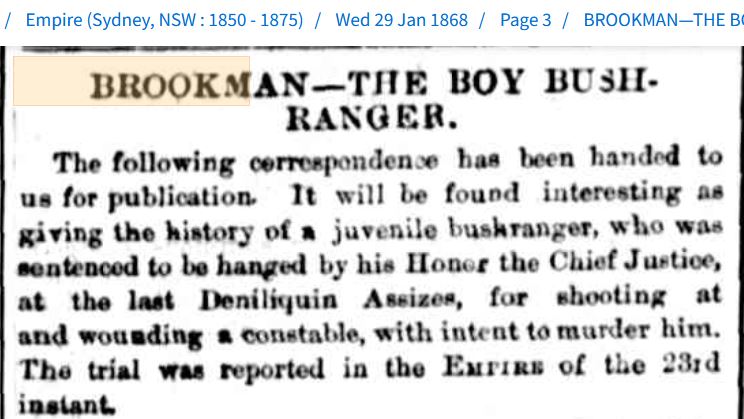
I have written about William, the boy bushranger before so won’t bring up the whole story here again as this is Maud’s story. But this article gives us a phenomenal insight into what was happening for the family at this time.
To set the scene, it is 1862. Maud, who is about five years old, is with her mother, Christina, her brother William, aged eleven, and their younger sister, newborn, Margaret. Margaret, whose birth was registered in Hotham, Victoria, dies about one month after her birth, and somewhere around that time, Samuel, Christina’s husband and the children’s father, deserts them all.
This extraordinary excerpt below is from the correspondence handed in for publication above(Figure 10 ). It further details what happened to Christina and the children after Samuel deserts them. It is written by the owner of the Inn where Maud’s mother Christina eventually gets a job.
“The Boy” is referring to Maud’s brother William.
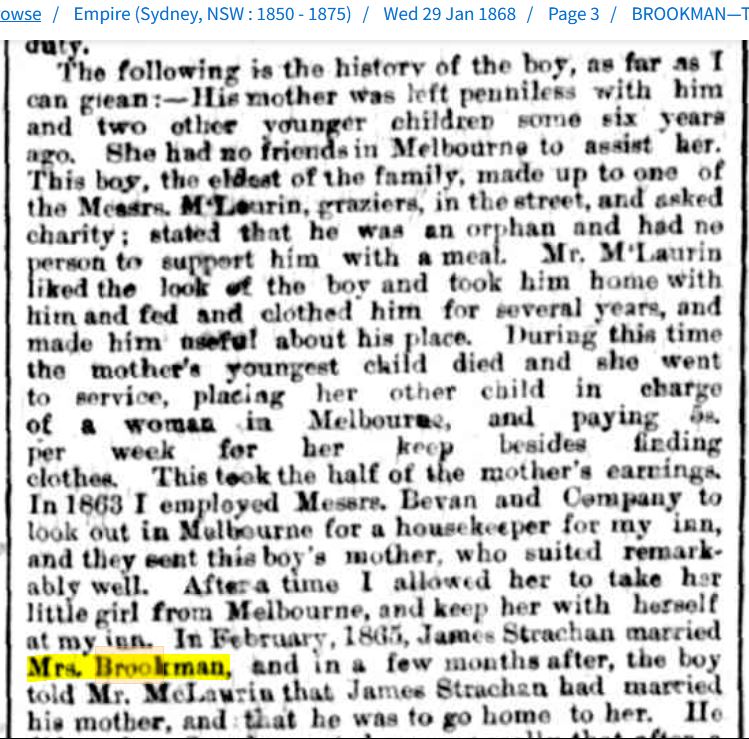
With the date of the article being 1868, we can work out that six years earlier puts us at the 1862 mark which matches up with Margaret’s death, which is also mentioned.
Maud is the daughter who is left with the woman in Melbourne and who is eventually allowed to join her mother Christina at the Inn where she is working. Even though it says that William also rejoined the family after Christina married James Strachan, he didn’t stay around long.
Apparently, James Strachan acted very “…coolly towards the boy” This led to William leaving and making a few disastrous decisions that led to him joining the Blue Cap bush-ranging gang and eventually being captured, tried and sentenced to death in 1867. (William was involved in a shootout with police and he shot a police officer through the hand.)
The person that was providing this information about the family to the paper was Mr John Smith the owner of the “Travellers Home Hotel” at Kyeamba.

This is where Maud was living with her mother Christina and as you can see from this advert, her new step-father James Strachan was listed as the proprietor of the Hotel at this time.
Here is a photo of the actual hotel from 2005. Yes it was still standing. This is the actual building they were all living in 159 years ago.
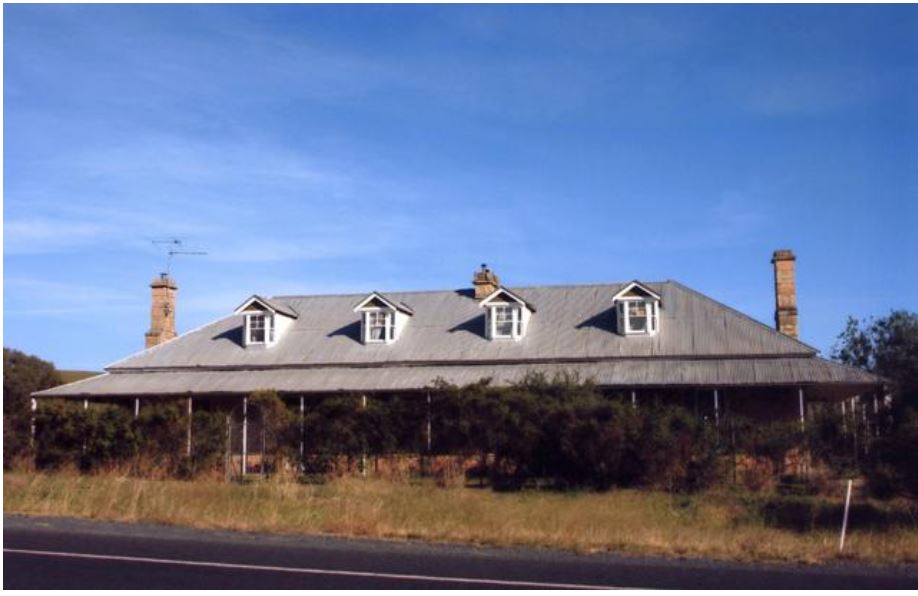
Figure 12: Courtesy of John Graham, accessed on GDAY Pubs.com.au http://cdn.gdaypubs.com.au/NSW/kyeamba/52109/former-travellers-joy-inn.html
This is where things go a bit dark concerning any information on Maud. She of course was only 11 years of age when this article above went to print. (Figure 11) I’m assuming she stayed with her mother Christina and step-father James Strachan in Kyeamba. Christina goes on to have another three children with James, all daughters.
Now there is a big time jump here as there is no information relating to Maud until 20 years later when she meets a young man by the name of Edward Charles Travers. He was an Englishman, only two years older than her and they married in 1882.

I have no idea where they married, apart from Victoria as most of the details for the registration on the Victorian Births Deaths and Marriages site are blank.
I checked the 1882 Sands & McDougall’s Directory (the White Pages of the time) and there is no entry for Charles or Maud for this year either.
We next pick them up with the registration of birth of their first child, Charles William Travers in 1882.

https://www.bdm.vic.gov.au/search-your-family-history
We can see from the registration that Charles was born in Williamstown, Victoria.
Williamstown sits about 14kms to the southwest of Melbourne city. It was Melbourne’s original shipping port, with ship mooring and repair facilities. https://www.victorianplaces.com.au/williamstown

At the time Maud and Charles were living there, Williamstown hadn’t even been proclaimed a town, that was to come in 1886. It had however developed from a largely rural farming area in the 1850s into a vibrant maritime hub thanks mainly to the prospectors passing through on their way to the goldfields. It was also home to the Naval Dock Yards. https://www.visitwilliamstown.com.au/history
I started looking for any specific mention of Maud and Charles in the area but without a street name, there is nothing to pin them to. Searching the Sands Directory provided no hits either.
I did however find some fantastic photos of Williamstown on the State Library Victoria site from Maude and Charles’s time that give us a great view of what it would have looked like for them.

Figure 15a: Courtesy of the State Library Victoria
http://handle.slv.vic.gov.au/10381/292945

Figure 15b: Courtesy of the State Library Victoria
http://handle.slv.vic.gov.au/10381/68940
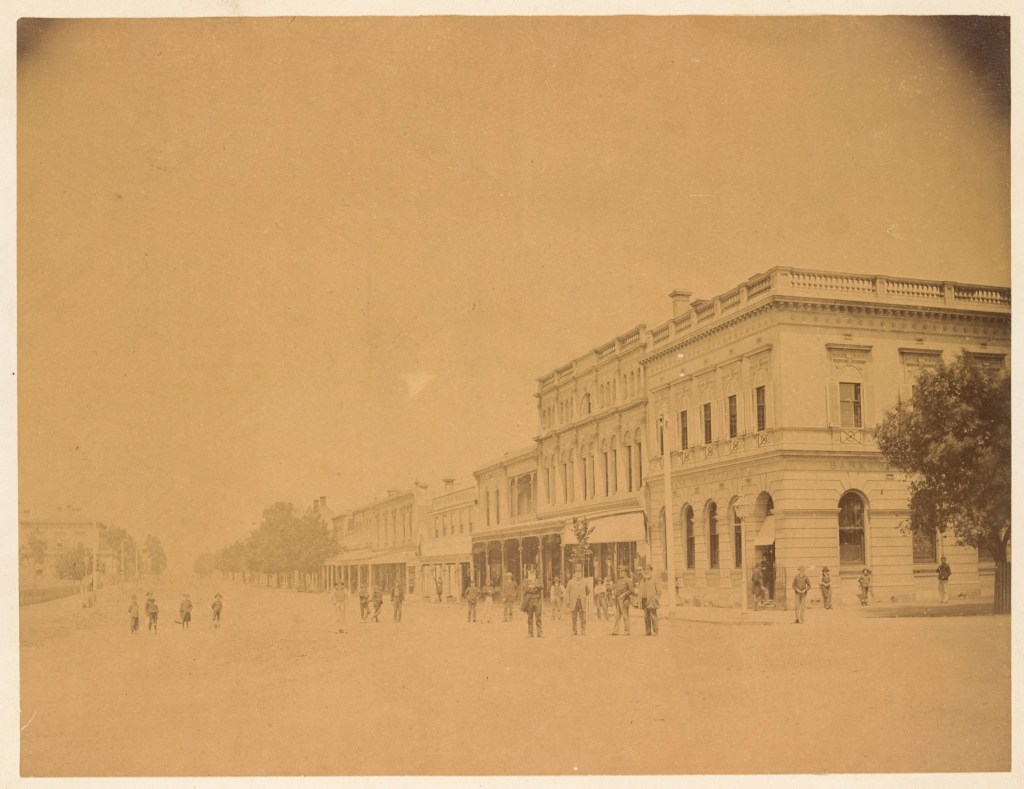
Figure 15c: Courtesy of the State Library Victoria
http://handle.slv.vic.gov.au/10381/292932
I then came across this notice on Ancestry.com.au from a Tasmanian Report of Crime list for March 1883.
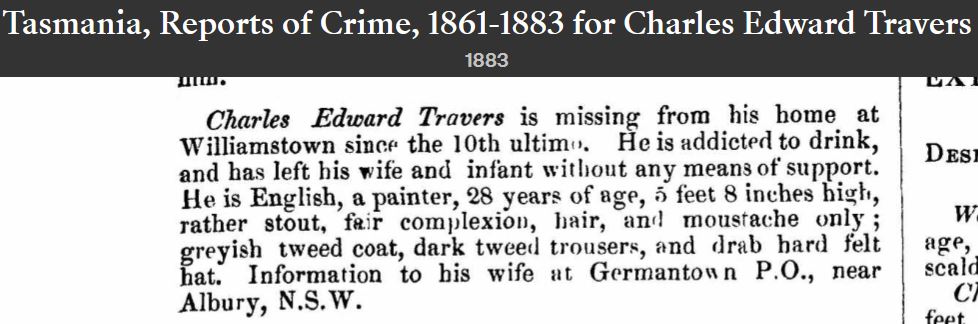
How sad is that! Married at the most, a year with a newborn and Charles abandons Maud and baby Charles with nothing.
This is also a case of history repeating itself. Maude’s father Samuel Brookman did exactly the same thing to Maude’s mother in the early 1860s.
I came across this rather poignant image when searching for photos of Williamstown. It is not Maud, but a young mother with a newborn, pictured in Williamstown. I could imagine Maud in this same position.

Figure 16a: Courtesy of the State Library Victoria
http://handle.slv.vic.gov.au/10381/4253098
It is also sad to see Charles described as “…addicted to drink.”
According to a little bit of reading I have done so far on the matter, alcoholism was a huge problem in the 1880s in Australia. When you jump online to find out why, there are lots of reasons provided but one of the main ones is that it was a cultural norm in Australia inherited from the time of colonisation. This norm had developed so that by the time Charles was struggling with the issue in the 1880s it was seen as just being part of male solidarity and part of the ritual of being a colonial male. https://dulwichcentre.com.au/articles-about-narrative-therapy/deconstructing-addiction/alcohol-in-australia/
The crime report above hints at how Maud handled this terrible situation. Remember, Germanton in New South Wales was where her mother Christina was living. By 1883, when Maude was there, presumably being supported by her mother, her stepfather, James, and one other sister, Isabelle, had already passed away.
It is a little hard to pin down exactly where they were in Germanton at this time as I can find no street name linked with them. I’m fairly sure they had moved on from the “Traveler’s Inn” (Figure 13). Land records published at the time confirm that this is the land, shown below, that James and Christina were allocated in the parish of Keajura, just 10 miles north of the Inn.

Figure 16b: Courtesy of the New South Wales Land Registry Services
https://hlrv.nswlrs.com.au/
I managed to find the area on Google Maps. You can see that the Keajura River follows almost the same path as the 1883 copy above.
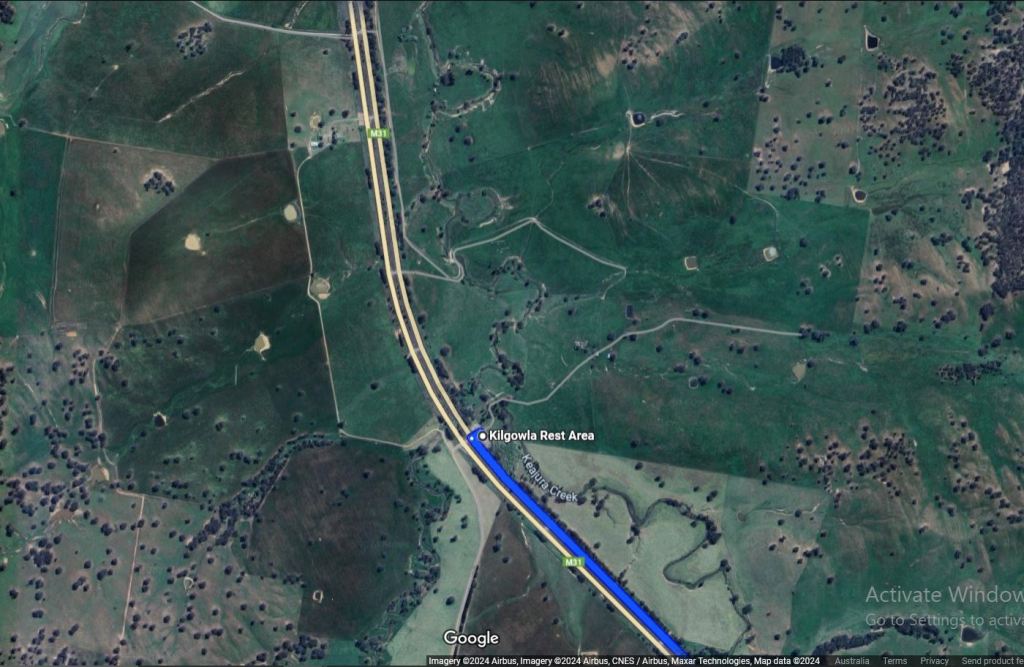
Figure 16c: Courtesy of Google Maps
I can’t find any mention of a resolution to the charge of desertion that Charles faced but what I did find was a mention of Charles in the rate book for the City of Collingwood. It is from 18 months later in October 1884.



No mention of Maud but when I checked out the birth records on the Victorian Births Deaths and Marriages site, look what came up in 1884 as well.

https://www.bdm.vic.gov.au/search-your-family-history
That is a record for the birth of their second child Christina Russell born in 1884 and registered in Collingwood. So I think it is safe to say that Maud and Charles reunited.
I found them listed in the Sands directory for Collingwood in Victoria and it actually gave us the street address this time.

Figure 19: Courtesy of the State Library Victoria https://find.slv.vic.gov.au/permalink/61SLV_INST/1dukq3j/alma9939666276107636
They were at 179 Wellington Street, between Peel Street and Stanley Street. The photo below shows this section of Wellington Street starting at Peel Street with the Sir Robert Peel Hotel.

Figure 20 : Courtesy of Google Maps
This hotel is not the one Maud and Charles would have known, this was built in 1912 after the original building that had stood there from 1857 was demolished. https://vhd.heritagecouncil.vic.gov.au/index.php/places/102801
I found the block on the Melbourne Metro Works plans from 1899.

Figure 21 : Courtesy of State Library Victoria
http://handle.slv.vic.gov.au/10381/120607
Wellington is at the bottom, Peel is on the left, and Stanley Street is on the right. When we zoom in, we see 179 Wellington Street.

I have been unable to find a photo of the actual property, but I did manage to find an image of the Medical Dispensary on the corner of Little Smith St and Wellington, which I have also highlighted above. It was taken at exactly the time Maud and Charles were living in Collingwood.
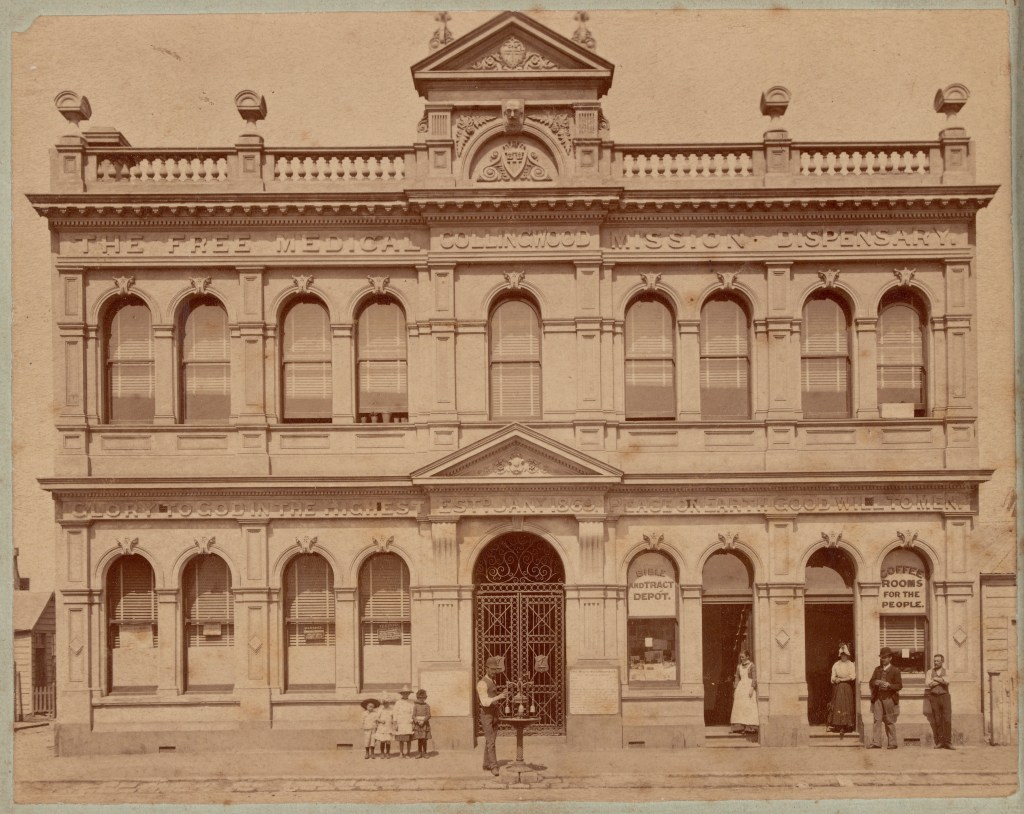
Queen’s Jubilee Buildings, 162 Wellington Street, Collingwood, Victoria, 1885
Figure 22: Courtesy of the State Library Victoria
http://handle.slv.vic.gov.au/10381/183899
This phenomenal building still stands today, almost intact.
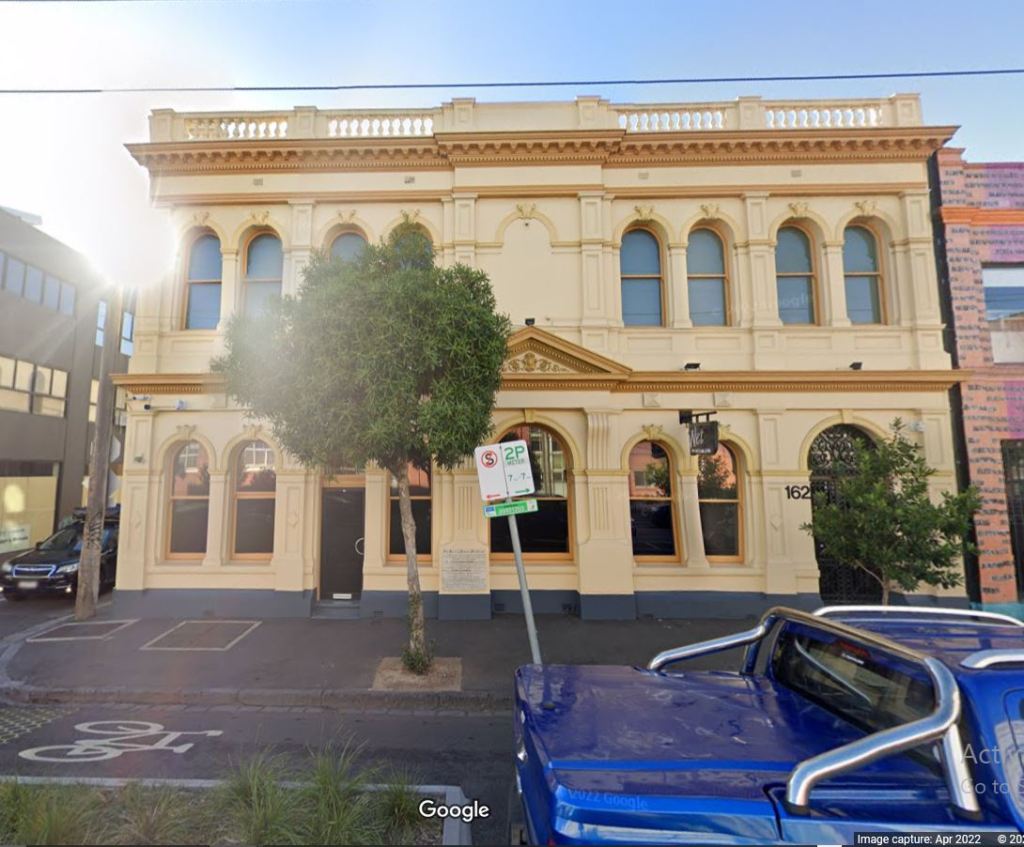
Figure 22a: Courtesy of Google Maps
Maud and Charles would have looked at this property from the verandah of theirs. Again, this is not Maud below but I found another photo of a woman and a baby on their verandah in Hoddle Street, Collingwood, just a couple of streets over from Wellington.

Figure 22b: Courtesy of Picture Victoria https://www.picturevictoria.vic.gov.au/site/yarra_melbourne/Collingwood/9004.html
I wonder if Christina had the chance to visit Maud like Grandmother Webb above and have her photo taken holding either baby Charles or Christina.
Our next find just confirms the cycle of misery the family were obviously on. Three years on from the first here is another warrant for Charles for deserting Maud and the children again.

These Police Gazette reports are fantastic with the detail they provide. This time an updated description of Charles. Still described as stout, with fair complexion, hair and moustache but now with side whiskers, a scar over the left eye and an anchor tattoo.
This is interesting as the anchor could indicate that Charles was a sailor with the merchant navy. It was traditionally given once a sailor had crossed the Atlantic successfully. Paradoxically it also represents a sense of stability which is something Charles was not providing at this time to his family. https://thedockyard.co.uk/news/every-tattoo-is-a-statement-but-what-do-they-mean/
The other interesting thing to note here from this police report is that Maud, Charles and the family had moved to Cambridge Street the next street over from Wellington. With the name of the cottage given, I was able to find this description of the property from 1860.

I managed to find one other mention of the cottage from 1886, exactly when Maud and family were in residence.

This one is fantastic as it gives us a street address. 183 Cambridge Street. I wonder if this advert was to try and get some sort of income coming in for Maud after Charles deserted her.
I turned to the Sands and McDougall directory again and this time I couldn’t find Maud and Charles listed but I did find the property, 183 Cambridge Street.


Sands & McDougall’s Directories, 1885,
Figure 26: Courtesy of the State Library Victoria
https://find.slv.vic.gov.au/permalink/61SLV_INST/1dukq3j/alma9939666276107636
I went back to the map of Collingwood again, this time focusing on Cambridge Street. I found the Cambridge Arms Hotel and started counting back.

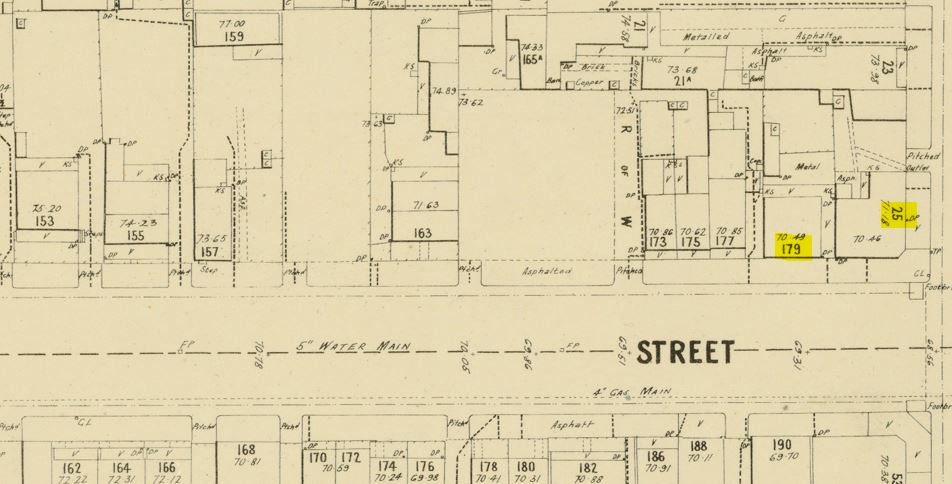
Unfortunately, 183 wasn’t there. You can see above, the last number on Cambridge is 179 and then it is number 25 Stanley Street on the corner.
The next Sands and McDougall directory was in 1890 and it showed what had happened, a number change.
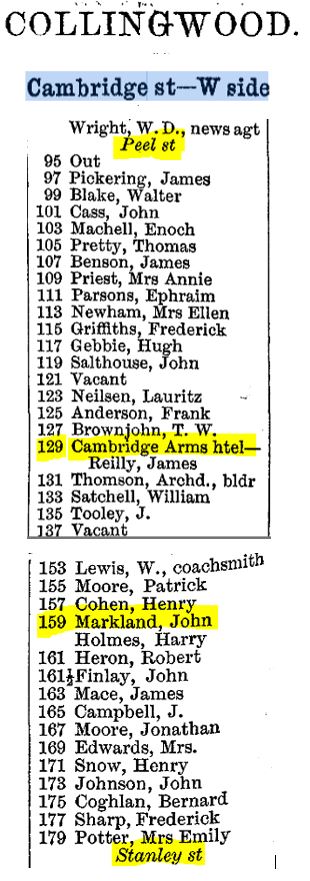
Figure 27: Courtesy of the State Library Victoria https://find.slv.vic.gov.au/permalink/61SLV_INST/1dukq3j/alma9939666276107636
I counted out the properties from the directory listing of 1885 and 1890 and they matched perfectly when counting from the Cambridge Arms Hotel. Tenby Cottage, the old 183 became 159 Cambridge Street. This is where Maud, Charles and the children were living from sometime in 1885, to 1886.
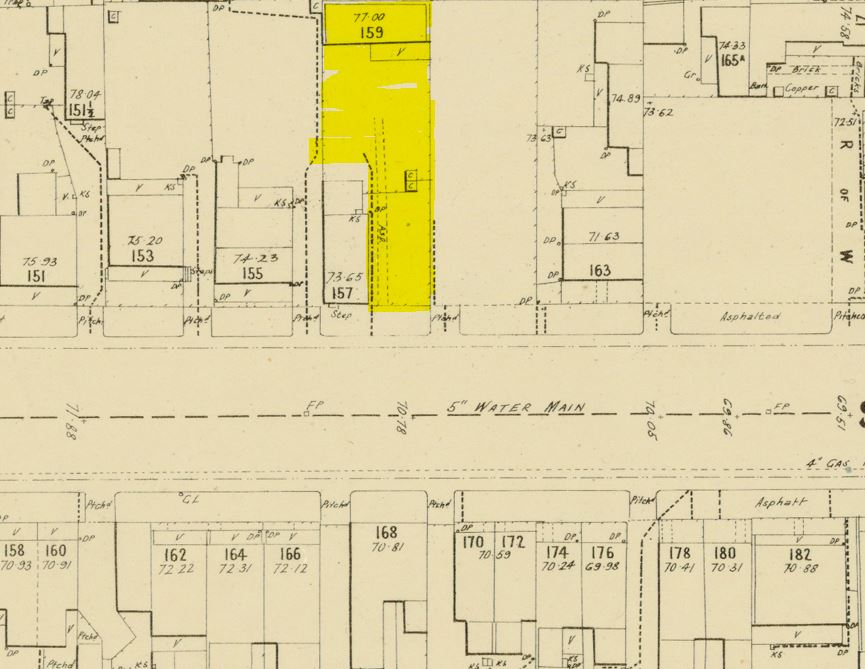
Again I was hoping to find a photo of the property but like the Wellington Street address, they just don’t exist. What I did find was this phenomenal sketch of the area from an old Foy & Gibson catalogue from 1930.

http://handle.slv.vic.gov.au/10381/370609
You can clearly see the Sir Robert Peel Hotel on the corner of Wellington and Peel Streets and then Cambridge Street is right behind that. You can also see that in the areas where 183 Cambridge and 179 Wellington Street sat, there are clearly huge warehouse buildings in their place.
This whole block from Smith Street on the left of the diagram to Wellington Street on the right is famous in Australian retail history. Just a year after Maud and Charles were there Foy and Gibson a huge manufacturing company started buying up the land in the area so that by 1912 over 200 workers’ cottages had been demolished to create the southern hemisphere’s biggest manufacturing hub at the time. The complex still dominates the area today but now houses apartments. https://collingwoodhs.org.au/resources/collingwood-history-plaques-project/former-foy-gibson-factory-buildings/
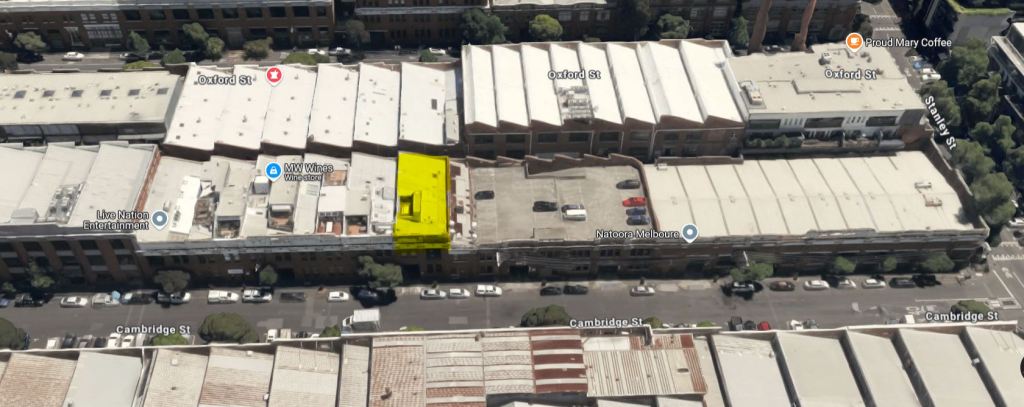
Figure 29: Courtesy of Google Maps
And here is 179 Wellington Street.
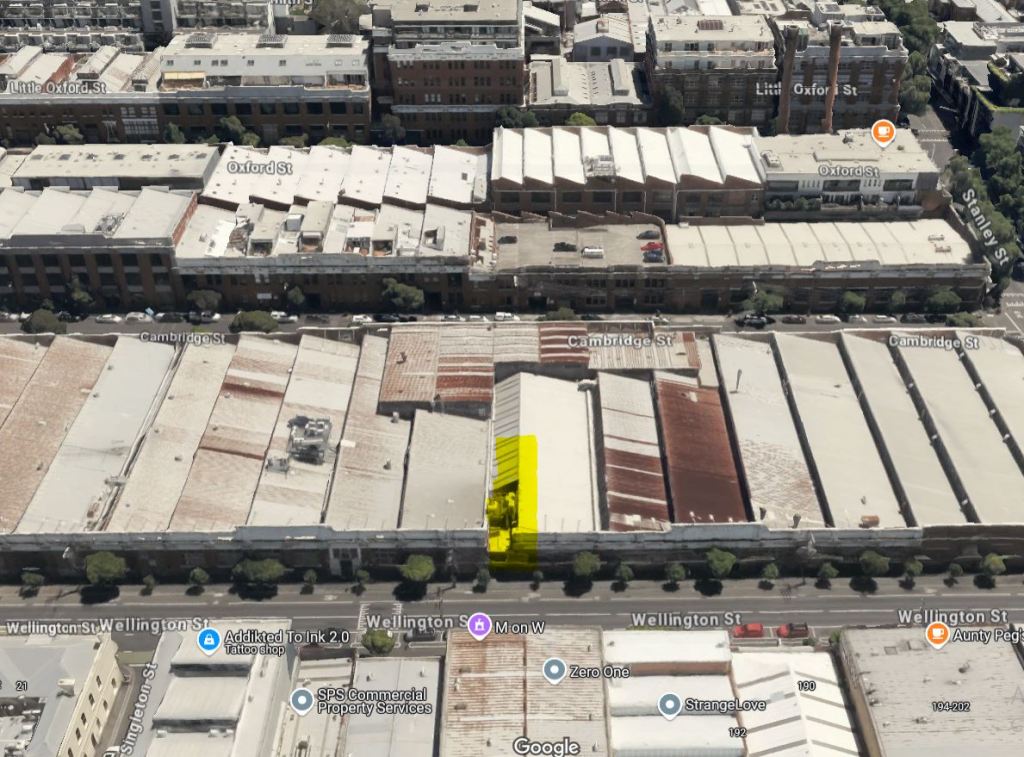
Figure 30: Courtesy of Google Maps
I found another version of the police report about Charles’s next warrant (Figure 23) and it reads that it was issued by the Germanton Bench and that Charles deserted Maud at Germanton.

I take this to mean they must have been visiting Maud’s mother Christina again and I think I worked out why Maud was back in Germanton. Charles disappeared on the 3rd of February, just three months before the birth of their third child, Alfred Victor.
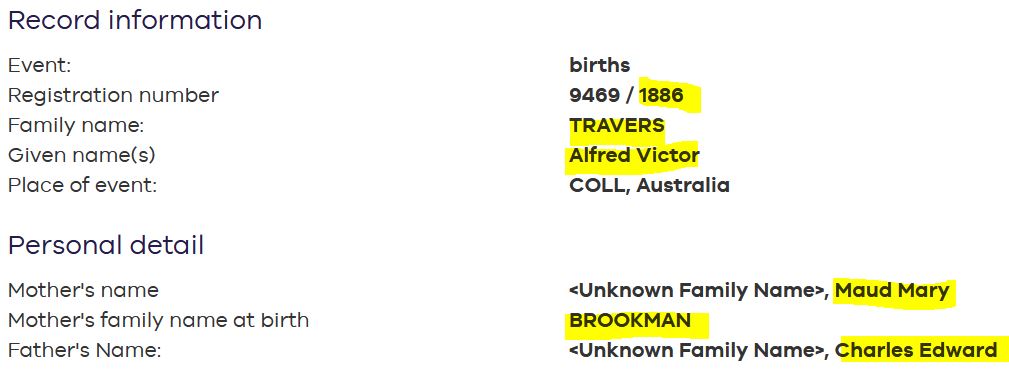
https://www.bdm.vic.gov.au/search-your-family-history
Yes, according to information on Ancestry.com.au Alfred was born on the 2nd of May 1886. This means that Maud had three children under the age of three years of age at this time and a husband who kept deserting her just before or after their births. You will note that the family is still listed as living in Collingwood.
Obviously, Charles makes it back to Maud and the children because four years later they are registering the birth of their fourth child, Ernest Reginald Bert.
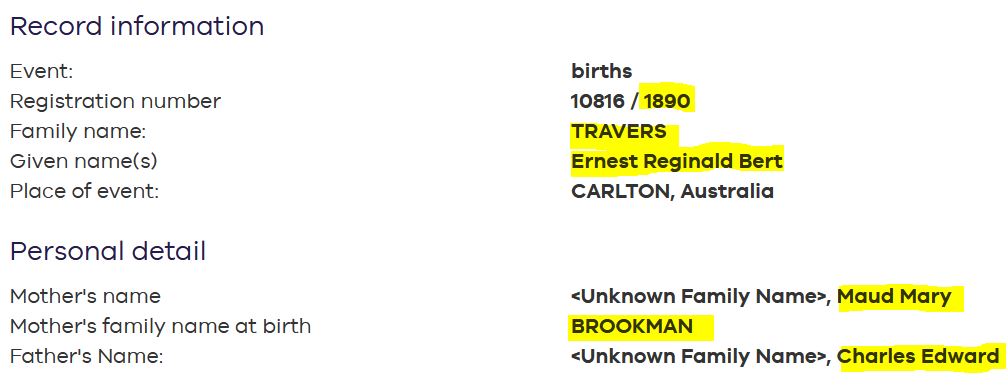
https://www.bdm.vic.gov.au/search-your-family-history
The registration confirms that the family had moved again, this time to Carlton. This may have been because Foy and Gibson were already developing the site in Collingwood and may have already demolished Tenby Cottage where they had been living four years earlier.
I can’t confirm exactly where they were in Carlton as neither Maud nor Charles’s name appears in the Sands Directory for 1890.
We next pick Maud up in a mention of a Criminal Court matter where a young man by the name of David Davis was charged with stealing a quantity of bedding from Maud.
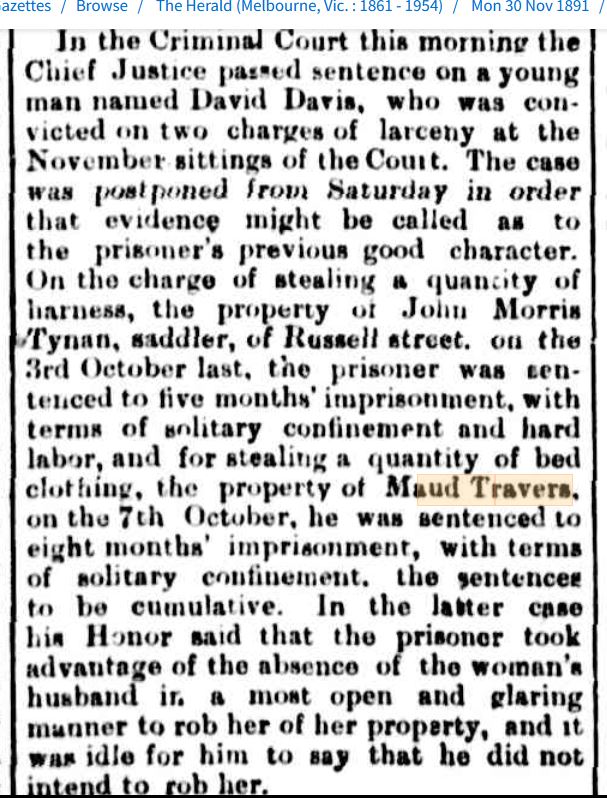
This article gives us a clue as to what might have been happening to Maud and the family. The fact that it was a quantity of bedding that Davis was accused of stealing from Maud suggests that she was renting out a room for income again and that would be because Charles had deserted her again as he is clearly described as being absent from the home.
The next notice is just two months after the one above. It is a request for Maud to make contact with someone with the initials of J.G.

I don’t have a clue as to who this might be but hopefully, it was someone that was offering Maud some support with the effects of this tumultuous life she seemed to be living.
Our next find, Charles listed in the Sands Directory again, this time for 1892. This would suggest that he and Maud had already moved the family from Carlton sometime in 1891 to this new address as I imagine the directory would have had a cut-off time the year before for printing.

I went back to the Metro Maps and found 139 Latrobe Street.

Figure 37: Courtesy of State Library Victoria
http://handle.slv.vic.gov.au/10381/115996
It sat twelve doors down from the corner of Russell and Latrobe Streets and was next door to the Young Women’s Christian Association Hall.

Here is 139 highlighted on the map right next door to the mission.

I thought being next to the Y.W.C.A might help with tracking down a photo of the building but no, nothing.
I even reached out to the Y.W.C.A. to see if they had an Archivist or Historian that I could talk to and they said they didn’t. The best they could offer was directing me to a book on the history of the Y.W.C.A
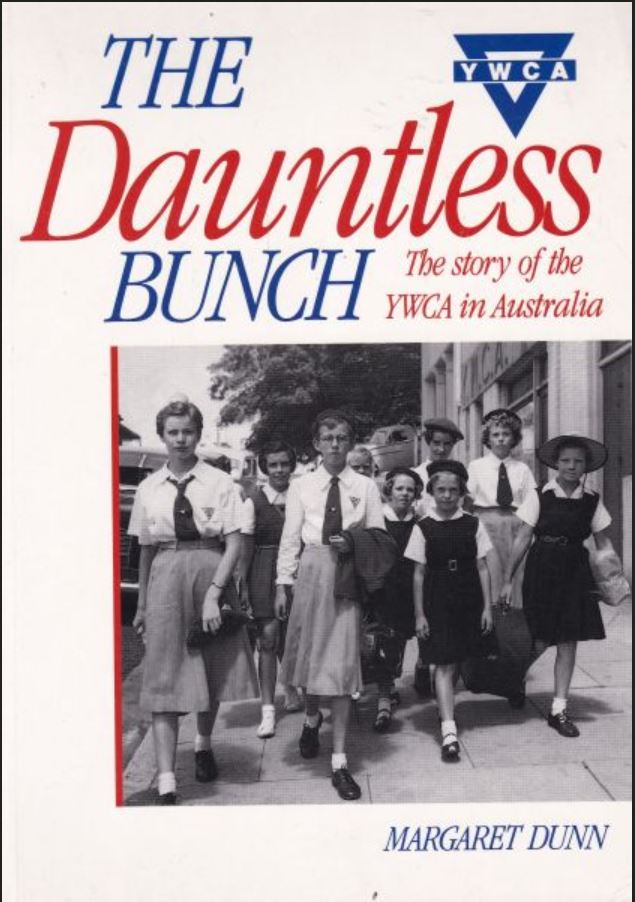
I purchased the book and started reading. Absolutely no mention of the mission on Latrobe Street. It is not to say the book is not a fascinating read, it is, what I have read so far.
I moved to Trove, and wow, what a rabbit hole I fell into. Just reading the yearly update letters from the Hon. Sec. of the association, Miss S.C. Booth, sent to The Argus is a real eye-opener. https://trove.nla.gov.au/newspaper/article/220466847?searchTerm=%22y.w.c.a.%22
Unfortunately apart from the advert above (Figure 38) and this one below, these are the only mentions of the Y.W.C.A. building on Latrobe Street I can find.

The Ragged School mentioned here, was a different matter. I found this old letterhead online of the organisation from 1906 and look what was included in it.

A photo of the actual building. You can see the address was 159 and 161 Latrobe Street, just six doors up from Maud and Charles and five from the Y.W.C.A. hall.

Figure 42: Courtesy of Find and Connect
https://www.findandconnect.gov.au/entity/melbourne-ragged-boys-home-and-mission/
We are so close to 139 but just not quite there which happens so often in these photo searches. Still, we are very lucky to have this view into Maud and Charles’s world.
And in an attempt to expand that view here is a photo of a house on the opposite side of Latrobe Street directly opposite the Ragged Boys Home.

Figure 43: Courtesy of the State Library Victoria
http://handle.slv.vic.gov.au/10381/72816
This view is definitely part of Maud and Charles’s world too. Here are all three properties highlighted on the Metro Map below.

159 & 161, (The Ragged Boys Home) & 64 Latrobe Street, Melbourne, Victoria, 1895
I know it says 64 and not 60 for the house opposite but you can clearly see that the outline of the house and the front gate entrance match perfectly on the map and photo. Also clearly shown in both the map and photo is the Russell Street Police Barracks to the left of the house which confirms its position.
Again, with the “getting so close” theme, this photograph below shows a wagon train parked out in front of the Ragged Boys School on Latrobe Street in 1899, ready to take the children on their annual picnic.
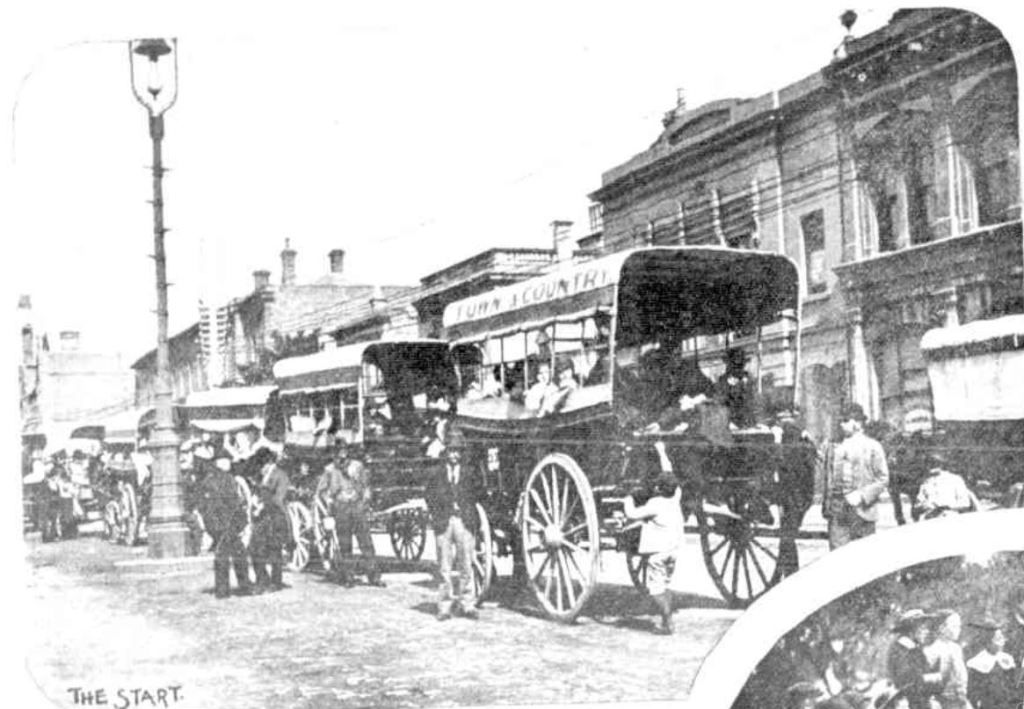
Figure 44: Courtesy of Trove, National Library
https://trove.nla.gov.au/newspaper/page/23485239
If you look at the building directly above the word (Town) on the wagon above, you will see it matches perfectly to no. 60’s roof in (Figure 43). This means the photographer was probably standing in front of Maud and Charles’s place or the Y.W.C.A. hall. If only he had turned around.
Returning to the article above about Mr W Minton’s Christmas appeal (Figure 40), you’ll note that he was named the school superintendent, and as such, a photo of him was included with the picnic photo.
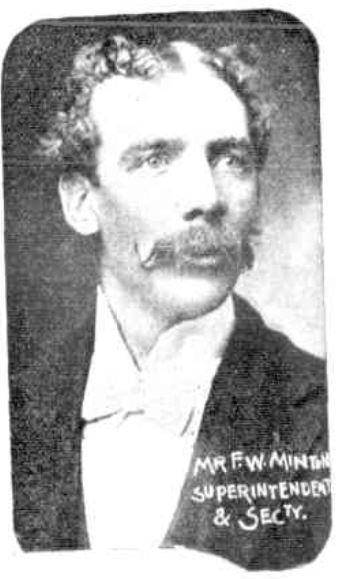
Being only a few doors apart, I wonder if he and Maud or Charles had any history together.
According to Shirley Davis, author of “One thousand white onions- : A History of caring for Children from 1865” (2005), this section of Latrobe Street was traditionally known as one of the poorest parts of the city and generally avoided by “respectable people”. I think it tells us a lot about the situation that Maud and Charles were living in especially when you consider how many times Charles had deserted the family up to this time.
Charles’s name appears again in the Sands Directory for the following year, 1893. Did this mean that he returned to Maud and the family or was Maud just using his name to provide some security to her and the children.
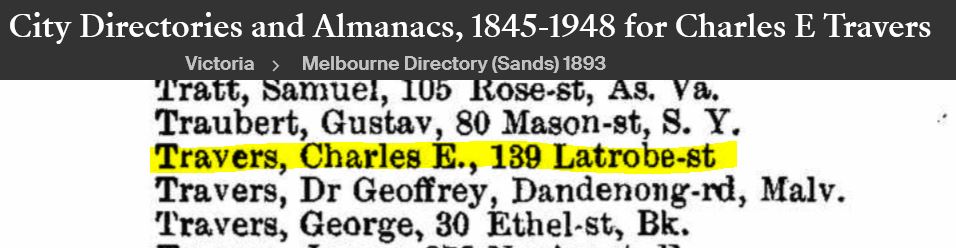
Then three years later, in 1896, our next find shows that Charles is gone and Maud is listed in his place.

And then again for the following year, 1897.

Did this mean that Charles had finally abandoned Maud and the children for good? I can only speculate on this as Charles disappears from all the online records after the 1893 City Directory listing above.
Maud was 39 years of age at this time, with four children aged 14, 12, 10 and 6 to provide for.
Next, we jump forward four years to 1901. Maud appears in an article describing a petition for divorce for a George and Elizabeth Ferguson where Maud was called upon to confirm some relevant details of the couple.

This small mention above and the following Electoral Roll listing confirms how Maud was providing for her and the children.
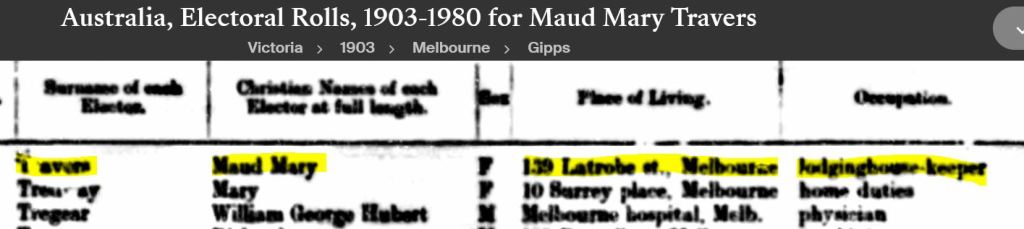
A lodging-house keeper. I wonder how many rooms she was renting out? I went looking to see if there were any adverts but of course, there was nothing. I can only imagine that advertising was probably not in the household budget, that it was probably word of mouth or perhaps a sign in the window of the house that brought the punters in.
I continued looking for photos of the area and found this one below taken in the 1950s. It is very close to the view shown in (Figure 44) of the Ragged School Picnic wagons, just further down the street towards the corner of Exhibition Street.

(looking from Exhibition Street towards Russell Street)
Figure 51: Courtesy of the State Library Victoria
http://handle.slv.vic.gov.au/10381/55241
Below is (Figure 44) again so you can see what buildings still remain. Comparing the two photos here, I think the house at no. 60 is gone but the one next to it on the right is still there. You can clearly see the flattened arched cut-out on the top of the roof facade, which is still there in the 1950 photo above.
Figure 44: Courtesy of Trove, National Library
The building on the very right of the photo above here in 1899 is the building with the high-arched roof facade shown below, behind the rear of the yellow car. You can see the arched windows match.
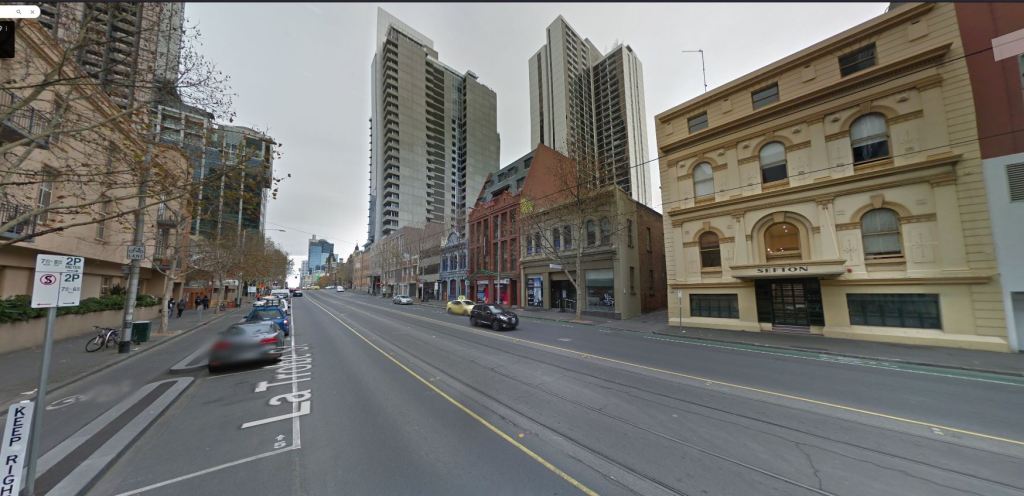
(Looking from Exhibition Street to Russell Street)
Figure 52: Courtesy of Google Maps
Although it is not shown in (Figure 44) the building with the name “Sefton” on the awning shown above was definitely standing there at the time. It was built in 1871 and named Turnverein Hall and primarily used as a gymnasium and social meeting place for German migrants. It was sold to the Grand United Order of Oddfellows (GUOOF) in 1906, whose signage is still visible on the building in the photo from the 1950s. (Figure 51) https://images.app.goo.gl/dUSMJ7XvnRsiFLRu7
Maud would be very familiar with the view of this building as it sat diagonally across the road from her at 30-34 Latrobe Street.

& 30-34 Latrobe Street, (Turnverein Hall) Melbourne, Victoria, 1895
The 2022 Google Maps photo shows that the other two historic buildings between the Sefton and the High Arched Facade building on the right have gone.

(Looking from Exhibition Street to Russell Street)
Figure 53: Courtesy of Google Maps
I can imagine if Maud saw this view of her street today she would find it hard to recognise it from her time. You have probably worked out that Maud’s building is long gone when you look at the building on the left there.
Below is a photo of the spot where Maud lived and worked for fifty years. This unfortunately is not the building that Maud lived in. This apartment building was built in 1949. https://www.propertyvalue.com.au/property/8/139-la-trobe-street-melbourne-vic-3000/11676900

Figure 54 : Courtesy of Google Maps
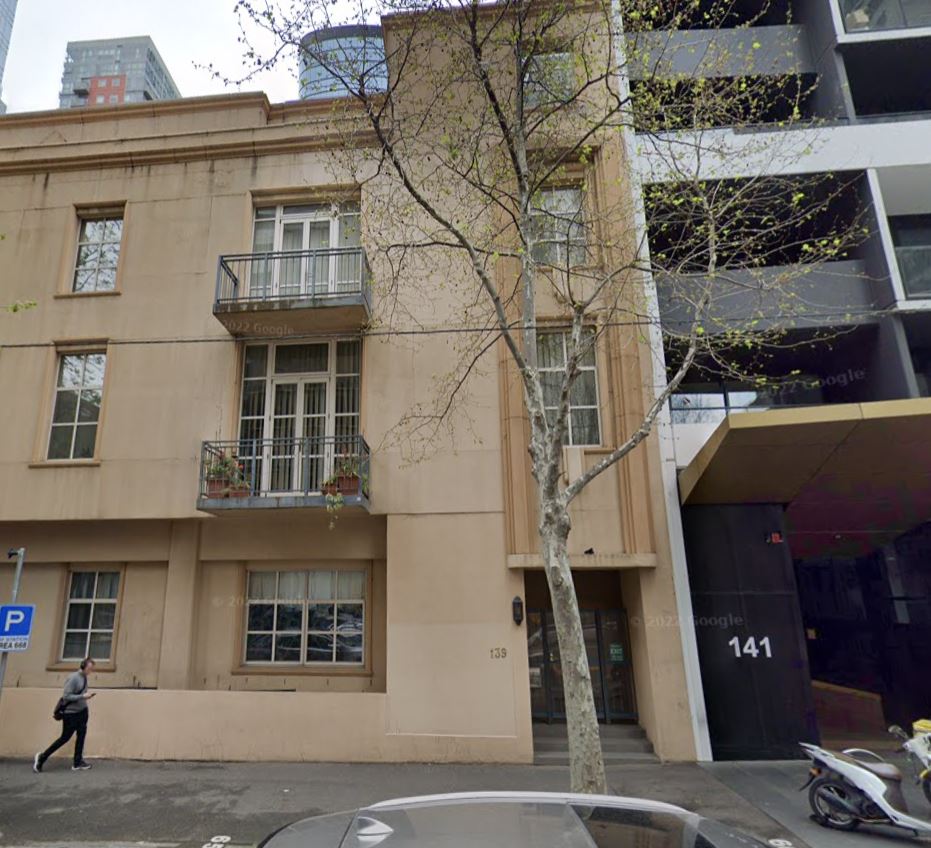
Figure 55: Courtesy of Google Maps
The next mention we find of Maud is the year after in 1904 when she was on trial for stealing. I know, what?

I can imagine this must have been very hard for Maud to endure in such a public manner. Interestingly the court where Maud would have appeared was just down the road from her on the corner of Latrobe and Russell Streets right opposite the Police Barracks.
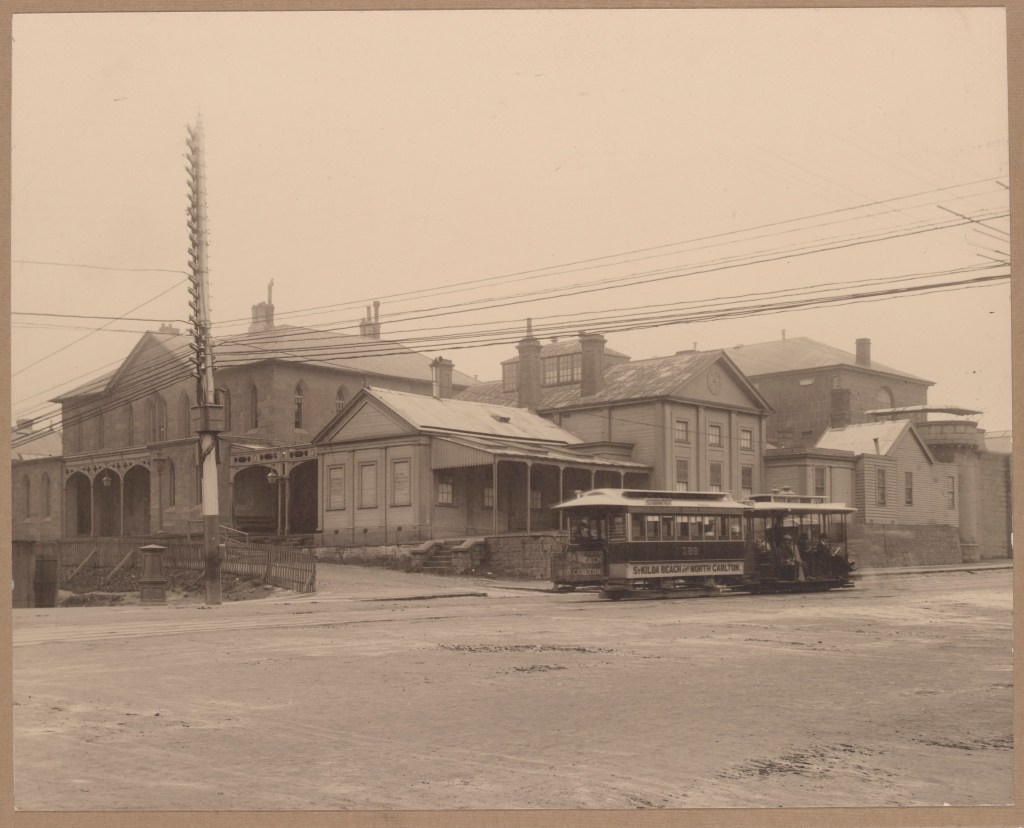
(built in 1842) on the present site of the former City Court, Melbourne
Figure 57: Courtesy of the State Library Victoria
http://handle.slv.vic.gov.au/10381/68959
The Public Record Office of Victoria had a copy of what looks to be the cover sheet of the Presentment and that is it.

https://prov.vic.gov.au/
What is fantastic about this article above (Figure 56) is not only that we learn that Maud was found innocent of the charge but also that her character witnesses are mentioned.
That is Mr William Minton pictured in (Figure 45) the superintendent of the Ragged School. This also answers my earlier question of whether Maud interacted with him. Obviously, it was a very close community.
I thought her other witnesses, Sister Hannah and Sister Agnes would be long lost to us but a quick search on Trove provides quite a few articles about their work with the poor who lived in the slums of Melbourne city.
The Primitive Methodist Mission which Sister Hannah worked for was one of the first social charities in the area.
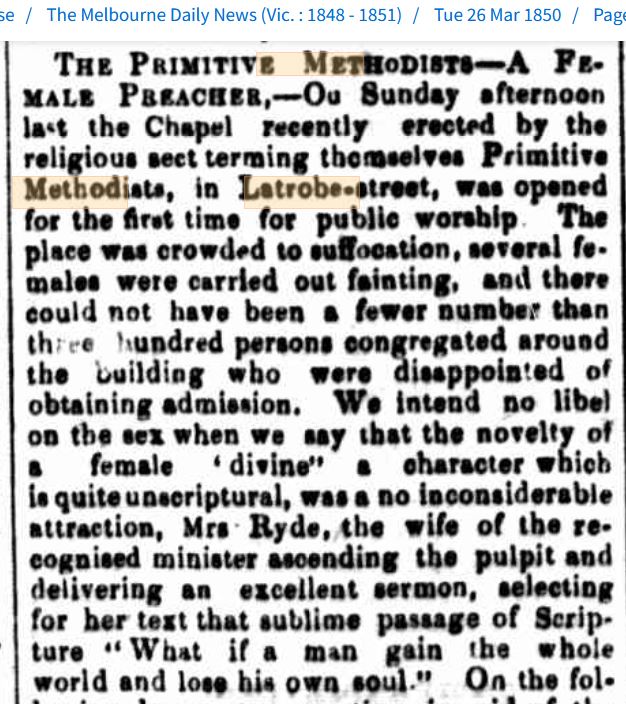
From what I can gather I think this chapel became the mission that provided respite to the poor and homeless when a new chapel was built further down Latrobe Street near Lonsdale Street.
There was a fantastic article describing Sister Hannah and her work with the poor printed in 1909 and it had a photo of Hannah printed along with it.


That is Sister Hannah who knew Maud and provided her with a character reference at her trial in 1902. How amazing to see her face.
The Church of England Mission that Sister Agnes worked for had been going for a while too.

I think the original mission was housed in the building that the Ragged School moved into in 1895 when the mission moved down the road to the corner of Elizabeth and Latrobe Streets.
Unfortunately, there is no photo of Sister Agnes online but there are lots of articles describing her work over the decades and I did find an obituary for her printed in 1930.

I love finding these little shards of light shining into someone’s world, like Maud’s, offering us a better glimpse of her from 120-odd years away.
The next find is another Sands Directory listing for Maud for 1904.
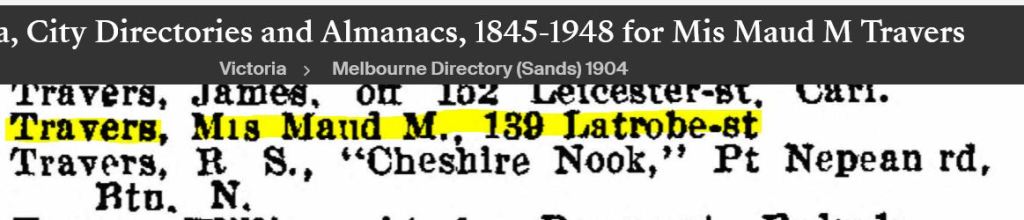
There is no mention of Maud anywhere until the next directory listing appears in 1909.

We move on to 1910 with the next article giving us a great description of the building Maude was living in.

So as I suspected it was a two-story building probably similar to the house at 60 Latrobe Street (Figure 43).
The articles are really starting to thin out now. There is no mention of Maud anywhere for the 1910s but I did find a marriage notice for Maud’s son Alfred Victor Travers who married Nellie McBride at Bexley in New South Wales in November of 1915.

This notice is a great find as it is the only primary source that I have been able to find that confirms what happened to Charles. We now know that he passed away sometime between 1893, his last Sands Directory listing and November 1915 when this notice was printed.
Staying with 1915 we next have an electoral roll listing for Maud and Ernest joins her as well this time. He was 24 years old at this stage.
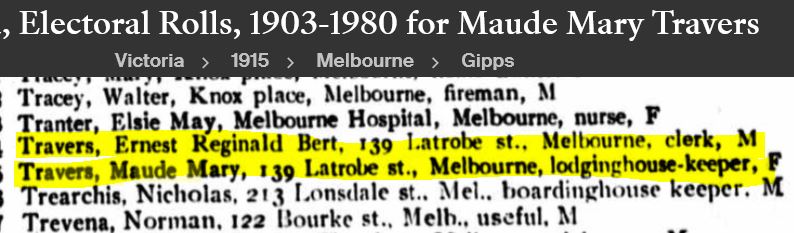
We now have a huge time jump to 1931 with another electoral roll listing and Maud and Ernest are still at 139 Latrobe Street.

I’m not sure what to make of this next electoral listing. It shows only Ernest listed at the 139 Latrobe Street address, not Maud.

I know she is still alive at this stage, does this mean they just didn’t bother putting her down as she was a 70-year-old woman by this time? Or had she stopped working as a lodging housekeeper or had she moved somewhere else because of her health?
Unfortunately, this will be another one of those many questions that will remain unanswered.
Then the inevitable happens, Maud passed away on the 9th of December 1935 at Glen Iris.

She was buried two days later on the 11th of December.

Even this death notice throws up more questions that will probably go unanswered. I don’t have a copy of Maud’s death certificate as yet so I’m left wondering, what was she doing at Glen Iris?
Perhaps this is where she moved to in 1934. I do know that her niece, Jean Stewart Ross Duke, née Cox, daughter of her half-sister, Agnes Cox née Brookman lived at Glen Iris at this time.
Her own daughter Christina Russell Travers had already passed away back in 1917 at the age of 33 and Alfred her other son who was married to Ivy Maude Beatrice Smith was living in New South Wales at the time of Maud’s passing.
Then there is the mention of Ernest being at 28 Ellerslie Place, Toorak. How does this work when he is listed in the Sands Directory of 1936 as still being at 139 Latrobe Street?

This is 28 Ellerslie Place Toorak as of January 2019. It looks like the property has been resumed to be part of an extension to the rail line that runs behind.

Figure 73: Courtesy of Google Maps
Next, we have the final ever mention of Maud. An In Memorium article placed by Ernest wanting to remember his mum on the fourth anniversary of her passing.

That is it for Maud’s story and this is only a fraction of what I’m sure was a very eventful life.
I’m going to finish this post here and continue the next post with Alice Victoria Maude Parsons’s story, or what I can find of it. Remember this is my other 2x great-grandaunt who was buried at Cheltenham.
 JOHN'S FAMILY HISTORY