The continuing story of my Pop, John, his family and what they were doing in the lead up to his wedding in 1937.
At the end of part two, I shared that we were up to March 1928, which means we are still nine years away from Margaret and John’s wedding day.
When I started this series of posts, I had no idea how much information I would uncover on the Macveans. How lucky we are to have access to all of that history. If you have stuck with me, I hope you are finding it as interesting as me.
This first notice relates to my grandfather’s brother, Alexander Douglas Macvean.

I wonder if the property was one of his grandfather’s in Gurwood Street that was left to him in his will. Alick as he was known was 28 years old at the time.
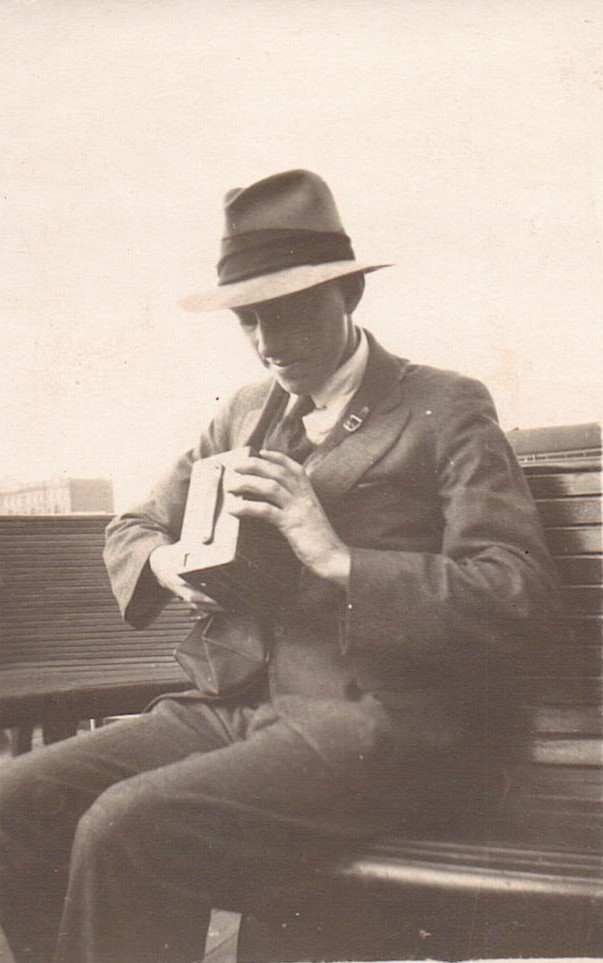
Figure 2: Courtesy of the Macvean Family Archives
Generously shared by Greg P (Cousin)
This is Gurwood Street in the late 1930s. It is the commercial end of the street, the residential side being down past those trees in the distance.

Figure 3: Courtesy of Museum of History NSW, Flickr account
https://www.flickr.com/photos/state-records-nsw/5247094105/in/photostream/
Here is Google Maps most recent shot of the same section of Gurwood Street.
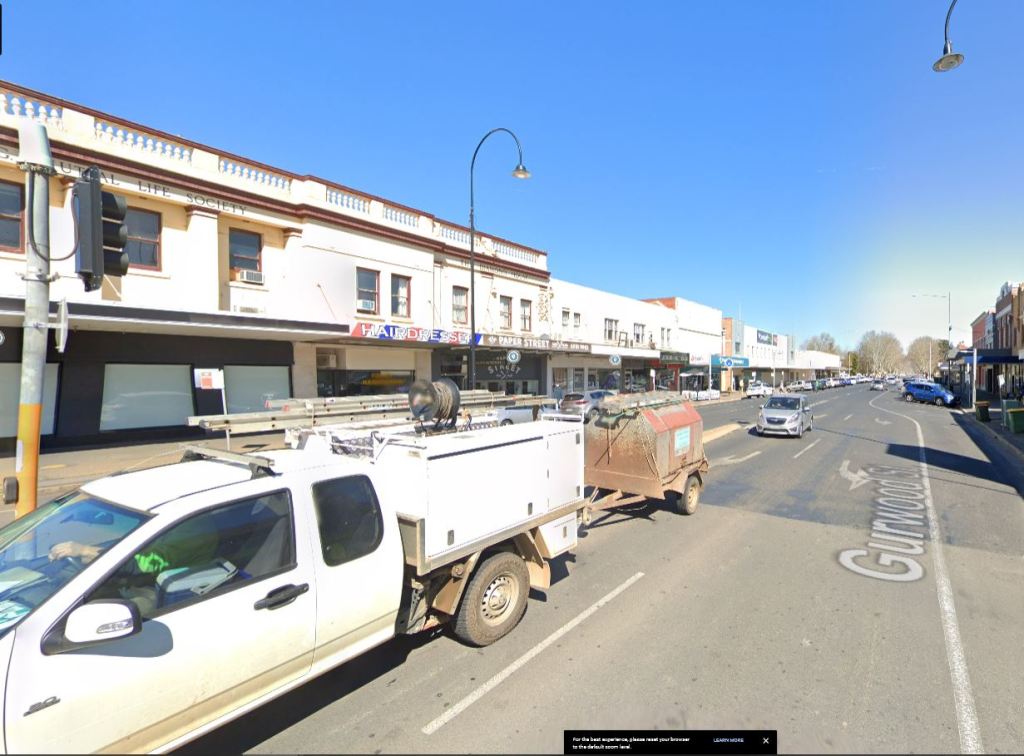
Figure 4: Courtesy of Google Maps
Even though this next notice is outside our timeline as it is from four years earlier, I’m including it to show that Alick was already continuing the “family business” of owning land just two years after his father’s death.

Coreinbob, you might remember, was the same area that his uncle, Capt Jack Macvean’s property, “Concudgery” was situated.
Next, Alexander (Alick) Kennedy Macvean was still going strong with his golf.
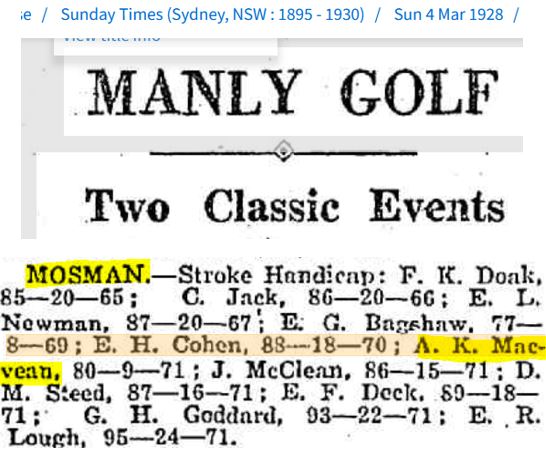
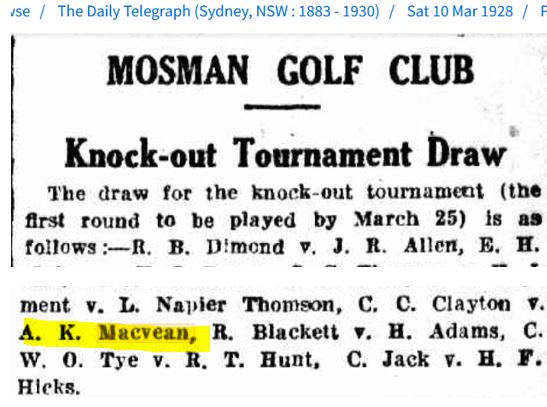

Tiled Gallery 1: Courtesy of Trove, National Library of Australia
I was lucky enough to find another photo of Alick in the archive.
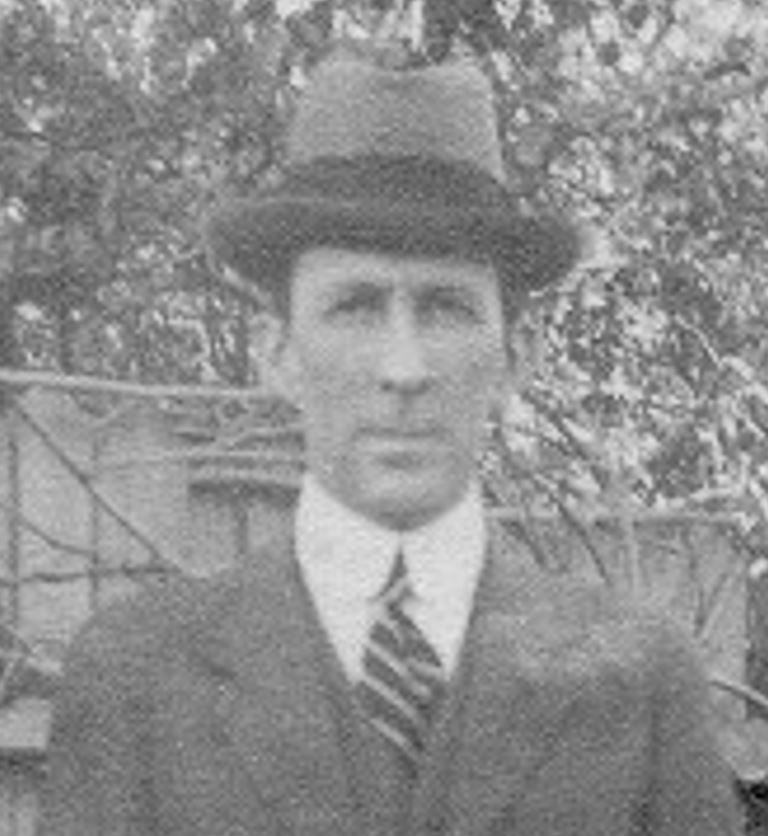
Figure 6: Courtesy of the Macvean Family Archives
Generously shared by Sally M (Cousin)
Next we have a notice of my great-grandmother, Agnes (Annie) Brookman Macvean, née Cox, my Pop’s mum, heading off to the United Kingdom.


Figure 8: Courtesy of Shipspotting.com,
Generously shared by Gordy
https://www.shipspotting.com/photos/2193315
The Nestor was a Triple Screw Steamer, (T.S.S.) she was built in 1912, owned by the Ocean Steam Ship Company Ltd but managed by the Blue Funnel Line. She only offered first-class accommodation, initially 350 cabins, but by the time Annie was travelling, these had been reduced to 250 cabins. http://ssmaritime.com/BFL-Nestor-Ulysses.htm
I managed to find an advert in Trove for Annie’s trip on the Nestor.

The ship had a Lounge, Library and a Writing Room, a Smoking Room, a Drawing Room, a Dining Room, and a covered, partially open Verandah. Although not as luxurious as some of the bigger liners of the time, it offered an intimate voyage with excellent service and fine cuisine. http://ssmaritime.com/BFL-Nestor-Ulysses.htm
By the way, that ticket price listed above is roughly $3000.00 in today’s purchasing power, which, unfortunately, wouldn’t get you very far in 2025. https://www.in2013dollars.com/australia/inflation/1928?amount=62
I did a quick check and a ticket on the Crown Princess departing Sydney and going to London via the Suez Canal, which is 56 days of travel in an interior cabin, will set you back $13,709. That is a per-person twin-share price. A balcony room is $20,199. https://holidaysofaustralia.com.au/holiday/world-cruise-liner-sydney-to-london-dover-3613C#:~:text=Discover%20some%20of%20the%20best,%2C%20constant%20unpacking%20&%20expensive%20meals.
Bit of a spoiler, my grandparents, John and Margaret did a 12 month world cruise for their honeymoon. I can only imagine what that would have cost. My Pop received a generous inheritance from his grandfather Alexander so I think that might have helped offset the cost.
Unlike John, I have no grandparents left, so no inheritance coming my way. Which means no ocean liner trip for Alex and I unless a Lotto win is coming our way.
Below are some amazing photos of the cabins that were on offer on the Nestor.

http://ssmaritime.com/BFL-Nestor-Ulysses.htm
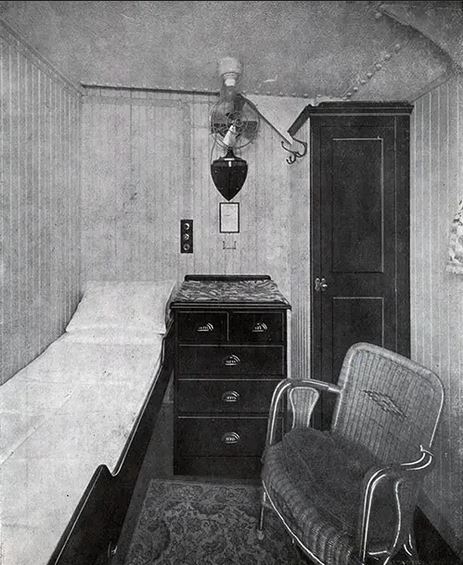
http://ssmaritime.com/BFL-Nestor-Ulysses.htm
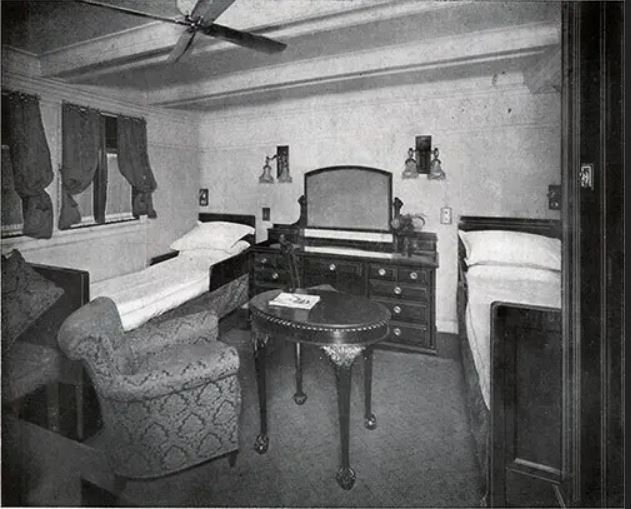
http://ssmaritime.com/BFL-Nestor-Ulysses.htm
Tiled Gallery 2: Courtesy of SSMaritime.com, Generously shared by users of the site.
Annie had some pretty famous shipmates join the Nestor when they arrived in Capetown South Africa. The Australian Women’s Tennis Team. They had been playing in nine different tennis tournaments around South Africa.

The Nestor arrived in Capetown on the 23rd of April and left two days later for Liverpool.

Now, one of the things I found of real interest here is that the Nestor went the long way round to get to the United Kingdom, via the Cape. That is passing the Cape of Good Hope at the southern tip of South Africa and not through the Suez Canal.
I knew in general that the Suez had been open since the mid 19th century. A quick look on Trove confirmed the opening date.
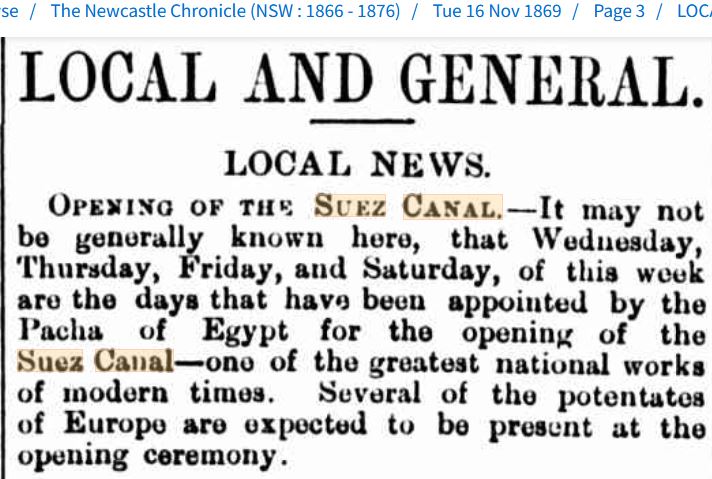
So it had been open 50 odd years by the time Annie was travelling to the UK in 1928. Maybe something was happening in the world at the time that stopped British ships from passing through. I did find multiple mentions of this issue, a crisis in Egypt in early 1928.

So, nothing big then. Wow, I had never heard of this crisis, as I said there is lots on Trove about this issue of the Egyptians wanting the British Forces out. If you are interested search for it on Trove, it is fascinating.
I haven’t found any source that confirms if the use of the Suez was curtailed because of this potential crisis, but I did find some interesting research on the Centre for Economic Policy Research (CEPR) that states that as late as 1913, half of emigrant traffic travelling by steam still sailed around the Cape. https://cepr.org/voxeu/columns/voyage-durations-age-mass-migration
This research suggests that the increased efficiency of ships such as the Nestor with the triple screw propellers cut down the travel times so that going via the Suez didn’t shave that much time off the travel time. It also suggested that the heavy canal tolls charged on tonnage and passengers meant travelling via the Cape could actually be more cost-effective. https://cepr.org/voxeu/columns/voyage-durations-age-mass-migration
No photo of the Nestor leaving Cape Town, but I have one of a Royal Mail Steamer leaving the docks, and it is thought to be of the same time.
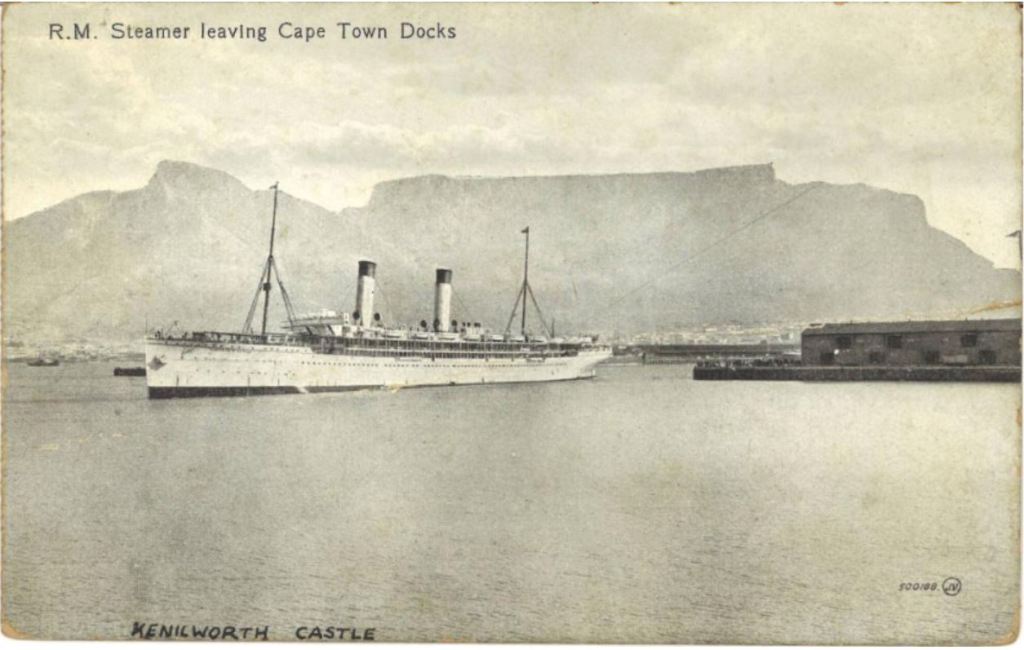
Figure 11c: Courtesy of The Australian National Maritime Museum
https://collections.sea.museum/collections
Back to the Ladies Tennis Team, they were Miss Louie Bickerton, Miss Daphne Akhurst, Miss Esna Boyd, and Mrs P. O’Hara Wood, who was Meryl Aitken O’Hara Wood.


This was the second women’s team to tour overseas, but it was the first team endorsed by the Australian Lawn Tennis Association. The first team back in 1925 was completely self-funded by the women involved. http://tennishistory.com.au/2011/12/womans-team-events/
Here is the second team again, this time pictured with their manager, Mr Harley Malcolm.

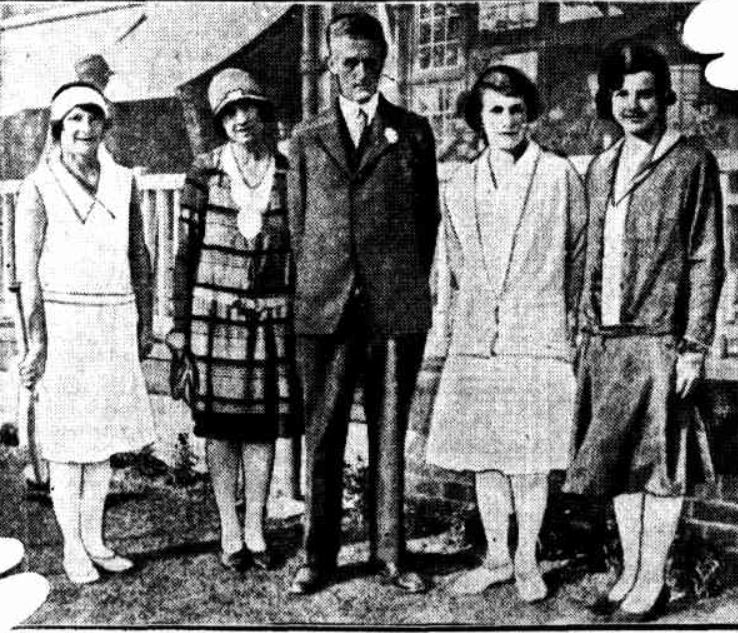

It was an eight-month tour, also taking in France, Switzerland, Ireland and England. It was hailed as a great success, and if you would like to read a detailed description of the tour, click this link: http://tennishistory.com.au/2011/12/womans-team-events/
In April, we find Alick Kennedy Macvean golfing again at Mosman, but these two articles below are not just lists of Alick’s scores this time. Rather, they give us a few more insights into his life.


Tiled Gallery 3: Courtesy of Trove, National Library of Australia
Alick was part of the Mosman Golf Club Greens Committee and was responsible for their upkeep. I mean that seems like a really skilled job to have, and it looks like it might have been an unpaid position for Alick. That taking care of the greens was just part of his committee duties and the fact that he took pride in his work.
We also learned that he was obviously a very good golfer and heavily involved with the club, and not only that, but we also found out where he was working at the time. As a Director of Bird and Co. LTD.
Bird & Co. Ltd. was actually referring to H. S. Bird and Co. LTD., and I did manage to find this single family notice for the death of Mr H. S. Bird that gives us a bit more information on the firm.

Alick was a director of one of the oldest providoring firms at the time. I’ve done a quick search on Trove, and it looks like they supplied and shipped whatever the particular provisions were that were needed. There was no one product that they specialised in.
What I find really interesting here is that for a company that had been operating since the early 1860s, up until say, Alick’s time in 1928, that is 58 years, they have no digital footprint on the internet apart from one or two mentions on Trove. So much history seemingly lost.
The next article mentions Hugh Macvean, my Pop’s second Cousin, one-time removed, who was mentioned as a groomsman at a friend’s wedding. The wedding was of Miss Nora Stuart Howard and Mr Kenneth Field Dawborn.
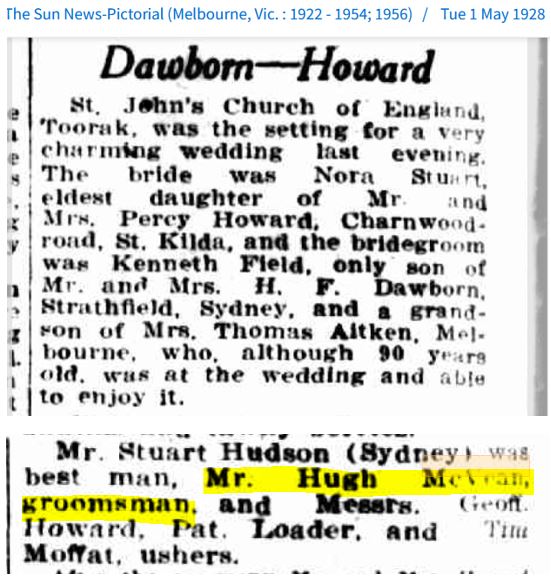
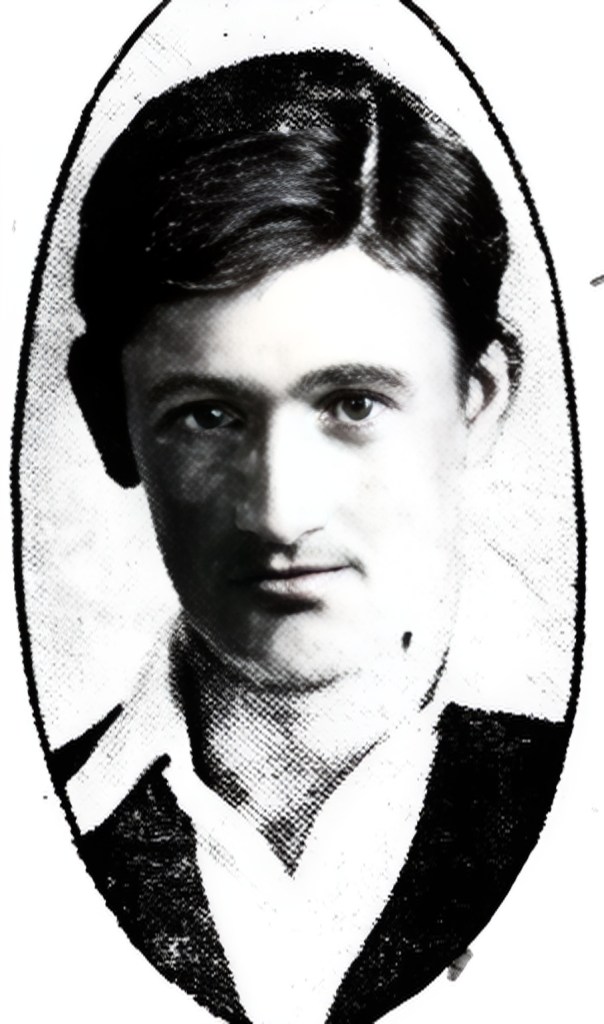
Figure 16: Courtesy of Trove, National Library of Australia
I tried to find what the link might have been between Hugh, Nora and Kenneth, but I couldn’t find anything except the wedding notice above. I did manage to find both Nora and Kenneth in Ancestry, but they only appear in a couple of family trees, and there is no information other than dates of life events shared.
I did have one bit of luck, a photo of Nora and her bridesmaids, but no Kenneth with his groomsman, unfortunately.

This next article seems very dry, but it introduces us to another new family member. It is a Local Land Board application for a pump to access water on Mallan Mallan Creek, South Western New South Wales, for Thomas Chalmers Macvean.

Thomas is actually the uncle of George Hugh above in (Figure 16). Thomas and Campbell (George’s father) are actually the sons of Hugh (Ewen) Macvean, brother of my 3x great-grandfather, John Hugh Macvean.
I found the land registry map for Portion 40 on the Parish of Coobool map. This one is dated from 1918, so I suspect that is why Thomas’s name doesn’t appear on it.

Figure 19: Courtesy of New South Wales Land Registry Service
https://hlrv.nswlrs.com.au/
I even managed to find Portion 40 on Google Maps today. You can see the bends in the Mallan match almost perfectly with the parish map above. I have cut this map below on the right, just where the first bend of the river happens in portion 41 above.

Figure 20: Courtesy of Google Maps
The yellow highlighted section looks like a cluster of buildings when you zoom in, I wonder if this is where Thomas and the family where living back in 1928.

from an Aerial view of Portion 41, Parish of Coobool, County of Wakool, 2024
Figure 20a: Courtesy of Google Maps
Thomas’s property actually sat on the traditional lands of the Wamba Wamba/ Wemba Wemba and Perrepa Perrepa people. https://landcare.nsw.gov.au/groups/yarkuwa-indigenous-knowledge-centre-aboriginal-corporation/what-is-a-welcome-to-country/
Our next article highlights exactly how busy Marion Macvean was at the time. Just a reminder, Marion is the wife of my 1st Cousin 4x removed, John Macvean.
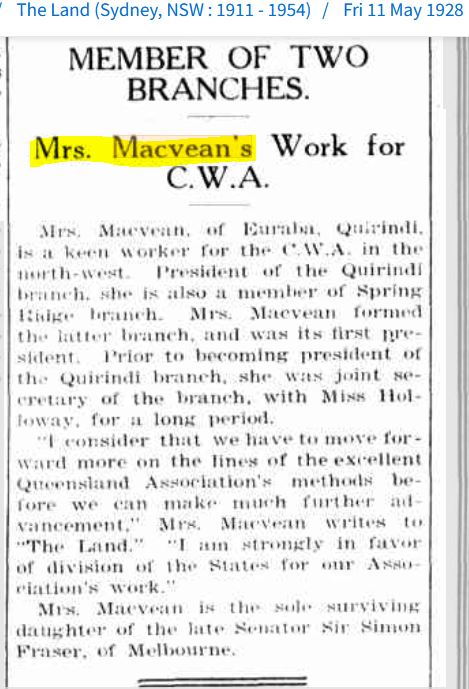
Keep Marion in mind, there is more coming up on her and her work with the Country Women’s Association later in this post.
In part two of this series of posts, I mentioned my grandfather, John’s aunt, Isabel Macvean, married to his dad’s brother, John Hugh Macvean and that she was skilled in animal husbandry. Here is a further example of her work below. This time, it is with Turkeys.

The Bronze Wing is a heritage breed of turkey and is known for its distinct copper-bronze colour and apparently flavourful meat. It has a slower growth rate compared to commercial breeds and is a popular choice for small-scale production. https://www.fondazioneslowfood.com/en/ark-of-taste-slow-food/american-bronze-turkey/
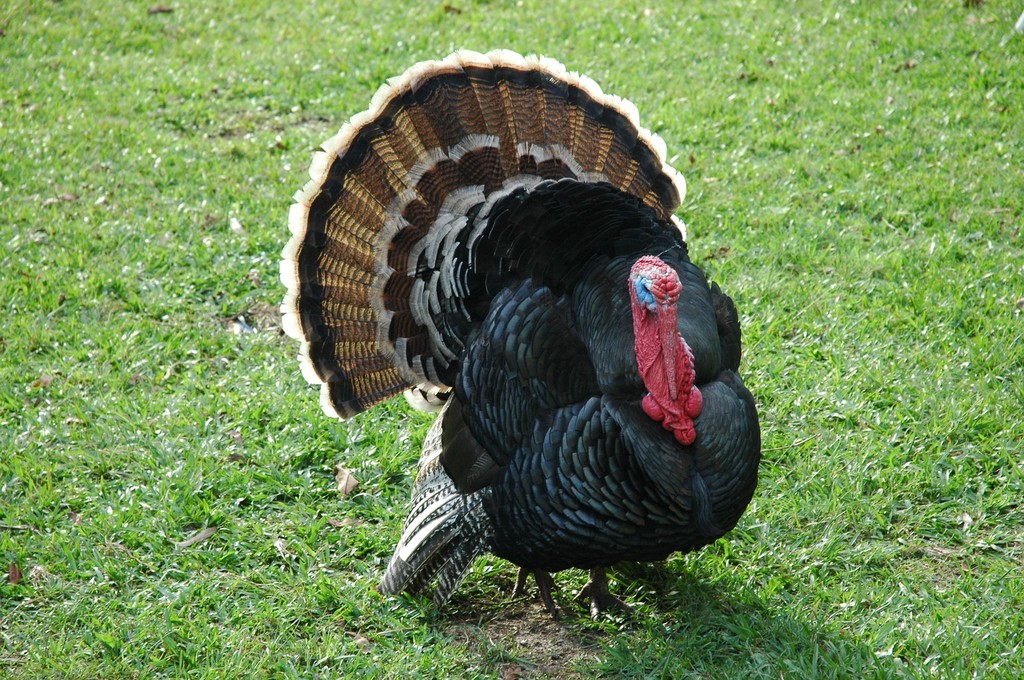
Figure 22a: Courtesy of Local Harvest
https://www.localharvest.org/ark/american-bronze-turkey&p=31
I’m sure these characteristics were all true even back 100 years ago for Isabel.
This next article is from 1929 (here is the second infringement of the timeline), but it highlights just how good Isabel was at raising this product and just how lucrative it was for her.
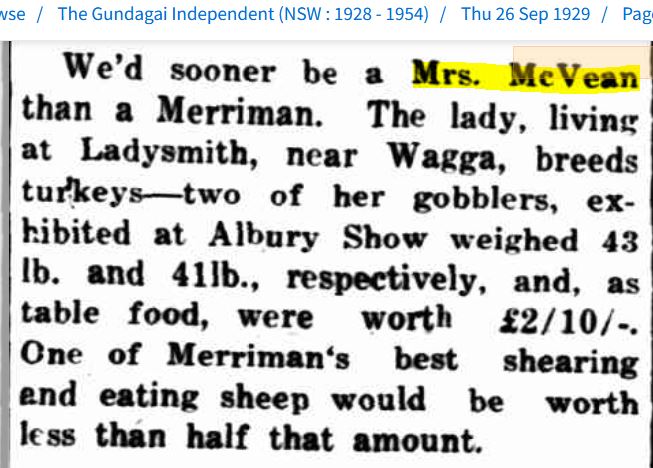
“Merriman”, is referring to Walter Merriman, a sheep breeder at the time from Yass, New South Wales. Later, to become Sir Walter Merriman, he focused on breeding fine wool Merinos. So Isabel was in some good company.
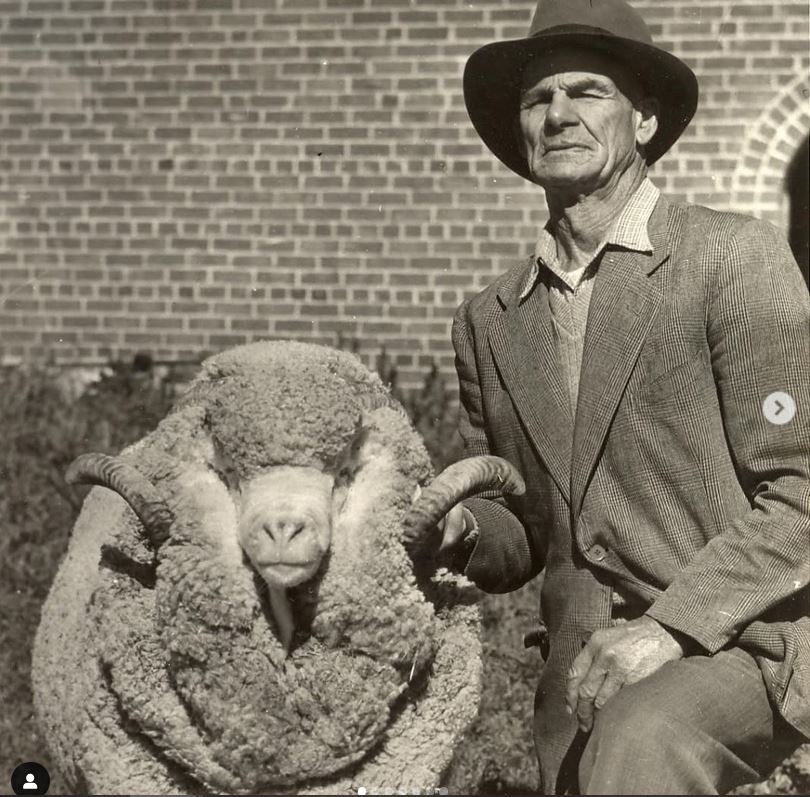
Figure 24: Courtesy of SirW.Merino, Instagram User
https://www.instagram.com/sirw.merino/p/C82ve1dvXJZ/?img_index=1
The focus of the next article is another one of my Pop, John’s, First Cousins, one-time removed: Armstrong Poliah (Sonny) Macvean.
Sonny is the son of my 3x great-granduncle, John Macvean, and his wife, Jemima Scott Armstrong. Sonny is the brother of William Armstrong Macvean (of Southport fame), John Macvean, who was married to Marion, and Elizabeth Macvean, the spinster sister who dies at Marion’s property, all of whom have featured already in this series of posts.
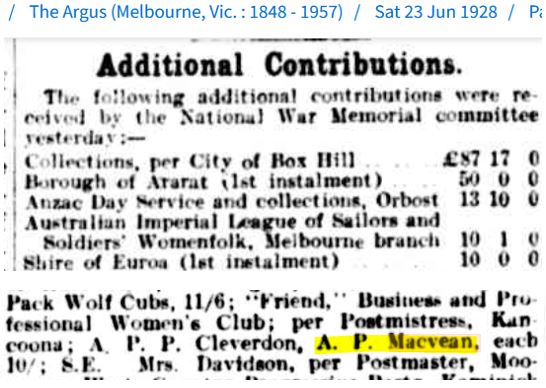
Sonny was donating to the National War Memorial Committee, which had been set up in 1919 to collect funds to go towards the building of an appropriate war memorial. Construction, which was set to commence in 1929, just seven months after Sonny donated, was delayed by the Great Depression. The memorial officially opened on Remembrance Day, 1941. https://en.wikipedia.org/wiki/Australian_War_Memorial#CITEREFAWMMHMP2022
Sonny was donating 10/ Shillings, which, according to the Reserve Bank of Australia’s pre-decimal calculator, is roughly about $50 in today’s money. https://www.rba.gov.au/calculator/annualPreDecimal.html
Here is a little bit of Sonny’s story I have managed to uncover so far. He enlisted in the Australian Imperial Force on the 15th January 1916, sixteen months after war was declared.

Sonny was part of the 17th Reinforcements of the 7th Battalion who left Australia on the 4th April 1916 on His Majesty’s Armed Transport, HMAT, Euripides, (A14). He was initially sent to Alexandria in Egypt for several months of training before heading off to France in mid-November 1916.
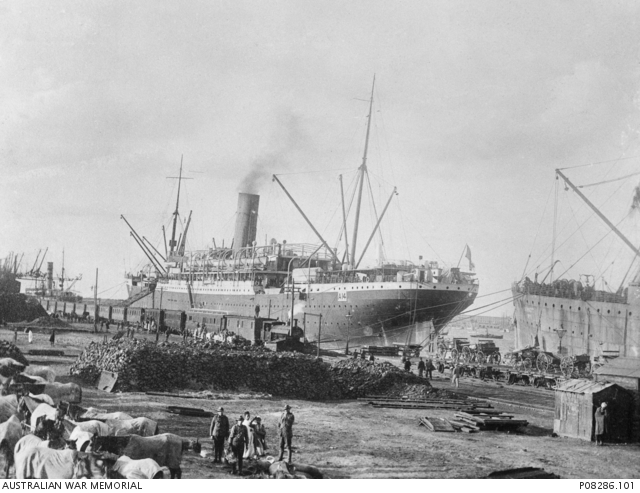
Figure 27: Courtesy of the Australian War Memorial
https://www.awm.gov.au/collection/C1236016
Sonny was 43 years and 10 months old when he enlisted. We are so fortunate that the Queensland resource, “Fox’s History of Queensland”, had a photograph of Sonny in it, pictured in his actual uniform.

Figure 28: Courtesy of the University of Queensland
I must admit, I was surprised at Sonny’s age at the time of his enlistment. I didn’t realise that the Australian Imperial Force (AIF) accepted men over 40 years of age.
I jumped onto the ANZAC Portal and discovered that the AIF initially had an enlistment age range of 19 to 38 years, but as the war progressed, the conditions for enlistment were relaxed. By June 1915, the age range had changed to 18 to 45 years, meaning that Sonny was eligible for enlistment. https://anzacportal.dva.gov.au/wars-and-missions/ww1/military-organisation/enlistment
Sonny served in the 7th Battalion until January 1917 and was then attached to the 1st ANZAC Corps Royal Engineers Workshops, which was later redesignated as Australian Corps Workshops. https://aif.adfa.edu.au/OrderOfBattle/Engineers.html
He was then detached from the Australian Corps Workshops and transferred to the 2nd Field Company Engineers on the 1st of March 1919.

Sonny started his deployment as a Private but was promoted twice in his time in service. First to Sapper and then just before the end of the war to Lance Corporal.

Obviously, we know Sonny survived the war as he made that donation in 1928. He returns to Australia on the SS Main, it left Davenport, England on the 29th July 1919.

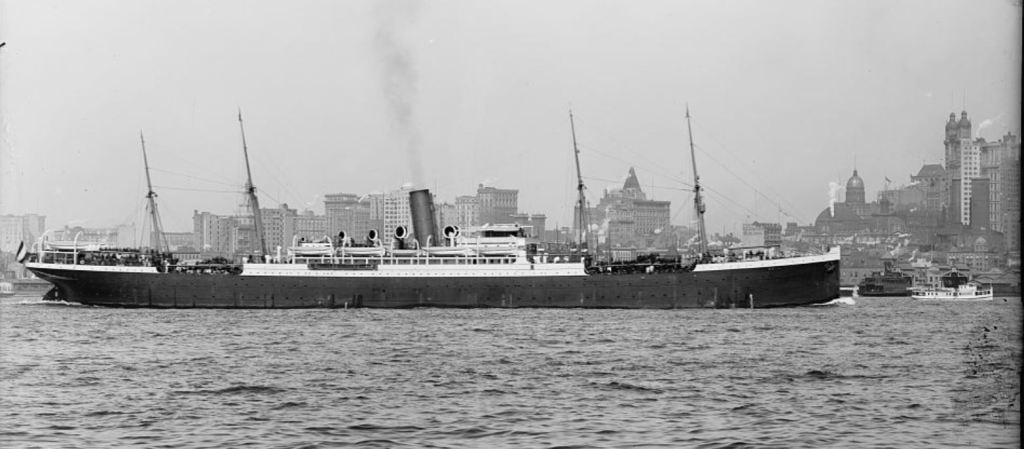
Figure 31: Courtesy of the Library of Congress
https://lccn.loc.gov/2016806383
The Main was a Rhine-class ship of the North German Lloyd company. It survived the war and was awarded to the British Shipping Controller in May 1919 and used to repatriate troops, hence how Sonny ended up on board. https://birtwistlewiki.com.au/wiki/SS_Main
There was some confusion as to where the ship was on its journey, as is indicated in this letter from Sonny’s wife, Eliza, a copy of which was in his service record on the Australian National Archives site.

https://recordsearch.naa.gov.au/SearchNRetrieve/Interface/DetailsReports/ItemDetail.aspx?Barcode=1966227&isAv=N
There was another letter from Eliza sent a month later, it is clear that she had a response informing her of Sonny’s return.

https://recordsearch.naa.gov.au/SearchNRetrieve/Interface/DetailsReports/ItemDetail.aspx?Barcode=1966227&isAv=N
How incredible is that? We are so lucky to have copies of those pieces of paper, which are now over 116 years old.
To say the Main had an eventful journey to Australia is an understatement. When it finally made it to Fremantle on the southern coast of Western Australia, a report appeared three days after it docked in the Perth, “Daily News”, which explained some of the events.

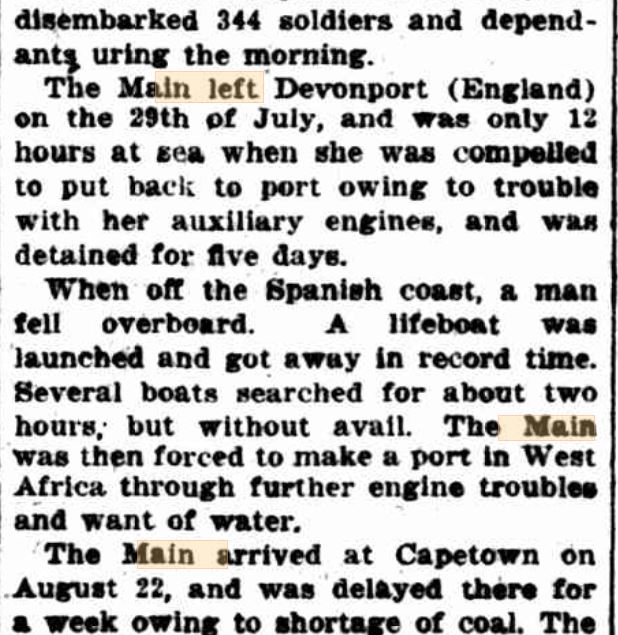
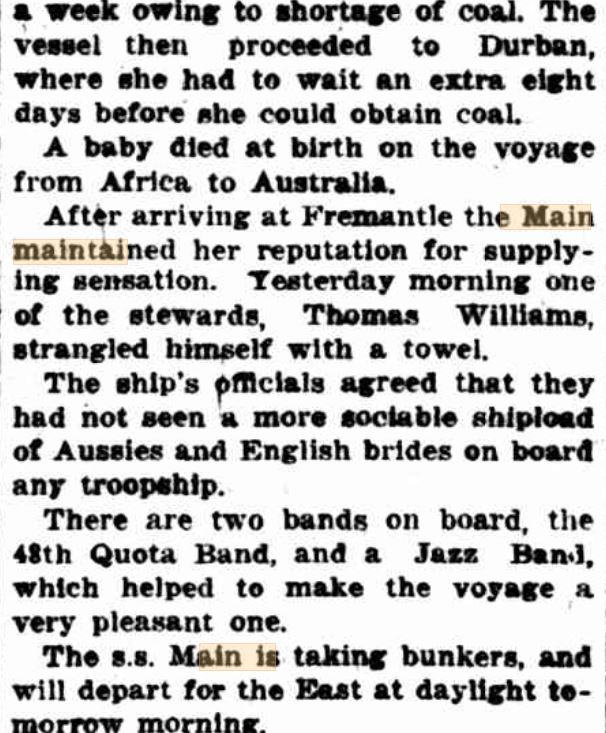
What a journey and how incredible to find this small window into Sonny’s world. Oh yeah, and how lucky they all were to have those two bands on board. (Sorry, I couldn’t help myself). After all that, the death of a baby, engine trouble, lack of coal, a man overboard, and his death, we finish off on the two bands and how they made the journey pleasant. Love it.
After an eleven-week sea journey, the Main arrived and docked at the New Pier in Port Melbourne at 1.30pm, Saturday, the 11th October, 1919.

In researching this small section of Sonny’s story, I was amazed to discover that he wasn’t the only family member on board the Main making their way home from the horror of the war.

That is, Clive Allan Macvean listed above, who was my grandfather John’s second cousin 1x removed, being the son of his grandfather’s cousin, Allan Macvean. Sonny was Clive’s first cousin 1x removed, being a cousin of his father Allan. Oh my head is spinning.

Figure 33: Courtesy of the Macvean Family Archives,
Generously shared by Anne M (Cousin)
I wonder if Sonny and Clive knew each other and whether they were aware that they were on the Main at the same time? I do hope so.
Clive’s service record shows the date of his disembarkation from the Main was different to Sonny’s.

If this date is correct it corresponds with the date that the Main docked at Fremantle.

This is what I love about this experience of researching family history. From that small mention of Sonny donating to the War Memorial Committee we get all of this information above.
Oh, and here is a fantastic gift to finish on. A photograph of the Main, sitting alongside the wharf at Fremantle, taken on the 28th September 1919, showing troops disembarking.

https://www.worldnavalships.com/forums/attachments/9/4/6/0/35635.attach
I mean, come on, what an incredible find! Clive could be descending that gangplank, or about to, or he could be on the wharf, and Sonny could be somewhere there watching from the deck.
What a fantastic rabbit hole to descend into, now back to 1928.
We are at the end of June with an engagement notice for Miss Elvie Clinton and Mr Angus Macvean.
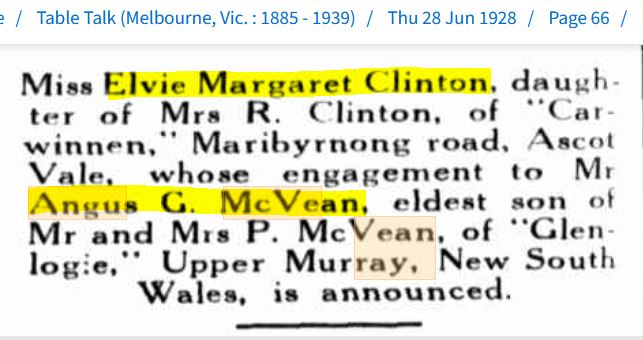
Angus Gordon Macvean is another second cousin 1x removed of my pop, John. Angus is the son of another of John’s grandfather’s cousins, Peter John Hugh Macvean and his wife, Lillian Woodland.
Angus was 23 and Elvie was 25 years old at the time of their engagement, and Elvie, lucky for us, had a photo of herself printed alongside the notice.

Figure 38: Courtesy of Trove, National Library of Australia
We are so fortunate again, the Macvean archives had a photo of Angus posing with his sister, Annie. It is undated, but I think it is most likely to be from the mid-1920s, when Angus was in his late teens and Annie was around 16 or 17 years old.

Figure 39: Courtesy of the Macvean Family Archives,
Generously shared by Sally M (Cousin)
Glenlogie, the family property mentioned in the engagement notice above, is about 55km southeast of Holbrook on the outskirts of Jingellic. The map below shows it sitting right on the New South Wales and Victorian border.

Figure 40: Courtesy of Google Maps
I went looking for any information on Glenlogie, and this Sands Directory listing was the earliest mention I could find.

That is, Angus’s father, Peter John Hugh Macvean, who is listed at Glenlogie. Appearing above him are my great-grandfather, Alex, at Rooksdale (Peter’s first cousin, 1x removed), his cousin, John, at Mooloomoon, and my 2x great-grandfather, Alex, at Howlong (Peter’s cousin).
I did find an article showing that Peter had been in the area much earlier than this, but perhaps not on Glenlogie at this stage.

1891, and working as a drover. I love it, you find an article to answer one question, “…how early was the family in the area?”, and it throws up a whole heap of new questions. “Working where? 7700 sheep, how the hell did he have control of all of them at the one time? What was the prescribed daily distance, who was the Inspector of Stocks and what the…is the charge of loafing?” More searching coming up, but I’m going to leave you to find the answers to these questions if you are so inclined.
In trying to pinpoint exactly where the property was in Jingellic, I found a listing for a “Glenlogie” for sale on “Realestate.com.au” from 2012, and it had an address listed for it of 146 Horse Creek Road, Jingellic. https://www.realestate.com.au/sold/property-mixed+farming-nsw-jingellic-7427229
I found this address on Google Maps. I have highlighted 146 in yellow below.
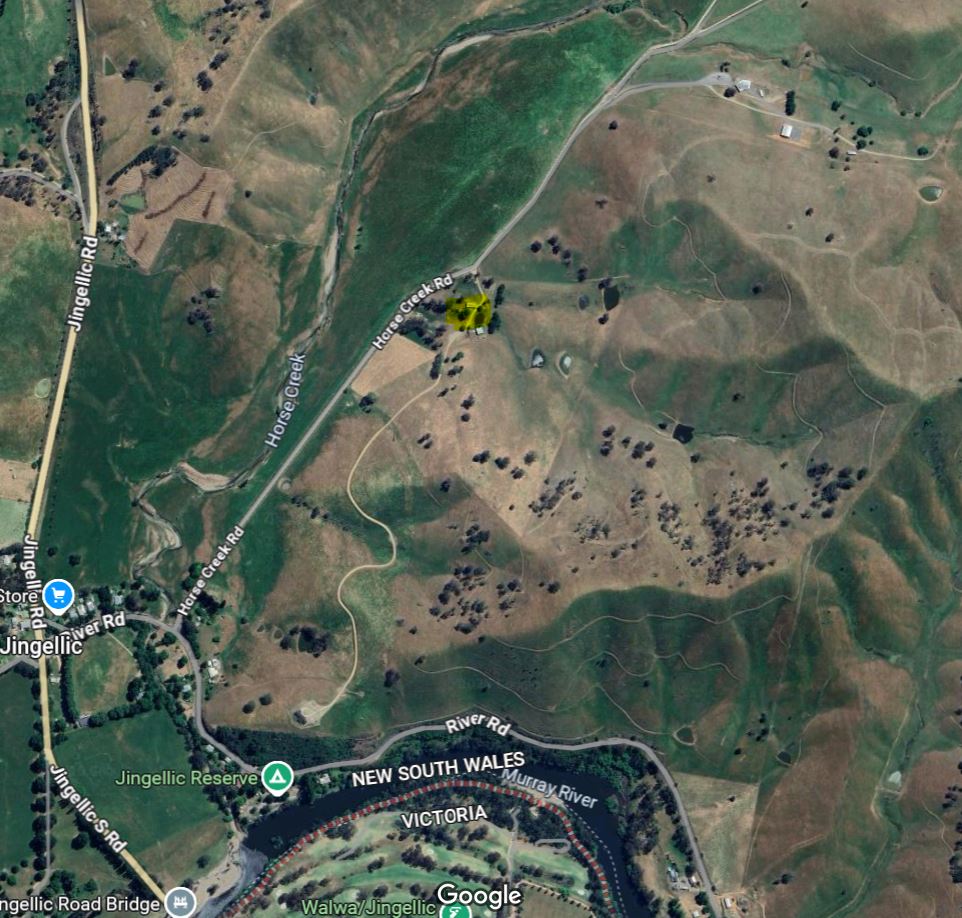
I then went searching on the NSW Land Registry site and discovered that this particular section of Jingellic is in the County of Selwyn in the Parish of Jingellic East and look what I found on the first map I opened.

Figure 44: Courtesy of the New South Wales Land Registry Services
https://hlrv.nswlrs.com.au/
Peter’s name noted on it. Glenlogie sits on the traditional lands of the Dhudhuroa and Walgalu people in the Wiradjuri Nation. https://en.wikipedia.org/wiki/Dhudhuroa_people
This map has been updated a few times, but you can clearly see that it was originally created in 1899, so we can confidently say that Peter was living on Glenlogie before the turn of the century.
If you look back at the Google map (Figure 43) and compare it with the Historical Parish map above, you can see that they match up almost perfectly. I would suggest that 146 probably sits in the top middle part of section 15 on the historical map, putting it firmly in Peter’s land holdings.
There is nothing that states definitively that this is Glenlogie, but I think we have enough points lining up to say, it very well could be. Here is a close-up of the property.
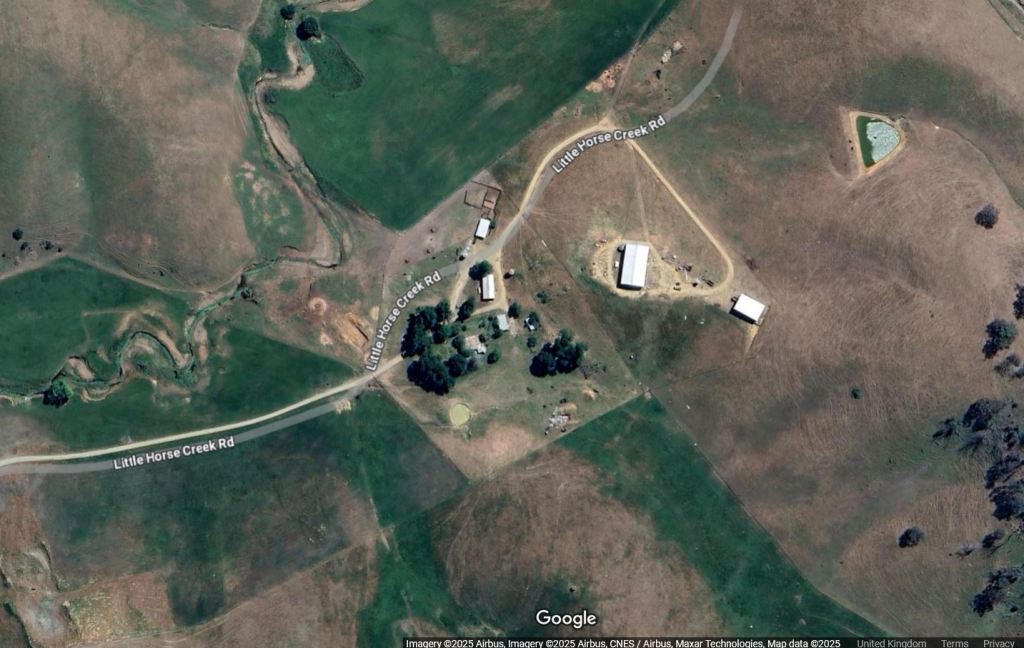
Figure 45: Courtesy of Google Maps
The next family event to happen, was the death of my grandfather’s granduncle, William Macvean, brother to his grandfather, Alexander.
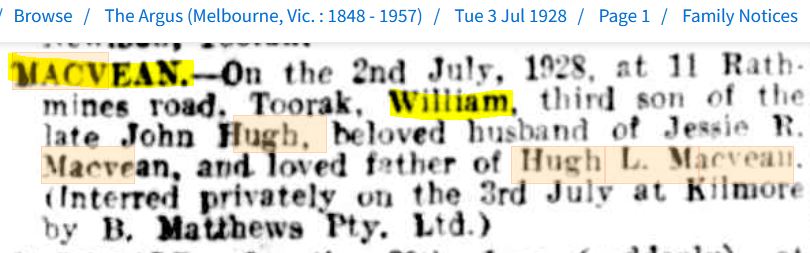
This is 11 Rathmines Road, Toorak today, but I can bet that William would not be familiar with the house that now sits on it.

Figure 47: Courtesy of Google Maps

This is the first that I’m hearing about these estates of Craiglielea and Cardonald, so will have to do some digging on these.
This next find is phenomenal, another photo of William. Sally M. (Cousin) shared this photo of William with us years ago, and it was a small digital file that becomes very pixelated when you enlarge it.
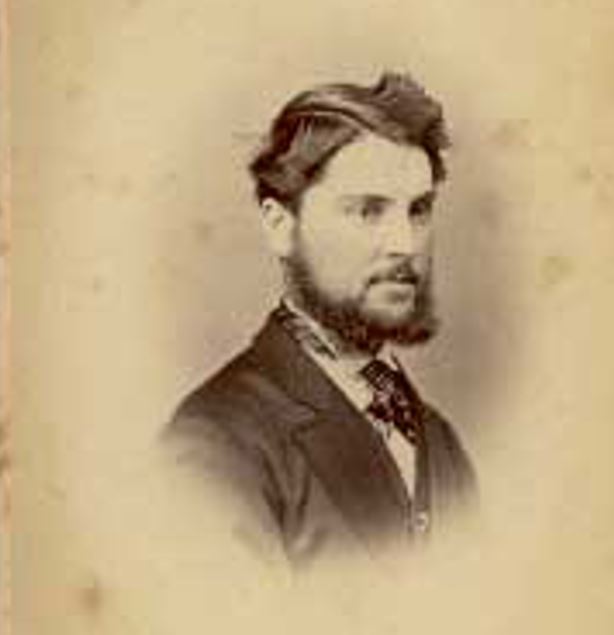
Figure 49: Courtesy of the Macvean Family Archives,
Generously shared by Sally M (Cousin)
I uploaded it to Ancestry and ran it through the new AI sharpen feature they now provide, and look how it came out below.

Figure 50
Just extraordinary, what a picture! I didn’t know anything about William’s story but I discovered him mentioned in “Henderson’s Australian Families: a genealogical and biographical record.”
William started working with his father, John Hugh Macvean, my 3x great-grandfather, on Stony Rises Station in western Victoria but had a change of career in 1872. He moved to Melbourne and opened a school in Brighton with a colleague of his, Hannibal John Luther Batten.
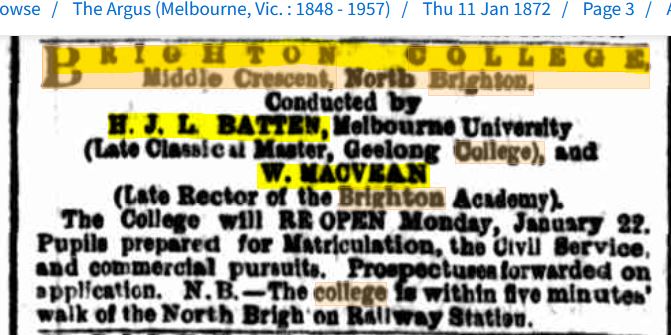

I went looking to see if there was any information on the college, especially now knowing that it was in Middle Crescent in North Brighton. I found it mentioned on the “Victorian Heritage Database” I wondered if this meant the college was still standing?


https://vhd.heritagecouncil.vic.gov.au/places/198127
Wow, the random stuff you can find is amazing. So the building was built in 1866, and it was still standing, just. Firbank Grammar wanted to demolish the house and build a sports hall on the site, but the Heritage Council ruled it was of historic significance to Victoria in 2017. https://www.theage.com.au/national/victoria/heritage-listing-for-brighton-home-may-block-26m-firbank-grammar-sports-centre-20170108-gtnqdd.html

https://www.theage.com.au/national/victoria/heritage-listing-for-brighton-home-may-block-26m-firbank-grammar-sports-centre-20170108-gtnqdd.html
Here is the latest Google Maps photo of the site from 2022. I, unfortunately, can’t find any other information on the house as to whether it survived or not.

formerly The Brighton College, 1872-1883
Figure 53: Courtesy of Google Maps
William and John’s partnership only lasted till October 1873 but it looks like William was still happy to be involved in the running of the school even though he clearly went back to his pastoral career.
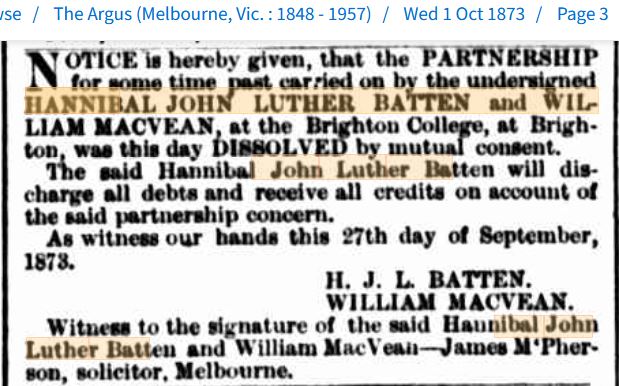

Tiled Gallery 6: Courtesy of Trove, National Library of Australia
I found a recent map showing Taminick Homestead, and it sits about 30 km from Wangaratta at the foot of Mount Warby.

https://mapcarta.com/29946936/Map
William was in partnership with his brother John Zieglar Huie Macvean operating under the name of the “Macvean Bros'”
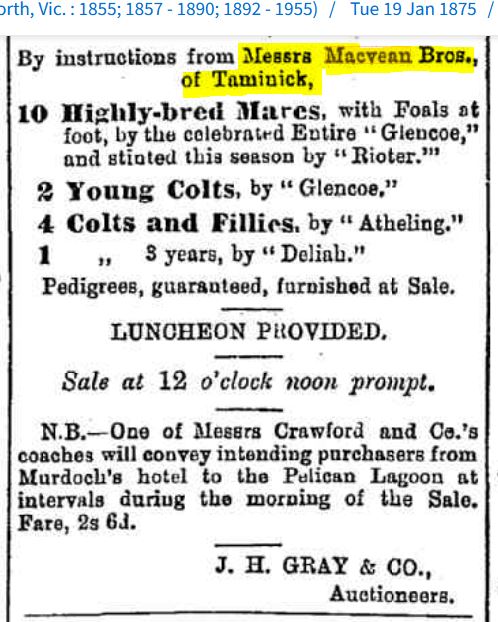
And you might have guessed from the recent map above that the station is still going today.

Figure 56: Courtesy of Google Maps
Our next find takes us to September of 1928, and it is another new Mr Macvean.
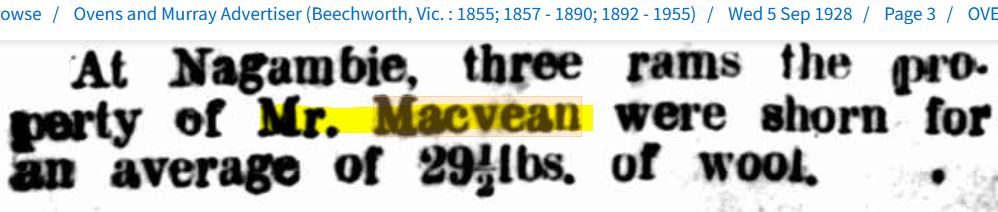
This Mr Macvean at Nagambie is referring to George Hugh Macvean’s (Figure 16) father, Campbell Cameron Macvean. Brother to Thomas Chalmers, whom we discussed earlier in this post and cousin to William above.
And here he is for us to look at, thanks to that amazing treasure trove of old Macvean photos again.

Figure 57a: Courtesy of the Macvean Family Archives,
Generously shared by Sally M. (Cousin)
I can also share that I discovered Campbell was settled in Nagambie around 1918, thanks to the Sands Directory again.

Campbell appears here in this Sands Directory listing for 1918 with his brother, Hugh, and their sister-in-law, Gertrude Macvean, née Snodgrass, who’d married another of their brothers, Duncan Cameron Macvean. (Duncan, unfortunately, passed away in 1912.) Also appearing is their other brother, Thomas Chalmers Macvean, and their cousin, William Macvean, at Moranding. (Both mentioned earlier in this post).
The last W. S. McVean, in the list, refers to William Stevenson Macvean. I was able to confirm, thanks to Janelle McVean’s family tree on Ancestry.com.au, that he is not related to our Macvean clan.
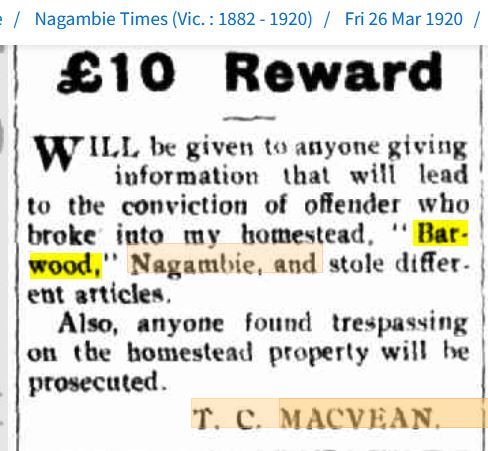
In pinpointing exactly where Campbell’s property in Nagambie was, I’ve been stymied. I’ve tried all the tricks and none have them have uncovered an address. There are lots of mentions of Campbell and his family being in Nagambie, but no specific street name has been mentioned. Here is a small selection below of these mentions.


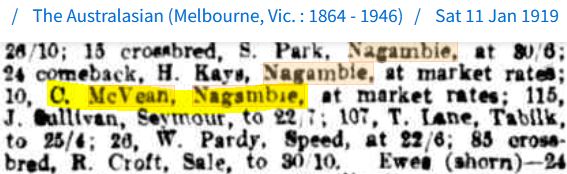
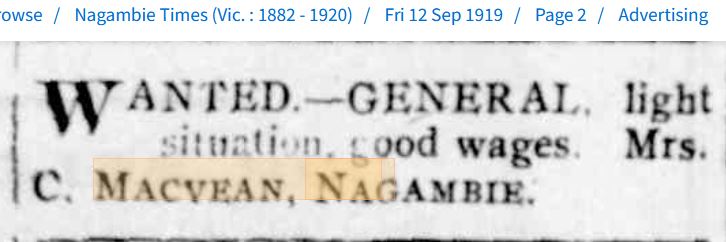

The map below is the closest I could get to showing the area that Campbell’s property may have been in.
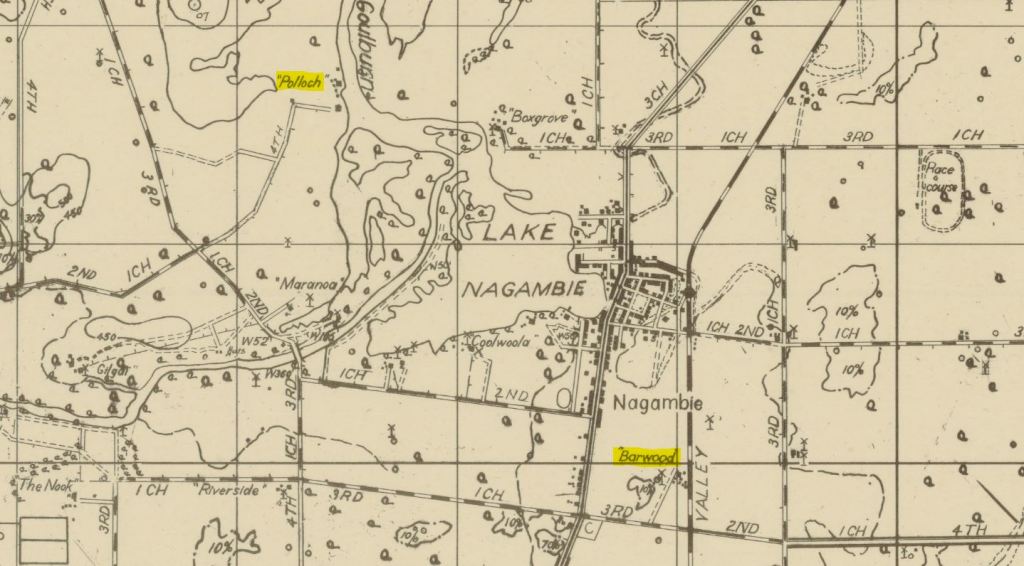
Figure 59: Courtesy of the State Library Victoria
http://handle.slv.vic.gov.au/10381/117589
What is great about this map is the fact that it has a number of homestead names marked on it. I have highlighted two.
“Barwood” you would have noticed, was mentioned in (Tiled Gallery 6) as the property belonging to his brother Thomas Chalmers Macvean. “Polloch” was the property of his maternal uncle, Alexander McLachlan Cameron.

Discovering Alex Cameron’s name led me to this very interesting article, which discusses an issue with his will and specifically what Campbell was entitled to.
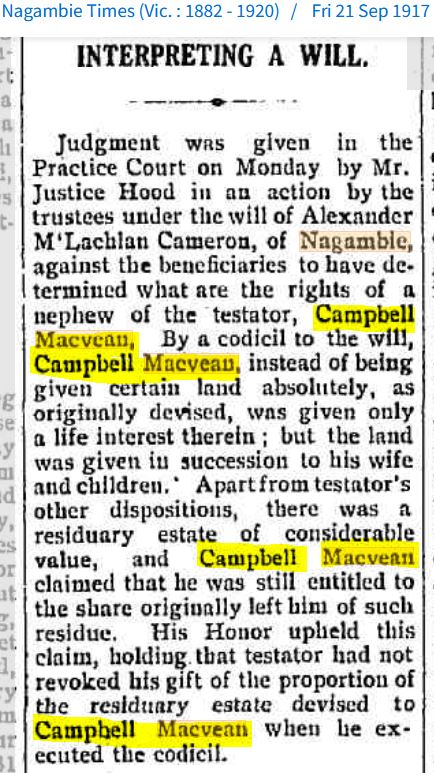
According to other newspaper reports at the time, Alexander’s estate was valued between £45,000 and £50,000, and once all beneficiaries had been paid out, the residuary estate was valued at about £12,000. Campbell was entitled to a sixth share of that residuary estate, which is equivalent to about $100,000 in today’s money, so well worth Campbell’s effort of contesting the will. https://www.in2013dollars.com/australia/inflation/1923?amount=1000
I found one other small mention of Campbell’s property and a name that might get us closer to where it actually was.

“Hughes Creek“, I went searching on the map and found it due south of the Nagambie township.

Figure 63: Courtesy of the State Library Victoria
http://handle.slv.vic.gov.au/10381/126919
So presumably, Campbell’s property sat somewhere along the creek pictured above.
Just to finish off this section discussing Campbell and his family, I found another great link within the family in Campbell’s marriage notice to Sarah Gertrude Weale.

That is his uncle, the Rev. Allan Macvean, brother to his father, Ewen and my 3x great-grandfather, John Hugh Macvean, who marries them. I love finding these links that show the family were involved in each other’s lives like this.
When I was searching the Public Records Office of Victoria (PROV) they had a copy of a slide of Rev. Allan, which I hadn’t seen before. I have a copy of this photo, but it comes from a photo album on the history of Brunswick. This slide is clear as and has so much detail in it.

Figure 65: Courtesy of the Public Records Office of Victoria
http://handle.slv.vic.gov.au/10381/126919
If you have an interest in the history of Brunswick, this slide is part of a collection of 500 slides celebrating its centenary. Here is the link.
http://handle.slv.vic.gov.au/10381/126919
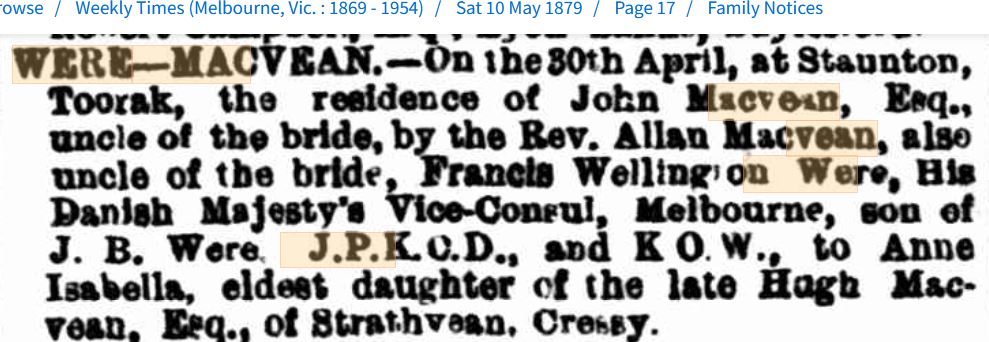
Rev. Allan also married Campbell’s older sister, Anne Isabella Macvean, to Francis Wellington Were back in 1879.
Back to 1928, we are in September and Marion Macvean is opening the new tennis courts at Spring Ridge. Of course, Spring Ridge is where she held her second Country Women’s Association (CWA) presidency.
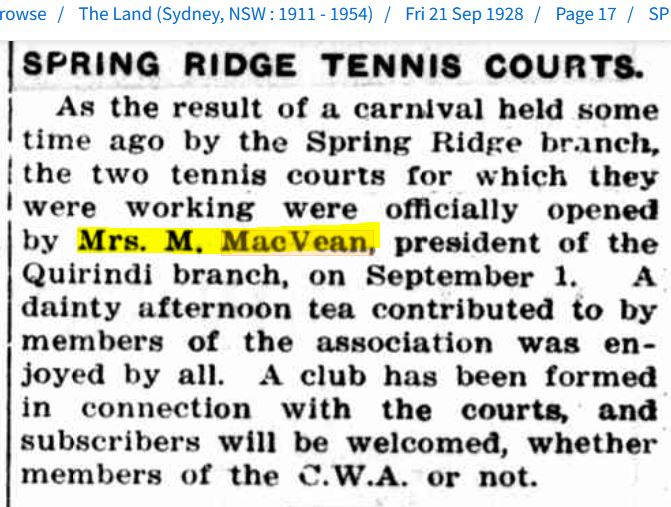
There are absolutely zero photos of the tennis court coming up from the time but I did manage to locate where the tennis courts are presently.

Figure 68: Courtesy of Google Maps
I wonder if this could be the site of the original courts that Marion opened. The C.W.A. rooms, where I’m assuming Marion would have stayed when in town, are only 700 meters up the road. Can you believe it? They were still standing and up for sale back in 2015. https://www.ratemyagent.com.au/real-estate-agency/agency/property-listings/lot-1-darby-road-spring-ridge-abtjes#gallery
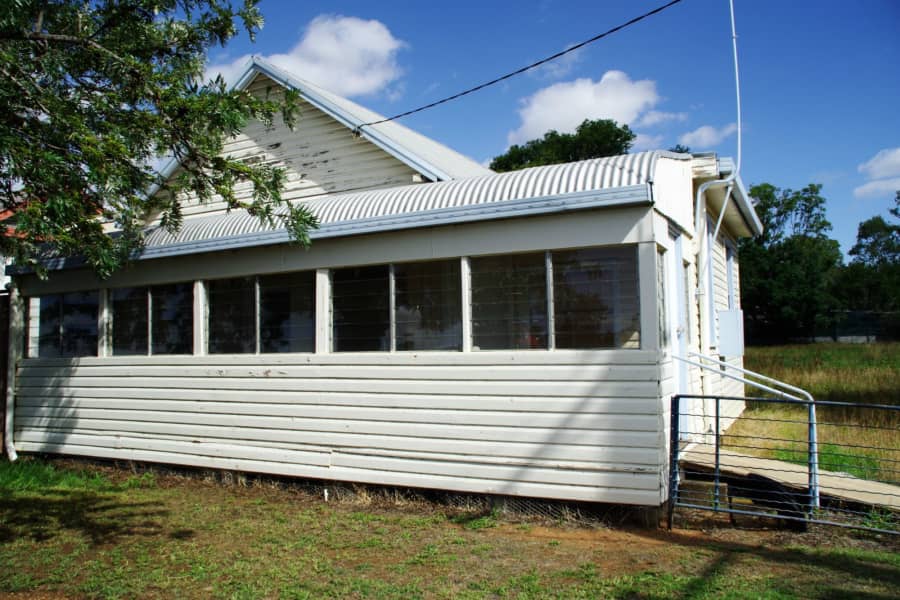
Figure 69: Courtesy of Rate My Agent
https://www.ratemyagent.com.au/real-estate-agency/agency/property-listings/lot-1-darby-road-spring-ridge-abtjes#gallery

Figure 70: Courtesy of Rate My Agent
https://www.ratemyagent.com.au/real-estate-agency/agency/property-listings/lot-1-darby-road-spring-ridge-abtjes#gallery
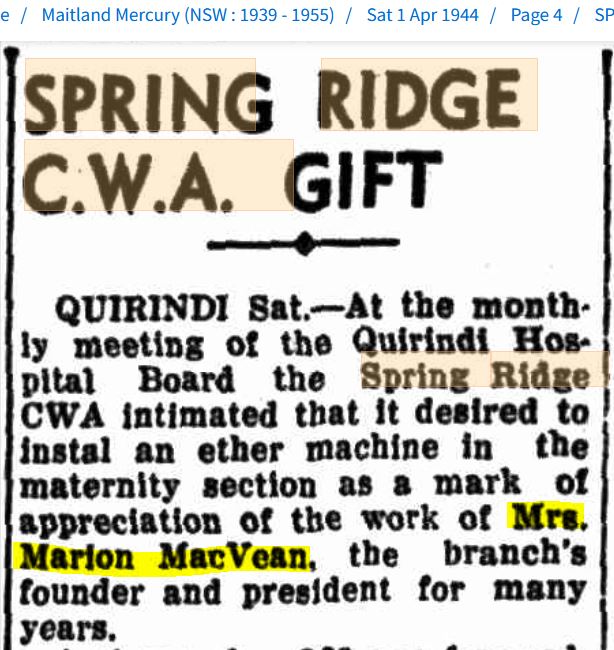
I can’t find any mention on Trove of when the C.W.A. stopped using the building as the official C.W.A. Rooms, but this article below is the last mention of the Spring Ridge branch I can find and it is fitting that it mentions Marion.
I found the building on Google Maps, and it was still standing as of February last year.
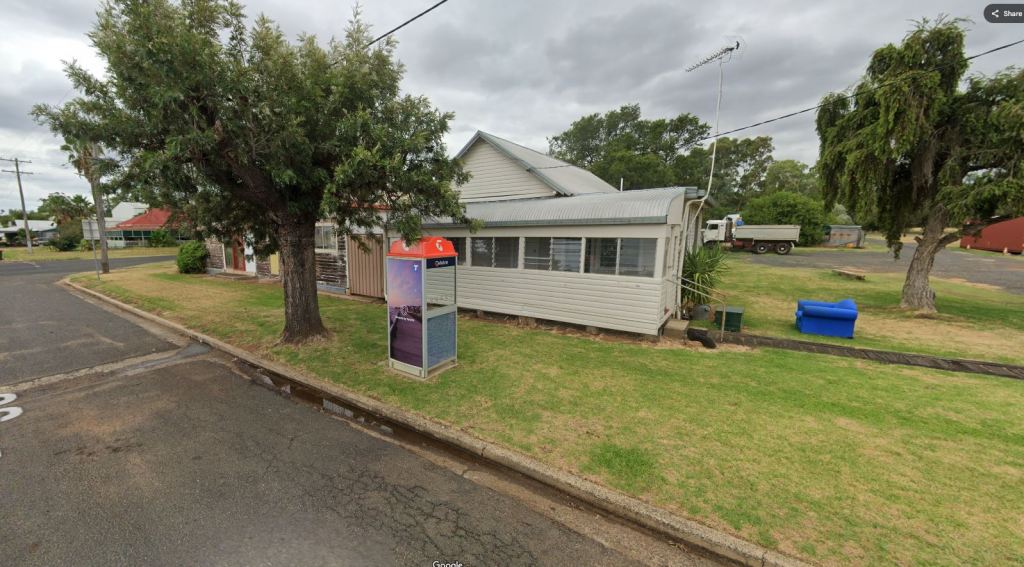
Figure 71a: Courtesy of Google Maps
I did forget to share where Spring Ridge actually is. It sits about 50km north-west of Quirindi, where Marion lived.

Figure 72: Courtesy of Google Maps
I also managed to find one historic photo of Spring Ridge. It is from 1906, so about 18 years before Marion visited the C.W.A. rooms in Darby Street. It is of the Royal Hotel, which was situated directly to the left of the rooms.
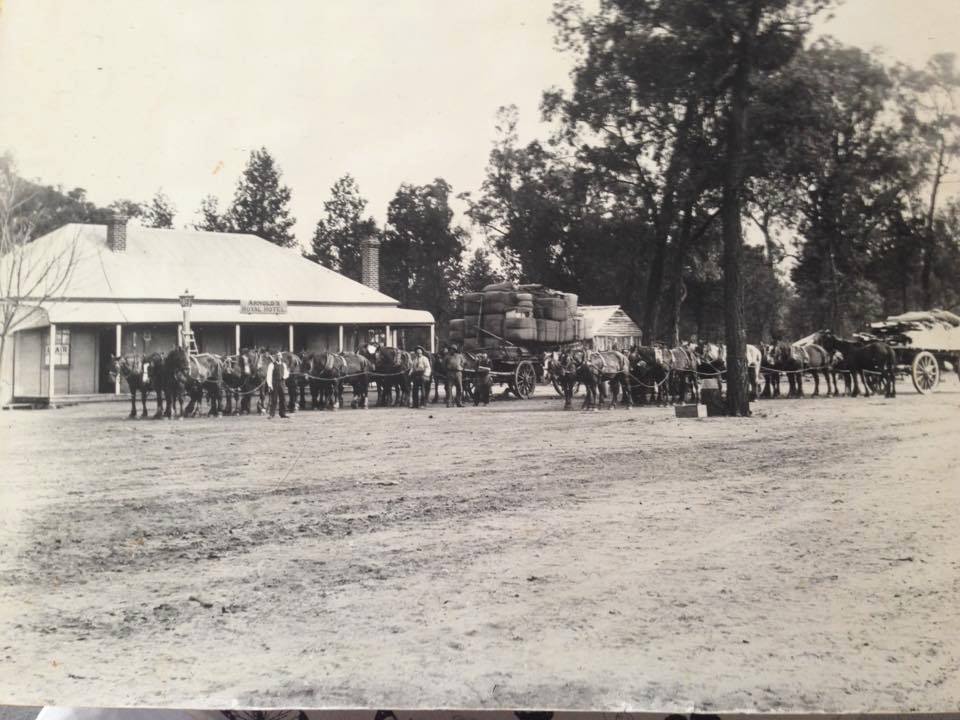
Figure 73: Courtesy of Quirindi Rural Heritage Village & Miniature Railway
https://www.facebook.com/photo/?fbid=1991405904215555&set=a.873969592625864
This is the same site today.

Figure 74: Courtesy of Google Maps
There was a small driveway between the two properties which is now just a walkway.

Figure 75: Courtesy of Google Maps
I find it fascinating to think that we are looking at a building and land with echoes of Marion all around it. She was right here, 100 years ago, holding all those meetings, living her life.

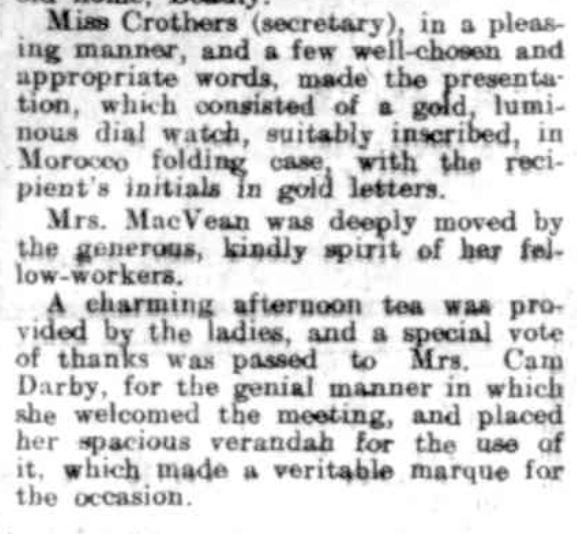
Article 1: Courtesy of Trove, National Library of Australia
The article above is from 101 years ago, the C.W.A. was only in its third year of operation as it was formed in April 1922. Oh yeah, and more on Beauly, Marion’s other home mentioned above, to come later.
Next, we have that other Mrs Macvean, who was a mover and shaker of her time; it is Isabel Macvean again, Mrs J. H. Macvean from Glencoe. Back again with a list of prizes for her turkeys and pomeranians.

Figure 76: Courtesy of Trove, National Library of Australia
And here we have another Mrs Macvean hitting goals.

This article is referring to Mrs Gertrude Macvean née Snodgrass, sister-in-law to Campbell Cameron Macvean, and Thomas Chalmers Macvean, all of whom we mentioned back in (Figure 58)
Gertrude married Duncan Cameron Macvean on the 11th of April in 1901 at All Saints Church in St Kilda, Melbourne. It was a society wedding.
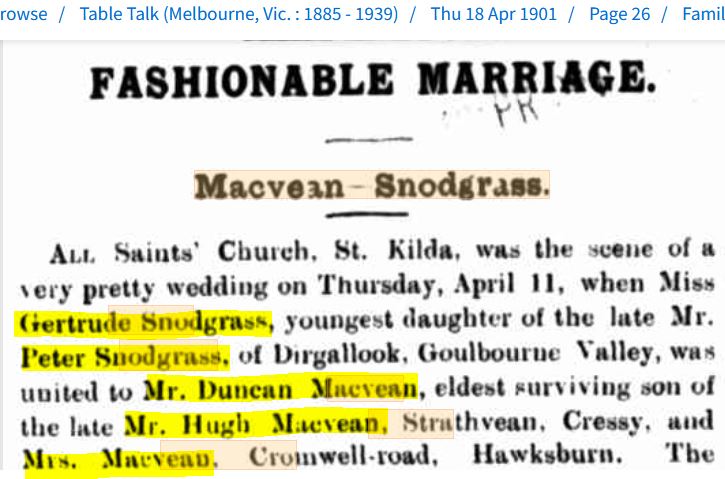
The wedding article is lengthy, so I have only added the first paragraph above. I will share the rest of the article in another post, as there is quite a bit of family history I would like to pull apart from it.

Figure 79: Courtesy of State Library Victoria
http://handle.slv.vic.gov.au/10381/301312
If you have read my previous posts on the Porter family or Dr William Begg, you will know that Duncan and Gertrude’s wedding is not the only family wedding that All Saints has seen.
William Begg, the son of Duncan’s cousin Annie Macvean, married his wife, Maude Mary Daniel, at All Saints twelve months earlier in April 1900. Then, Ellen Nellie Porter, the daughter of his other cousin Isabelle Macvean, married her husband, Norman Parbury, at All Saints six years later in April 1907. Obviously, there was something about being an April bride and groom.
There is no wedding photo of Gertrude and Duncan that I can find, but I did uncover these absolute gems in the Macvean Family Archives, thanks once again to our family historian, Sally M.
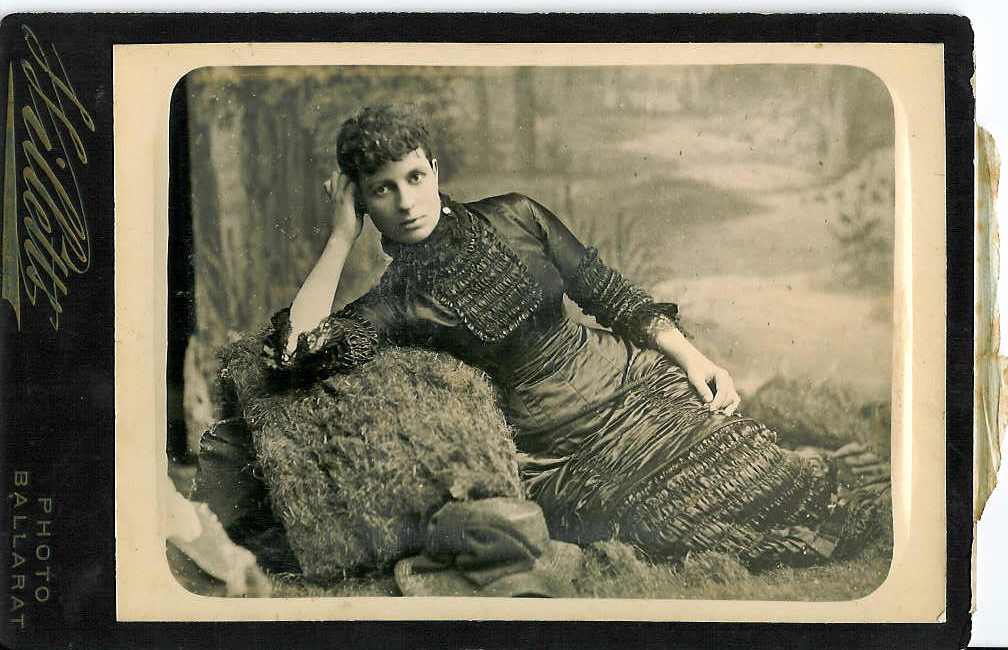
Figure 80: Courtesy of the Macvean Family Archives,
Generously shared by Sally M (Cousin)

Figure 81: Courtesy of the Macvean Family Archives,
Generously shared by Sally M (Cousin)
Duncan’s brother Thomas was one of his groomsmen. Unfortunately, there is no photo of him hiding in the archives. Gertrude’s brother, the Reverend Evelyn Snodgrass, actually performed the ceremony for them, and I did manage to find a photo of him online.
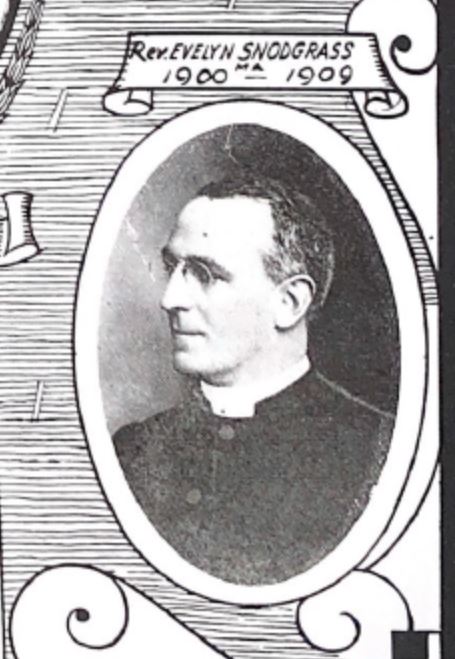
Figure 82: Courtesy of Rach at, Fitzroy Research, Melbourne
https://fitzroymelb.com/250-george-street-fitzroy-st-marks-church/
And Duncan’s best man for the wedding was the Reverend Ernest Selwyn Hughes and I managed to find a photo of him too.

Figure 83: Courtesy of Ancestry.com.au
Generously shared by User, djlj2359
Reverend Hughes also performed the ceremony for Nellie Porter and Norman Parbury’s wedding in April 1907, which we discussed above.
Reverend Hughes has a fascinating history himself from the little bit I have read so far. He was a sportsman and was heavily involved in the Cricketing world in Australia and also married Sir Don Bradman, the famous cricketer to Jessie Menzies in 1932. If you would like to know more, follow this link. https://trinity-college.shorthandstories.com/the-es-hughes-club/index.html
Returning to the lambing article in (Figure 77), “Shuma” was proving as difficult to pinpoint as Campbell Cameron Macvean’s property in Nagambie. I did, however, have some luck on the (PROV) site. Duncan’s will has been digitised and is readily available, and I just happened to find this small reference to the property hidden within it.
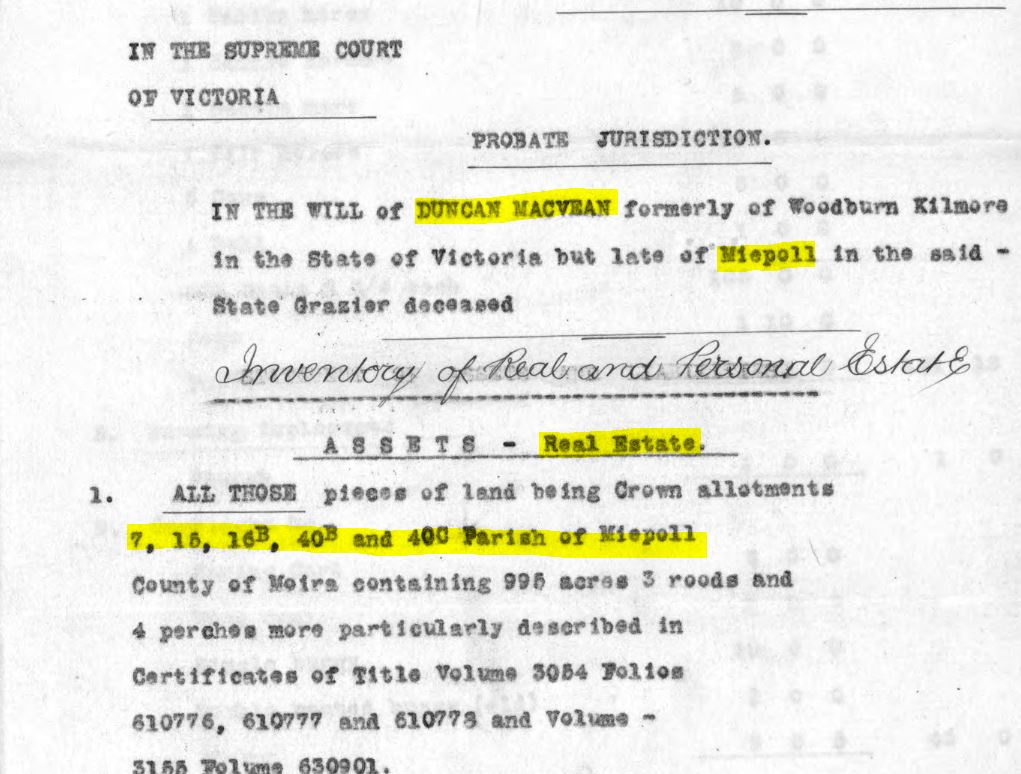
Figure 84: Courtesy of the Public Records Office of Victoria
https://prov.vic.gov.au/archive/6FEDF856-F207-11E9-AE98-39A703311D95?image=1
I have shared in previous posts that I haven’t had much luck tracking down maps on the PROV site, but this time I tried, things were a bit different. The trick is you have to go in via the “Historic plan Collection (1836-1984)” and then on the front page of this section, there is a reference to the “Map Warper Tool” which you then select and use to find the appropriate map.
https://mapwarper.prov.vic.gov.au/
This tool seems to have a lot of information that was captured during cadastral surveys, “…that is the surveys to document the boundaries of allotments, parishes and townships.” Which is great as that is exactly what we want.
I found the plan we needed, “Parish of Miepoll, County of Moira.” Excuse the split in the view of the map below; it wouldn’t fit on one scan.
You’ll note this plan is from 1968, decades after the family had ownership, and there has obviously been some subdivision that has taken place, but there are the portion numbers, as mentioned in Duncan’s will. (I have placed a yellow mark next to the numbers)
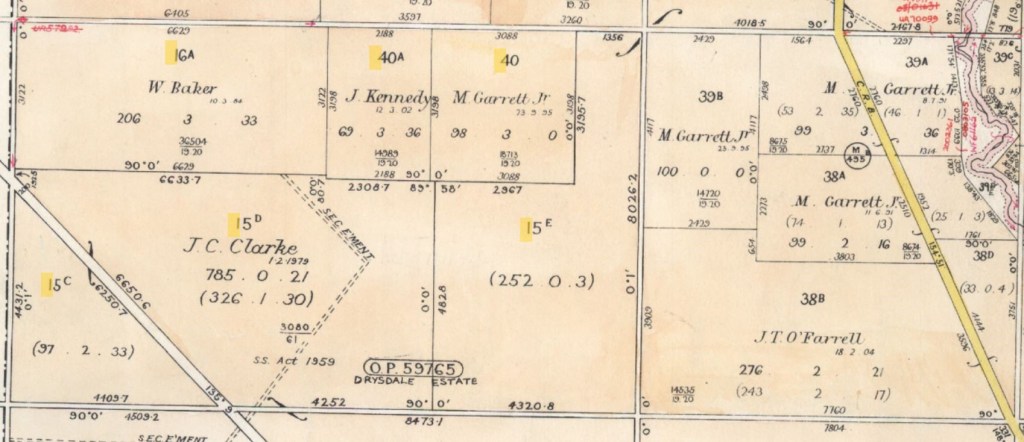

Figure 85: Courtesy of Public Record Office Victoria
https://mapwarper.prov.vic.gov.au/maps/2448
These pieces of “…crown allotments” actually belong to the Nguraiilam People. They have always been the traditional owners of this land and always will be.
It only took fifty years from the time of the British invasion for the Nguraiilam way of life to be seriously impacted. Grazing from the livestock that squatters had introduced onto their land had destroyed indigenous game pastures and staples like yams and mirr-n’yong roots. https://en.wikipedia.org/wiki/Ben_Kiernan
I went to Google Maps, and it is the most extraordinary thing; the boundaries are visible in the aerial photo, and they match with the map above. (The yellow highlighter strikes again, just to help out.)

Figure 86: Courtesy of Google Maps
If you look up in the left hand corner of the map in what is Sect’16, you will see a cluster of trees and what looks like could be buildings. I zoomed in and look what appears.

Figure 87: Courtesy of Google Maps
I wonder if this might be the original “Shuma Homestead”
We next jump to the first week of October and a mention of sheep sale prices, for Maffra (Jack) Bushby Macvean at Nyngan in the Bogan Shire.

Randomly, the Bogan Shire has shared a Shire Property map that just happens to show exactly where Capt. Jack’s property was. The property was named “Strathvean”, the same name his cousin, John Hugh Macvean, used for his property in Tarcutta and his granduncle, Hugh Macvean, father of Duncan, Campbell and Thomas, used for his in Cressy, Victoria.

Figure 89: Courtesy of Bogan Shire
https://www.bogan.nsw.gov.au/images/tourism/maps/reduced_bogan_shire_property_map.pdf
Capt. Jack’s Strathvean sat on the traditional lands of the Ngiyampaa Wangaaypuwan people, who are a clan of the Ngiyampaa nation. https://www.everyculture.com/Oceania/Wongaibon.html
I think I matched it to the present day map on Google.

Figure 90: Courtesy of Google Maps
There is only one house that I can see when you zoom in. It sits just outside the yellow line that I have drawn on the map above, upper right quadrant. This view is what appears when you zoom in.

Figure 91: Courtesy of Google Maps
The next article relates to William Armstrong Macvean again. We have already discussed in this post that he is brother to Poliah (Sonny) Armstrong Macvean, and now we can give him a bit more context, he is also cousin to Duncan, Campbell and Thomas Macvean of Miepoll.
This time, William is golfing at Toowoomba, Queensland.

There is a reason why he is playing at Toowoomba, which will become clear in a moment.
I found a couple of photos of the club and the fairway on the State Library of Queensland site.
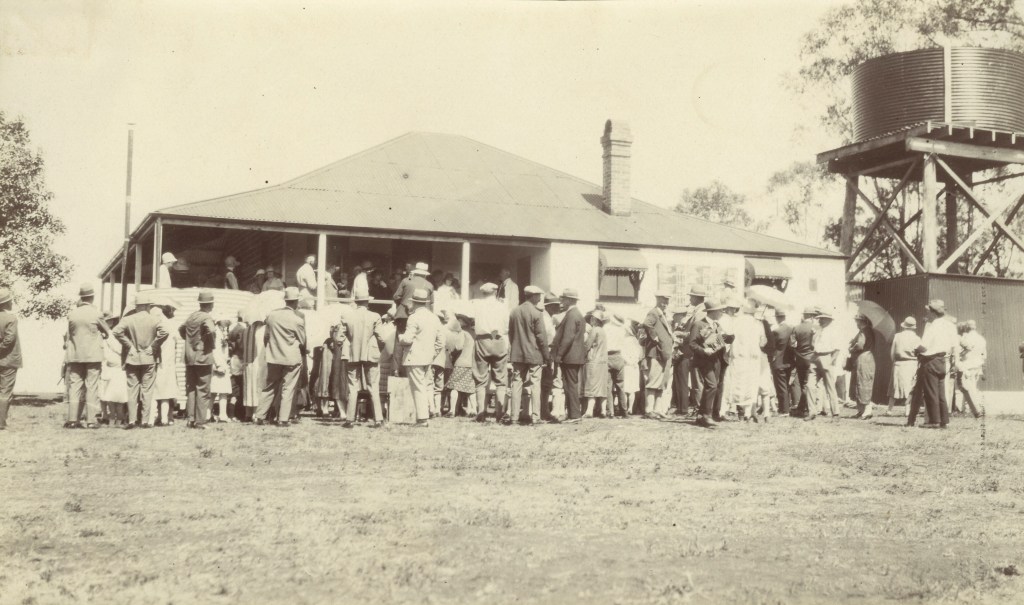
Figure 93: Courtesy of the State Library of Queensland
https://collections.slq.qld.gov.au/viewer/IE1410344
This is only three years before William is teeing off so he would be very familiar with this view and even though the fairway photo is undated it is assumed to be of the time.

Figure 94: Courtesy of the State Library of Queensland
https://collections.slq.qld.gov.au/viewer/IE4848890
Just three and a bit weeks later, there is a mention of William presenting a cup at the Whychcourt Tennis Club in Southport, but I don’t think he travelled back down for this.
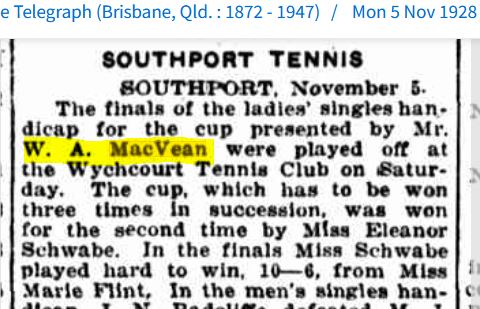
There are a few other mentions online about the cup, and I think that William and Flo actually purchased the cup that would actually be awarded at the finals presentation.

Back at Miepoll for our next article, and a mention of this poor bloke, Mr Cain, this wouldn’t have been pleasant.
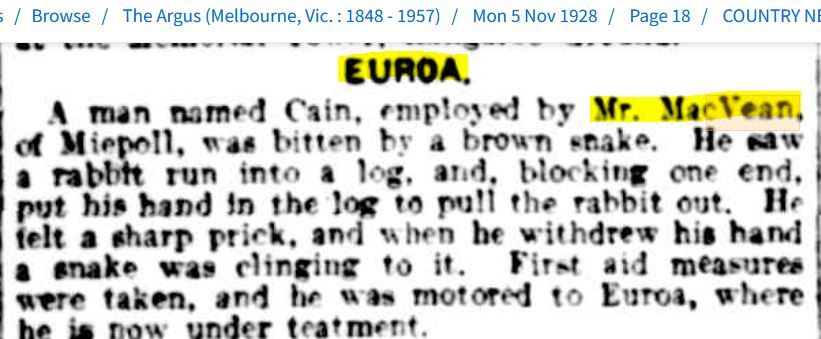
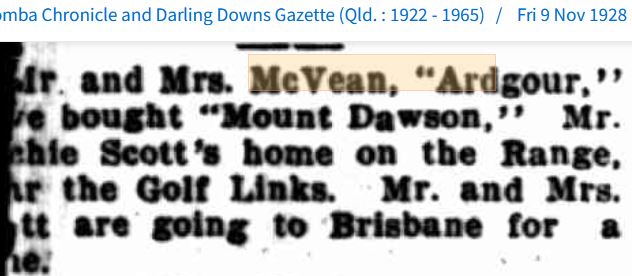
And here is the reason that William was playing golf in Toowoomba: He and Flo had bought a property there.
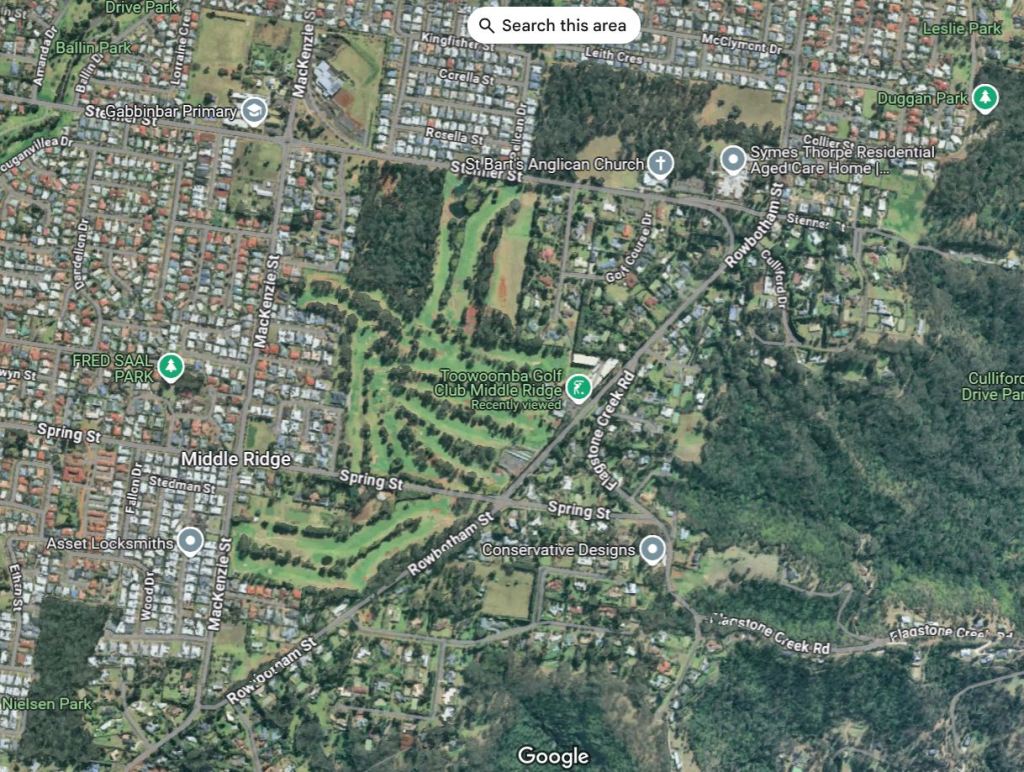
I couldn’t unearth any information or a photo of “Mount Dawson” the property but here is an aerial view of the area around the golf course so I’m presuming it was in here somewhere.
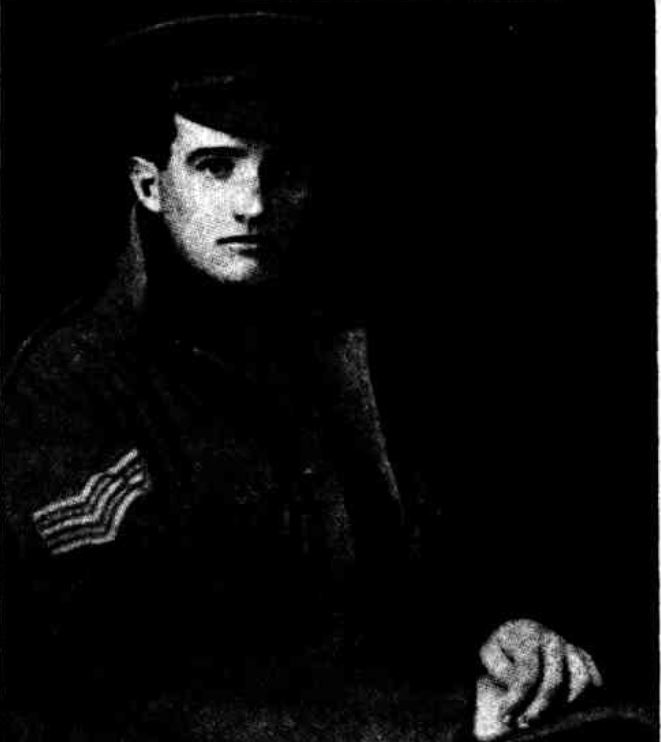
I did find this one mention of “Mount Dawson” in relation to a very sad event that occurred to the Scott family who William and Flo purchased the property from.
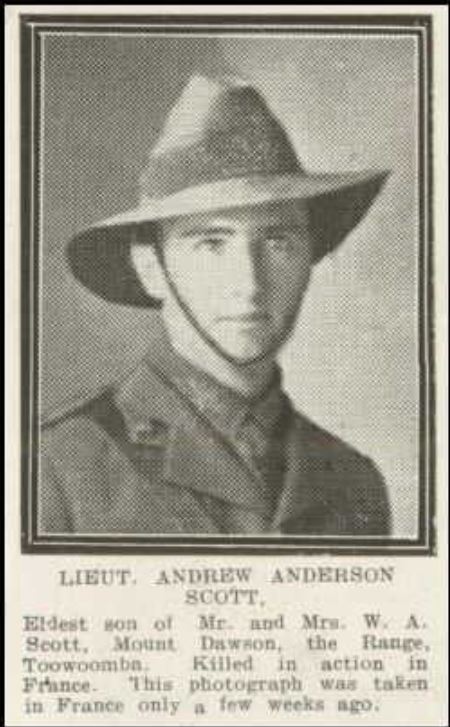
Generously shared on the K Rheese Family Tree
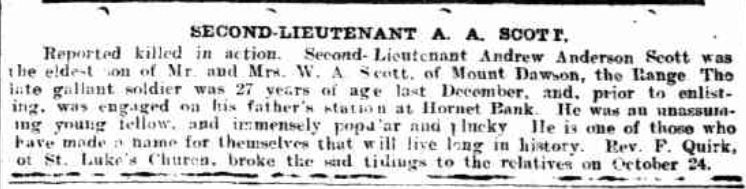
I’m assuming this next article means that Flo and William were staying at this hotel whilst the sale of “Mount Dawson” was being finalised, or perhaps they were having some renovations done prior to moving in.
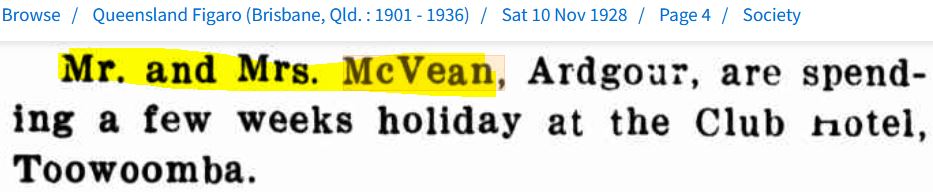
The State Library of Queensland had a photo of the Hotel from 1890.

Figure 103: Courtesy of the State Library of Queensland
https://collections.slq.qld.gov.au/viewer/IE78562
I think it would have looked very similar for Flo and William, here it is advertised, 22 years later, just 16 years before their stay.

Figure 103a: Courtesy of Time Gents
https://timegents.com/2018/12/09/queensland-hotel-advertisements/
Next, we are back with Alick and Muriel Macvean, who were teamed up again, this time for a game of Canadian Foursome with Mr. and Mrs. Muston.

In Canadian Foursome, two players form a team, both tee off and then choose one of the balls to play on each hole. https://www.nelsongolf.co.nz/about-us/golf-competition-rules/
This next find shows that just five months after his father’s death, Hugh L. Macvean has taken the family property on Rathmines Road, off the market.

You will recall this was William Macvean’s property in Toorak mentioned above in (Figure 46).
My next find shows that Ewan Macvean was still treading the boards of the very small stage of the Queens Hall in Collins Street, Melbourne. This time, taking a lead role.

Now this is very interesting, two of the plays were in the tradition of the Theatre Grand Guignol. This style of theatre was founded in Paris in 1897 and was dedicated to performing naturalism in theatre and became synonymous with all things gory. https://www.theatreinparis.com/blog/the-horrific-history-behind-theatre-du-grand-guignol-in-paris
So it looks like Ewan was pushing the boundaries of his performance which for the 1920s I imagine would have been fantastic.

https://www.therantsmacabre.com/main-page/2016/3/21/i1ix3161brhm1yw8e8l47jd79dxvta
The excitement must have been brewing for Flo and William with their impending move to their new home, “Mt. Dawson”.
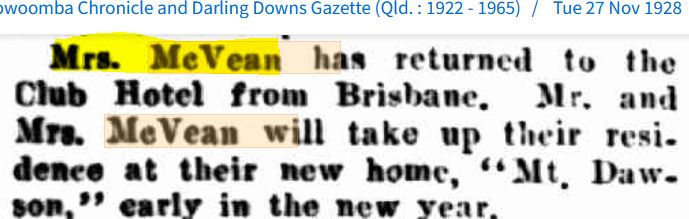
I wonder if Flo had been in Brisbane buying new furniture and rugs.
We now move on to December 1928 and the last big family event of the year, the death of Isabel Marian Bye, née Macvean, my grandfather, John’s cousin.


Article 2: Courtesy of Trove, National Library of Australia
Isabel was the sister of Ivan Laurence Macvean. If you read part one of these posts, you might recall that we discussed Ivan’s marriage to Mary Bromham on the 14th January 1925 and the fact that Isabel and Ronald Bye, her fiancé at that stage, were part of their bridal party.

Figure 109: Courtesy of the Macvean Family Archives
Isabel and Ronald had only been married for three years at the time of her death.


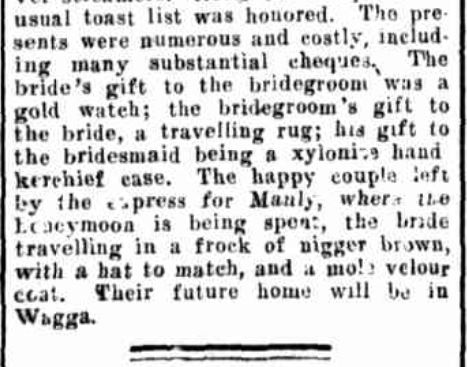
Isabel and Ronald were married just eight months after Ivan and Mary, holding their service at the same church, St Andrew’s at Wagga Wagga and their wedding breakfast at the same cafe in town, The Wonderland.
One noticeable difference was that Madame Sedgley sang at their service, and we now know, after reading part two of these posts, that Madame Sedgley goes on to sing at Isabel’s grandfather’s memorial service just six months later in February of 1926.


Article 4: Courtesy of Trove, National Library of Australia
As the obituary stated, Isabel was only 22 years old at the time of her passing, and she left Ronald with their two young sons, Willie and John, to raise.
I wonder if this article was placed by Isabel’s mother, Mrs Isabel Macvean of turkey breeding fame, to help take some of the pressure off, that I’m sure Ronald would have been under. It was placed just ten days after Isabel’s death.
Even though my grandfather’s name doesn’t appear in the article, if he were in town, I’m sure he would have been at Isabel’s funeral. He appears in the electoral rolls just 12 months later in 1930 as living and working at Holbrook, and I’m thinking he would have been in town in December 1928.
Two days later, William A Macvean, who is about to move into “Mt Dawson”, has some wool pricing listed from sheep raised on Ardgour, his and Flo’s sheep station in Queensland.

In our next article, just a week before Christmas of 1928, Dr Charles Battandier Macvean is attending a dance at the Nurses Club in Potts Point.
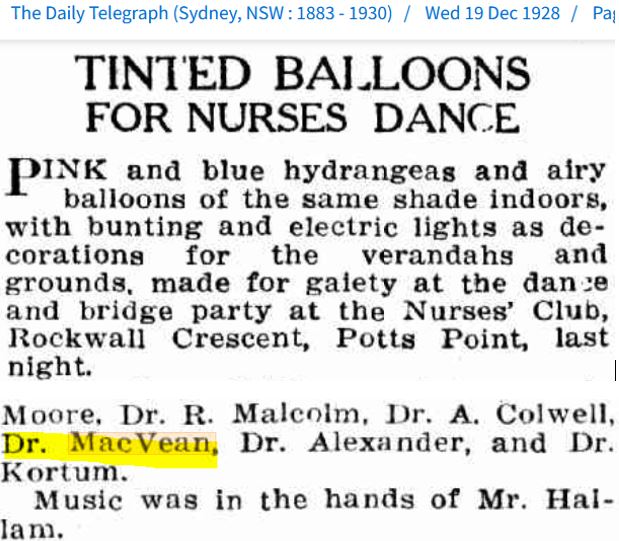
Don’t forget, Dr Charles is the son of my pop’s grandfather’s brother, Allan Macvean.
This next article shows that things were certainly progressing for Flo and William at “Mt Dawson”.

I wonder with this next article if Ivan was selling his property in response to his sister Isabel’s death.

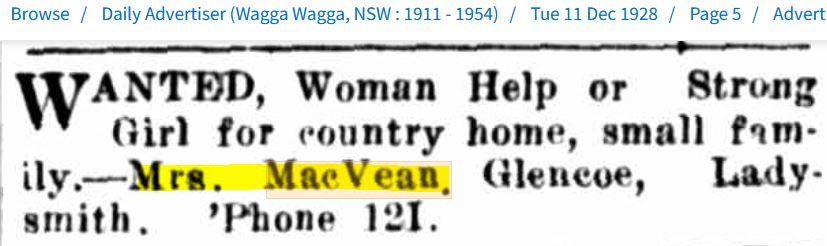
Perhaps he was thinking that he might be able to work with his brother-in-law, Ronald, or maybe it might have been in response to the fact that his father, John Hugh Macvean, was very ill, as was mentioned in Isabel’s funeral notice, which kept him from attending the service and that Ivan planned to take over his parent’s station, Glencoe.
“Glenburn” must not have sold or perhaps it came back into Ivan’s hands as his daughter, named for her aunt, Isabel, writes to the Albury Banner from the property. This was in 1938, ten years after the Agents note above.
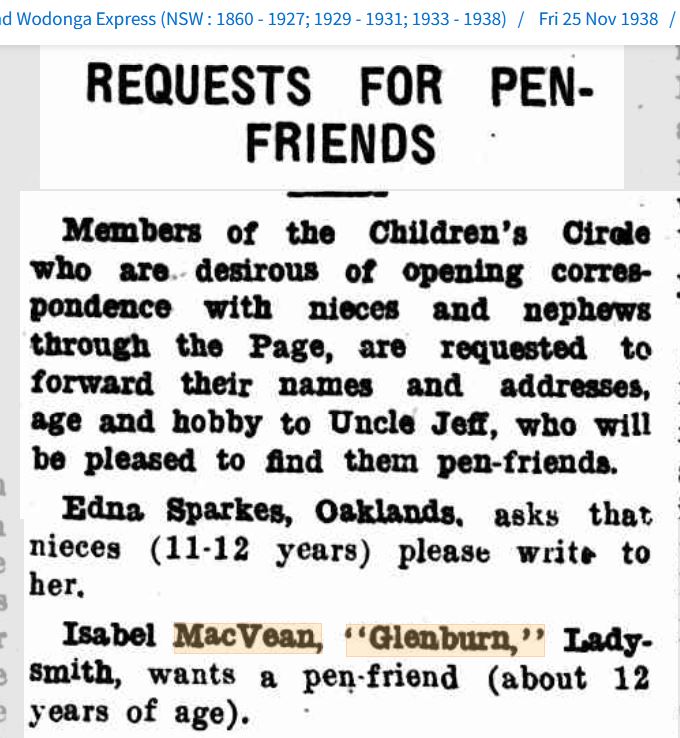
It is wonderful to see with this next notice that Isabel, John, Ivan and presumably Ronald were so well supported at what must have been a terrible time.
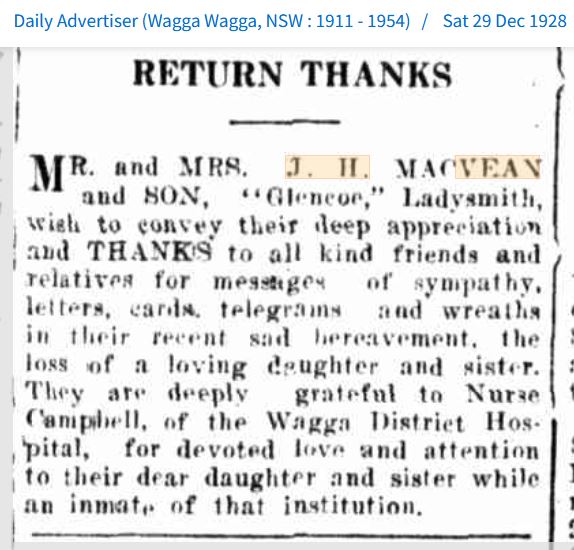
I did a bit of digging and to my amazement I was able to confirm who Nurse Campbell was.
She was Mary Douglas Campbell, sister to Mr Frank Leslie or Lester Campbell and I was able to find her in Ancestry thanks to a mention in her brother’s death notice.

Mary had six sisters, and you wouldn’t believe it, all of them have a photo attached to their profiles in Ancestry except Mary. So, unfortunately, we can’t see the face of the woman who looked after Isabel so well.
Now our final notice for the year, William and Flo getting closer to their move in date.

You may have noticed this whole post has basically focused on 1928 from March, with the odd step back in time here and there. Obviously, the journey to my grandparents’ wedding is taking much longer than I initially thought, which is fantastic; I’m not complaining.
At this stage, there is definitely a part four and maybe a five of these posts but as there is still nine years till my grandparent’s wedding I may change the sub heading to just “The Macveans in 19__!”
Hopefully, you can keep travelling with me.

 JOHN'S FAMILY HISTORY
Clear Picture – Next time we talk I will explain how I knew about this. Love you
Womens Tennis History
Sent: Thursday, May 15, 2025 at 3:16 PM
LikeLiked by 1 person
Sounds good, thanks for commenting.
LikeLike