My Paternal Grandfather, John Hugh Macvean, his Journey to his wedding day, what his family were doing at that time, and other amazing facts.
Thanks for joining me for part two of what the Macveans were up to as a family in the lead-up to my grandparents’ wedding.
If you read part one, you might recall I finished off jamming in quite a bit of information that I uncovered outside the timeline of that post.
You might be asking, “Why bother with the timeline?” Well, it helps me keep the story in some sort of order, and I find it difficult to go back and insert something I have discovered once that section of the timeline has been written. Hence the jamming. Hopefully, that makes sense.
We finished part one with the death of Donald Macvean, my 2x great-granduncle, in 1927. I have uncovered a few other items of interest concerning the family from 1926 that I will share now.
The first is a notice about a memorial service that was held for my 2x great-grandfather, Alexander Macvean, just five days after his death.
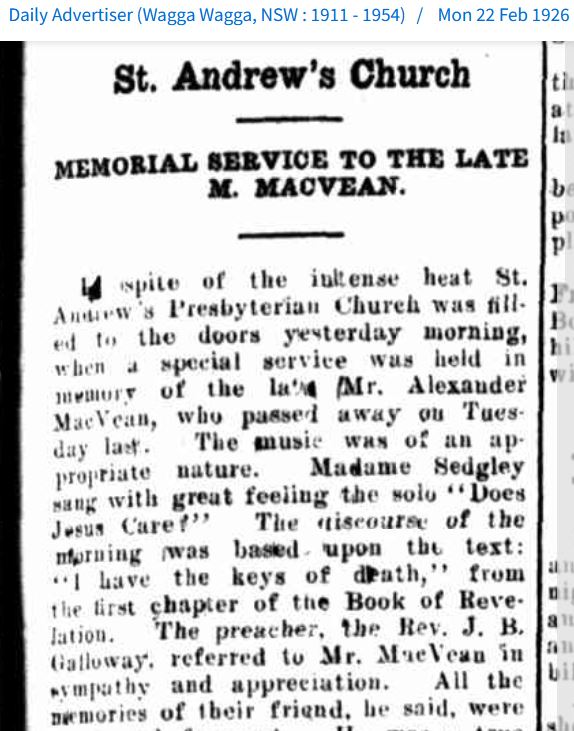


I don’t have much experience with memorial eulogies, but that seems like a pretty impressive bit of prose to read about your life. Again, if you read part one, you will note that it was the Rev. Galloway who was giving Alexander’s memorial, who also presided over his funeral.
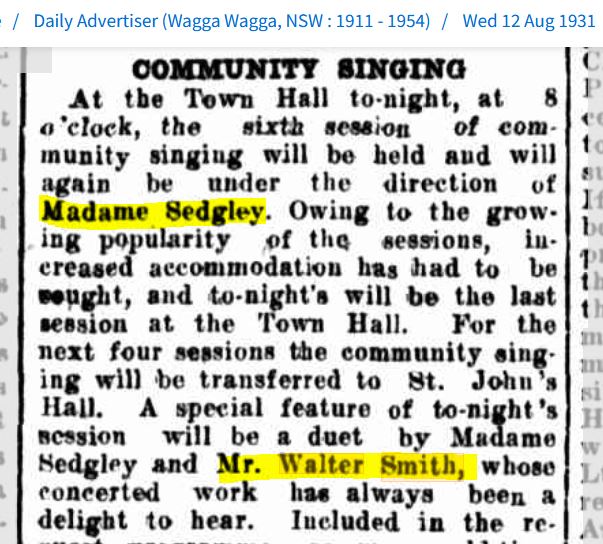
I had to do some digging on who, “Madame Sedgley ” was and why she was singing at Alexander’s memorial service. I was unable to unearth a photo of her but I did find this program of a concert she gave, on the Charles Sturt University website.

https://archives.csu.edu.au/index.php/5-s44-301
I was then able to find a mention of this actual concert on Trove.
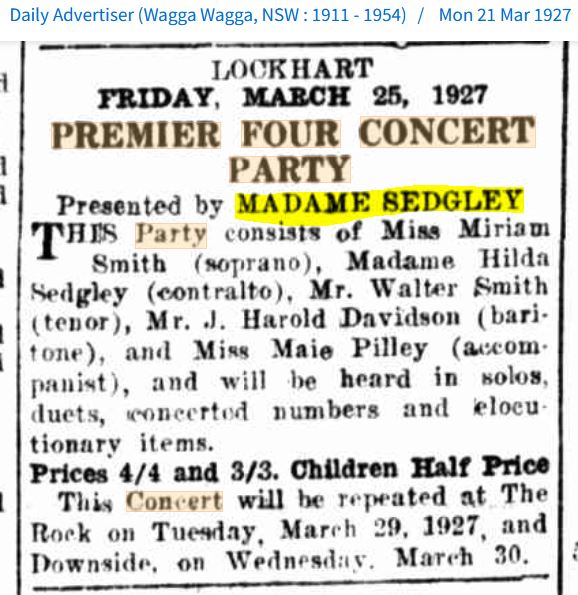
I found Madame Sedgley in Ancestry.com. It took a while, but I was finally able to confirm that she was Hilda Rosalie Sedgley, Mansfield, née Wood, and she was a very popular vocal artist at the time. Below is a small example of some of the press appearances she made.
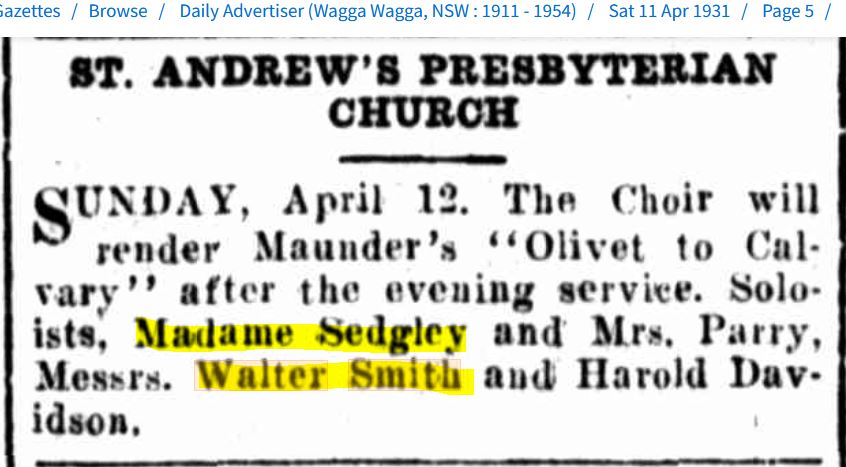
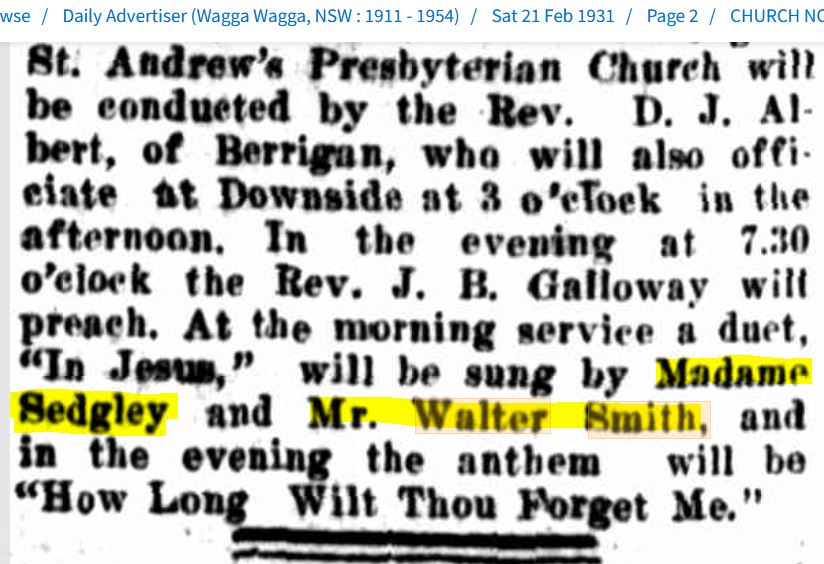

Tiled Gallery 1: Courtesy of Trove, National Library of Australia
Madame Sedgley was very active in the local Wagga Wagga community as well as at St Andrew’s Church, where Alexander was an elder. So I’m assuming this is why they knew each other.
Another link Hilda may have had to the family is Mr Walter Smith, the other name I highlighted above. I have a feeling it might be referring to Alexander’s son-in-law, Walter Smith. Walter was married to my great-grand aunt, Margaret Anne Burnett, née Macvean (Alexander’s daughter), in 1935, but I’m getting ahead of myself; we will come to them later in the post.
I can only imagine this next article would have stirred up some emotions for my grandfather and the rest of the family. A notice of sale for their property, “Rooksdale”, placed by the man who purchased it from them five years earlier.

It looks like Mr Mackie made a good profit. It was reported that he bought the property from my great-grandparents, Alexander and Annie, in November 1921 for £ 20,000; he sold it for £9,500 over his purchase price, which is the equivalent in purchasing power today to about $ 471,946.43. https://www.in2013dollars.com/australia/inflation/1923?amount=20000
This photo below is the only photo we have of “Rooksdale” in the family collection.

(L-R: Jean Macvean, Unknown, Jessie Macvean, Maffra “Jack” Macvean(maybe)
bottom row, L-R: Alexander Macvean, Marjorie Macvean & John Macvean, my Pop)
Figure 4: Courtesy of the Macvean Family Archives,
Generously shared by Greg P. (Cousin)
Just a week after the Rooksdale ad, there is an advert for all of Alexander’s household items for sale.

On our first visit to Wagga Wagga back in 2018, we managed to find “Lumeah”, Alexander’s last home. It was still standing in Coleman Street.

Figure 5a: Courtesy of the Macvean Family Archives
Lumeah stands on the traditional lands of the Wiradjuri people. https://aiatsis.gov.au/explore/map-indigenous-australia
Then, three months later, this fascinating article appeared, disclosing the sum of Alexander’s estate.

That combined amount of property, valued at £46,500, is the equivalent in purchasing power today to about $2,310,054.00. Yep, that is millions. https://www.in2013dollars.com/australia/inflation/1923?amount=46500
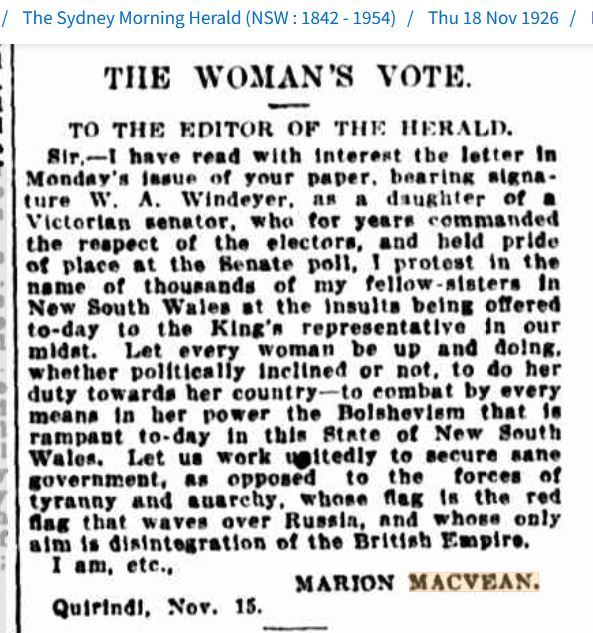
My next find is a letter written by Marion Macvean, wife of my 1st Cousin 4x removed, John Macvean. I mentioned in part one that John had passed away in 1924 in Quirindi, leaving behind Jane Marion, his widow and their daughter, Kathleen Margaret.
Marion was the daughter of Sir Simon Alexander Fraser and Lady Margaret Fraser née Bolger. Unsurprisingly, there is no photo of Margaret, but there is one I sourced for Marion’s dad, Sir Simon.
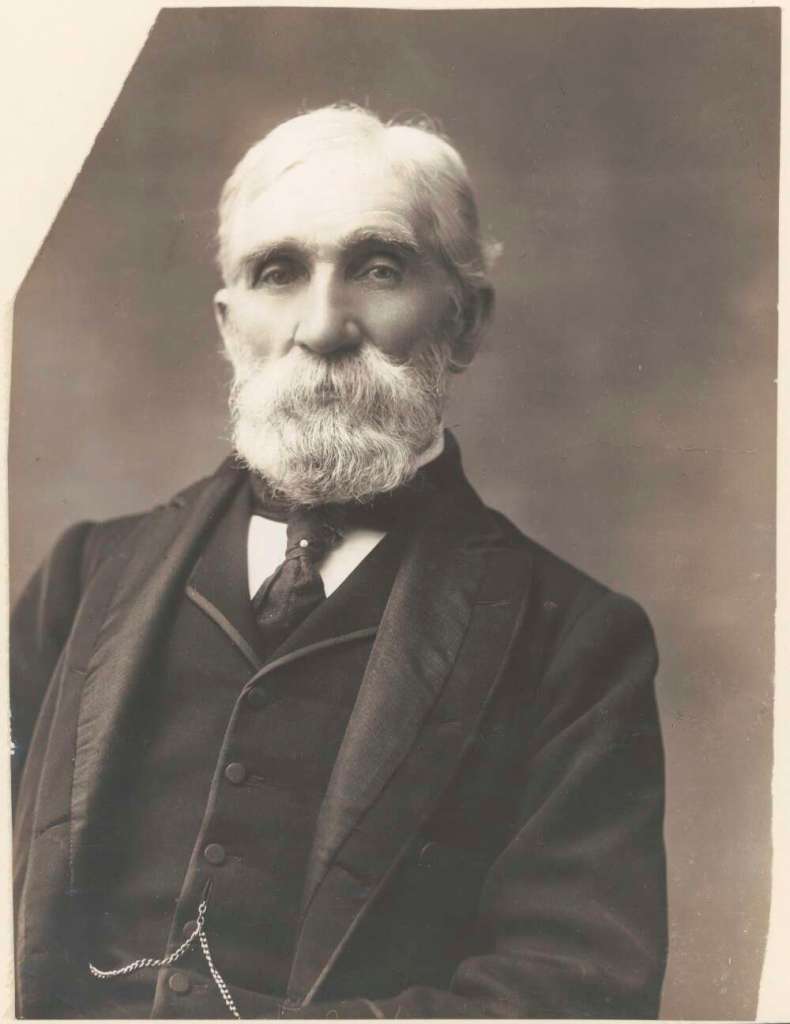
Figure 8: Courtesy of National Library of Australia
https://nla.gov.au/nla.obj-136696664/view
As a matter of interest, I did find the letter that Marion refers to in her letter, and if I have the gist of the matter correct, she is supportive of Windeyer’s position and is calling for her “fellow-sisters” to lend support to the NSW Governor at the time, Sir Dudley de Chair.
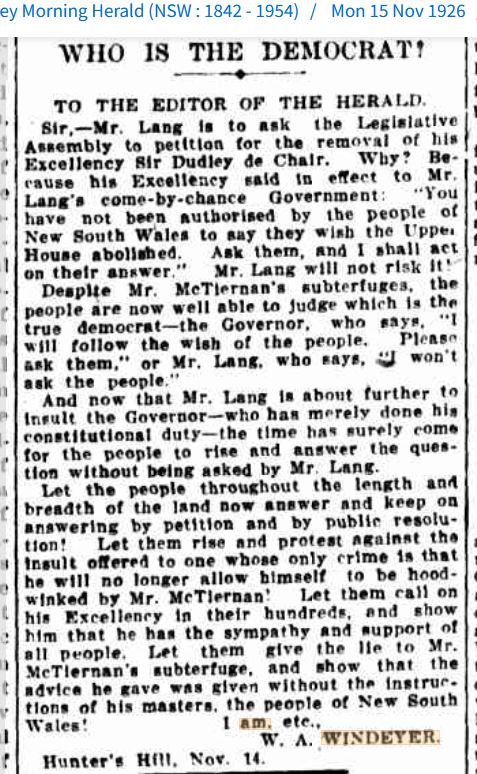
If you are interested, there is a lot of information about the issue between Mr Lang, the NSW Premier and the Governor, Sir Dudley de Chair, on Trove and Google.
In a nutshell, Lang had come to power in 1925 with a program of social and economic reforms. Apparently, there was a lot of opposition in the house to these reforms, and Premier Lang sought to abolish the Legislative Council to get his reforms passed. Governor de Chair foiled Lang’s plans of abolition, leading to calls for his recall by supporters of Lang’s government. 1: https://www.parliament.nsw.gov.au/about/Pages/Unlocking-the-House-Exhibition-Set-in-sandstone-Saved-by-the-Privy-Council.aspx 2: https://nla.gov.au/nla.cat-vn333899
Our next article relates to the marriage of Clive Allan Macvean, my grandfather’s second cousin 1x removed. Clive was the son of his grandfather’s cousin, Allan Macvean and his wife May Louise Connebee. Clive married Alice Margaret Coverlid.
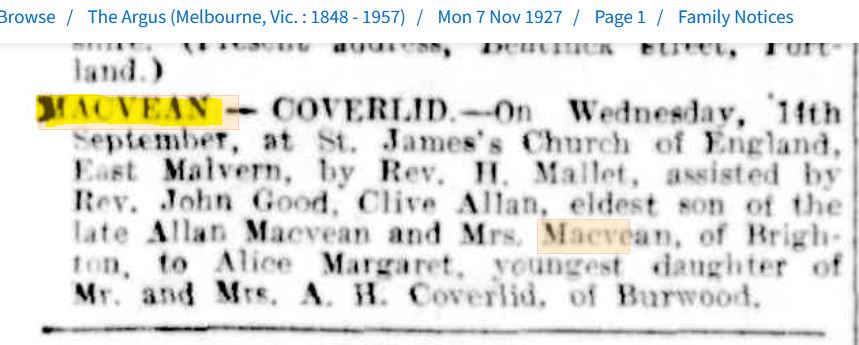
St James’s East Malvern has unfortunately disappeared into time. There are many wedding notices on Trove showing lots of couples married there over the years, but there is not one photo of the actual church I can find online. The nearest I could get was this illustration from an article stating that building was happening on the site.
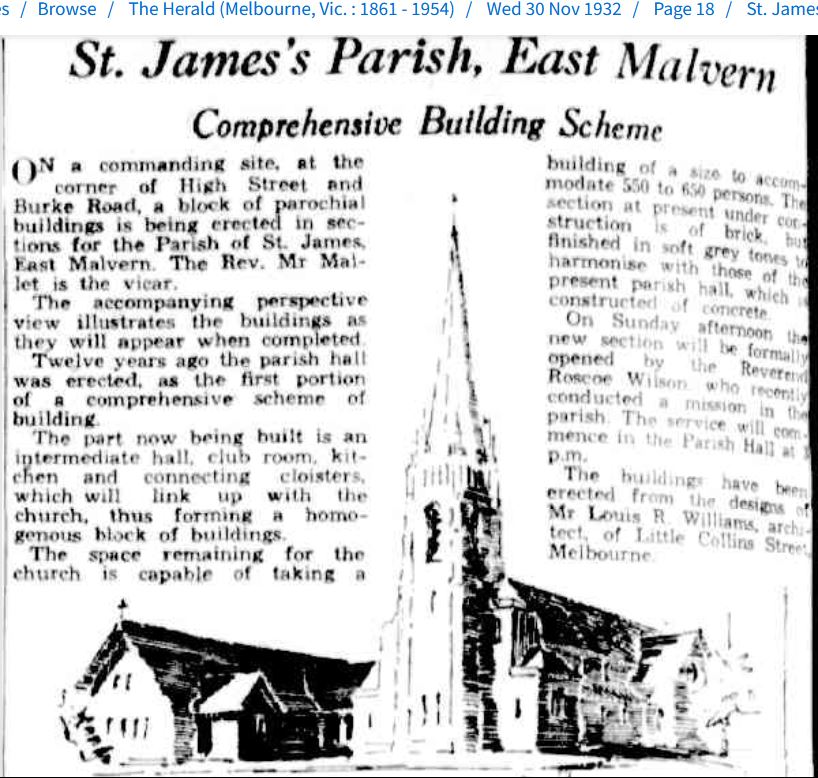
If I’m reading the article correctly, I don’t think the church was built at the time; it was just the Parish Hall that was built, and I think this might be where Alice and Clive married.
I went over to Google Maps and this is the church site today on the corner of High St and Burke Road.
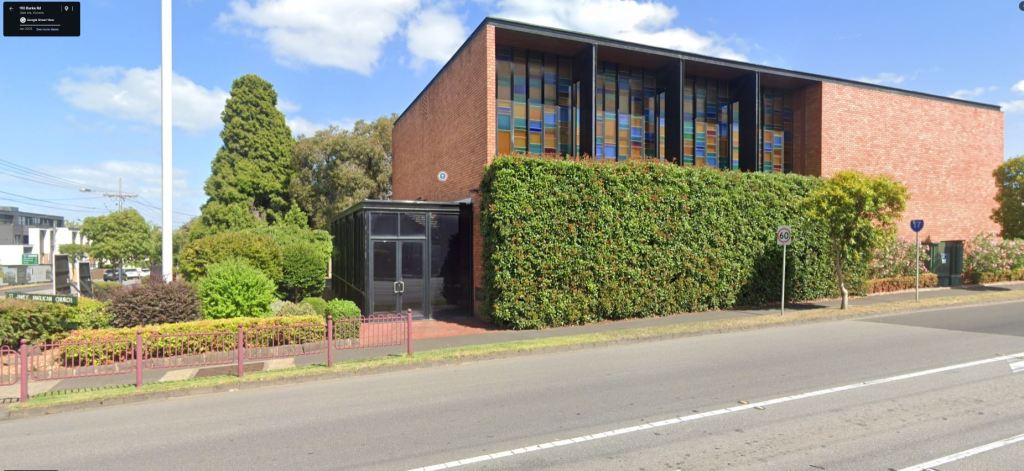
Figure 10b: Courtesy of Google Maps
The fact that I can’t find any photos of the beautiful church pictured in (Figure: 10a) makes me think that maybe it was never built. I did find the Parish Hall, and I think you can make out that the wing to the right was probably the connecting cloisters that were supposed to join up to the church.
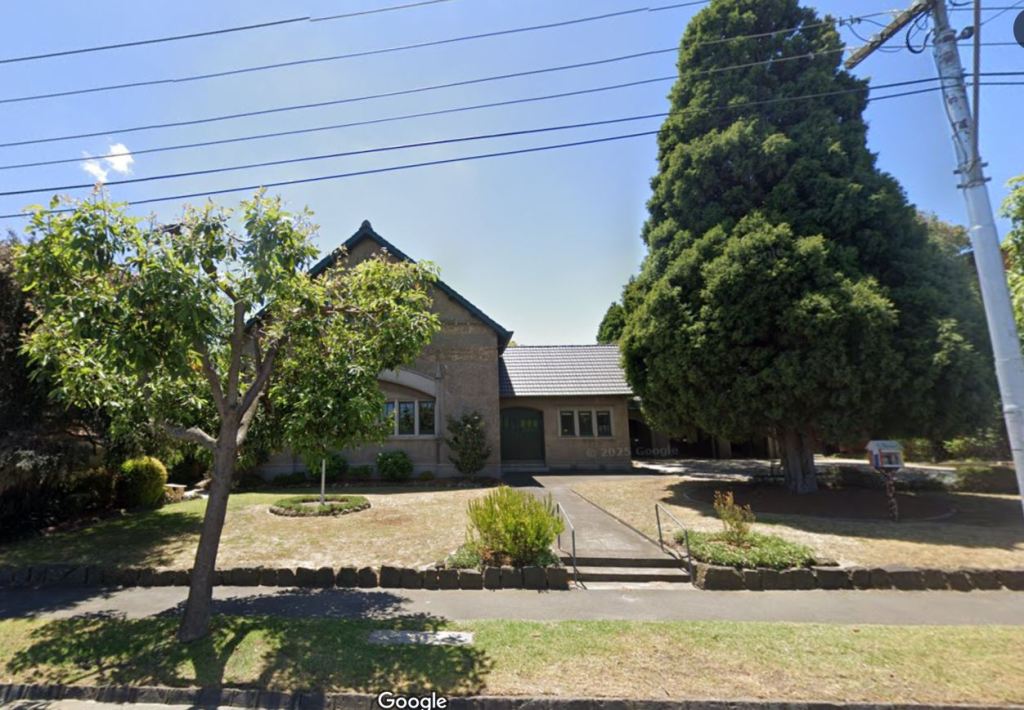
Figure 10c: Courtesy of Trove, National Library of Australia
I wish there were some way to confirm it, as it is pure speculation on my part. But I wonder if perhaps my great-grandmother, Annie Macvean and my grandfather’s sisters, Jean and Jessie, might have attended Alice and Clive’s wedding. They lived only a couple of kilometers away from East Malvern at the time.
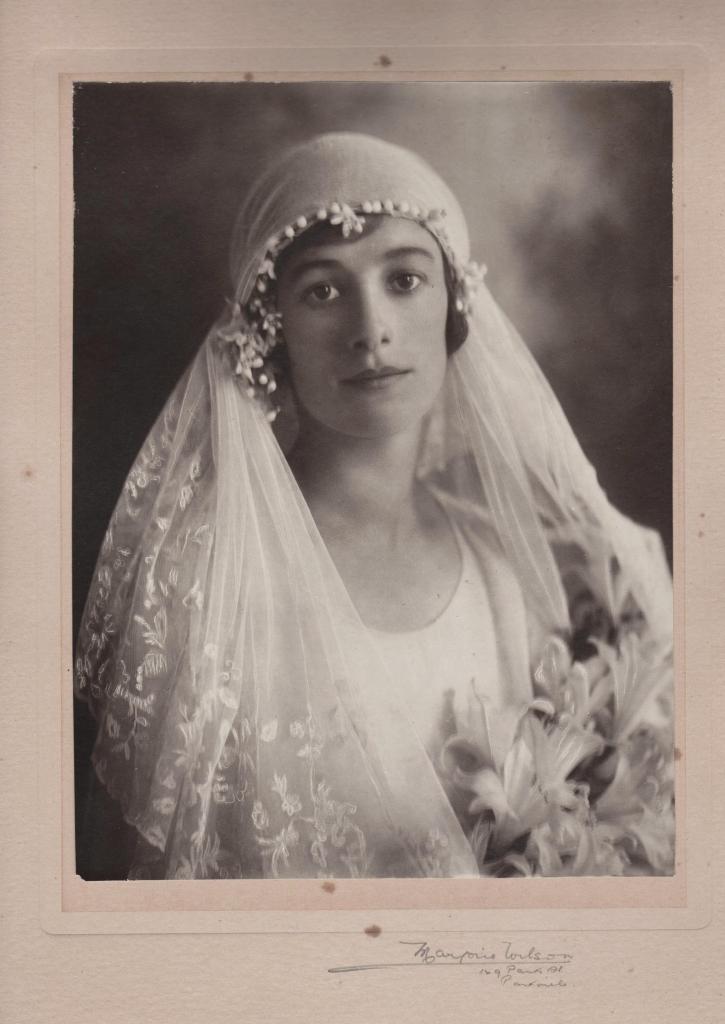
Figure 11: Courtesy of the Macvean Family Archives, generously shared by Anne M (Cousin)

Figure 12: Courtesy of the Macvean Family Archives, generously shared by Anne M (Cousin)
Now, I did mention at the end of part one that my grandmother, Margaret, was going to feature in this post, but I have decided to leave the details of her journey to the wedding day for another post. The reason for this is; I have been very lucky and discovered a fair bit of information on my grandmother and her family in the 1920s and 30s, which I wasn’t expecting and at this stage it will fill its own post.
I will just share this one bit of information below to put her in the picture. This is a copy of her nursing registration for 1927.

The Renwick, where my grandmother did her training, refers to an old family mansion in Summer Hill, Sydney called, “Carleton”. It was built in 1884 and converted into the “Renwick Hospital for Infants” in 1921. https://knowthatproperty.com/PropertyDetails?propid=40
The hospital closed in 1965, and the photo below shows the building my grandmother would most likely have been familiar with. Obviously not the dilapidation parts.
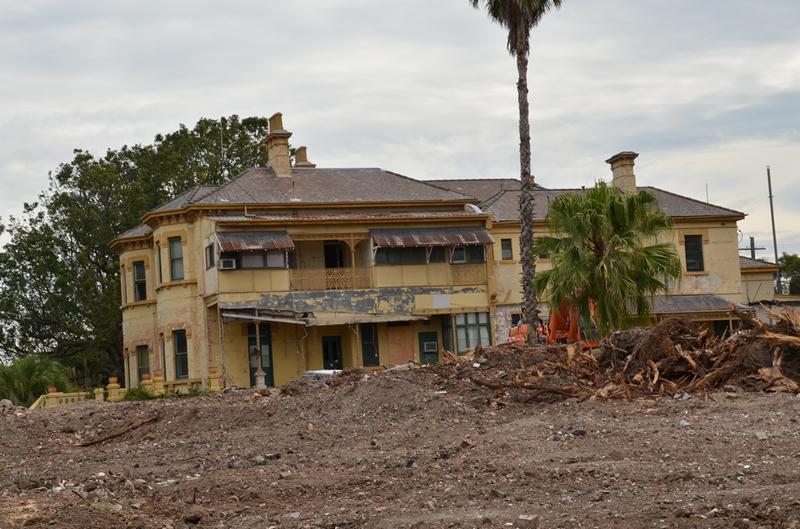
Figure 14: Courtesy of Know that Property
https://knowthatproperty.com/PropertyDetails?propid=40
Here it is in 2012 being converted into apartments.
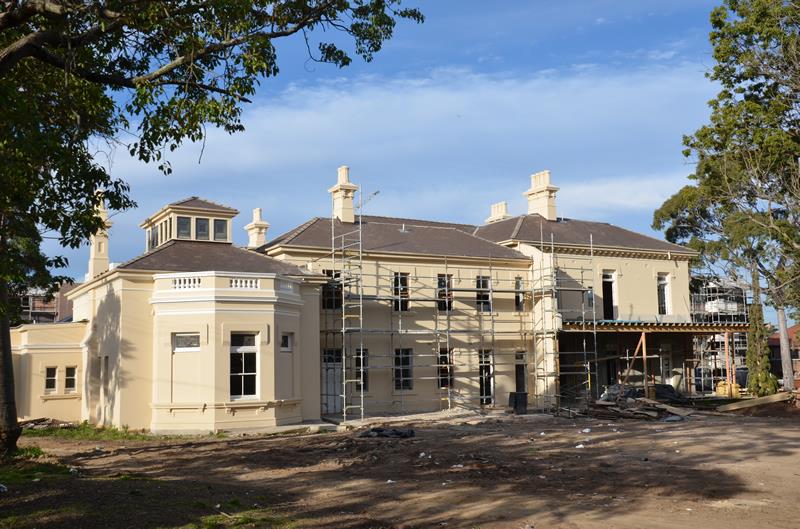
Figure 15: Courtesy of Find & Connect
https://www.findandconnect.gov.au/entity/property-id-40-renwick-hospital-for-infants-summer-hill-grosvenor-hospital-grosvenor-centre/
And here it is pictured last year, thanks to Google Maps.
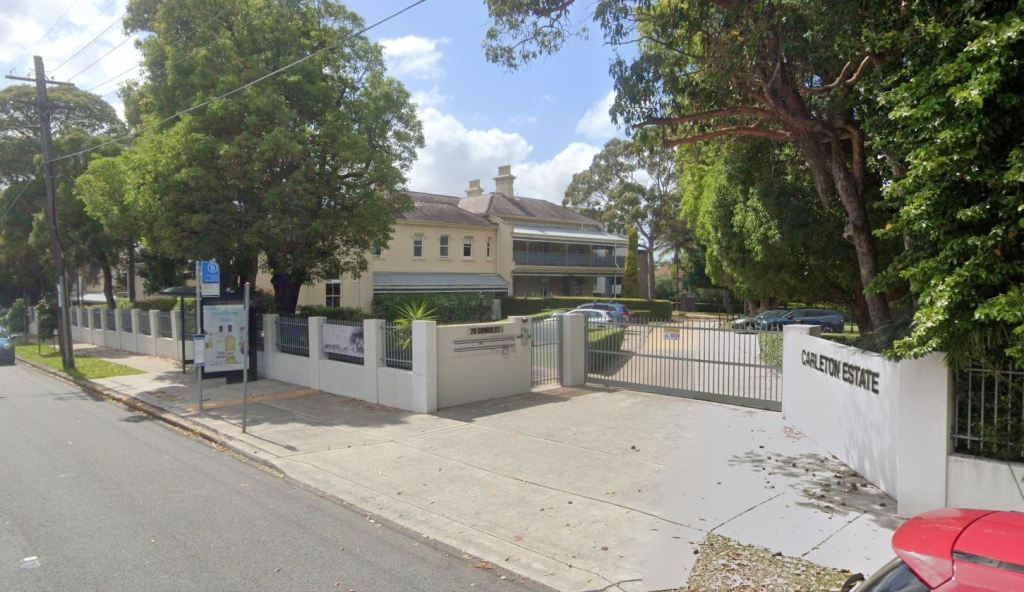
Figure 15a: Courtesy of Google Maps
Well, we have done it and reached the point of the timeline we left in part one. We are in the middle of 1927. We have farewelled Captain Jack Macvean’s father, Donald, and Jack is having a clearing-out sale on his property “Concudgery” at Coreinbob.
The remainder of the year is filled with many golfing scores, advertisements and family functions.
Most of the golfing scores relate to my grandfather’s 1st cousin, 1x removed, Alexander Kennedy Smith Macvean, and his wife, Muriel Spooner.

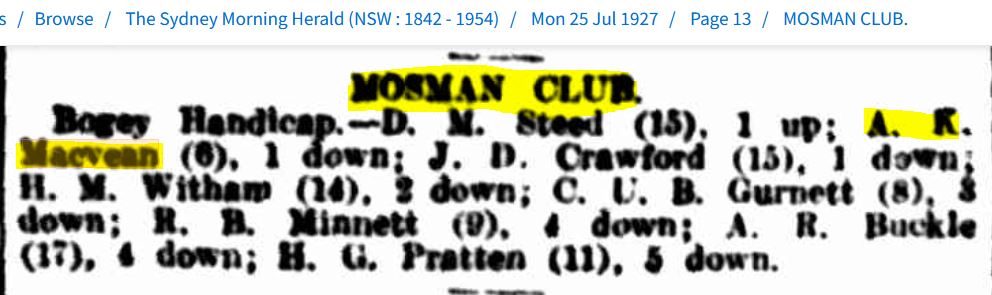
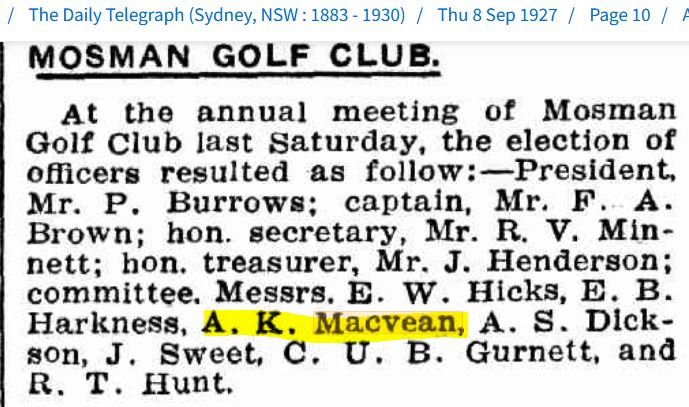


Tiled Gallery 2: Courtesy of Trove, National Library of Australia
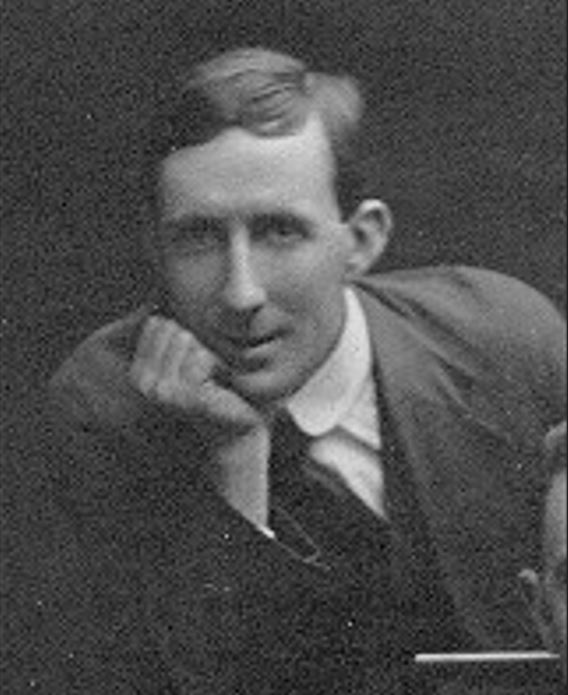
Figure 16: Courtesy of the Macvean Family Archives
(Generously shared by Sally M. (Cousin))

Figure 17: Courtesy of the Macvean Family Archives
(Generously shared by Sally M. (Cousin))
Muriel and Alexander, or Alick as he was known, were married on the 20th October 1915 at St Michael’s in Darlinghurst, Sydney.
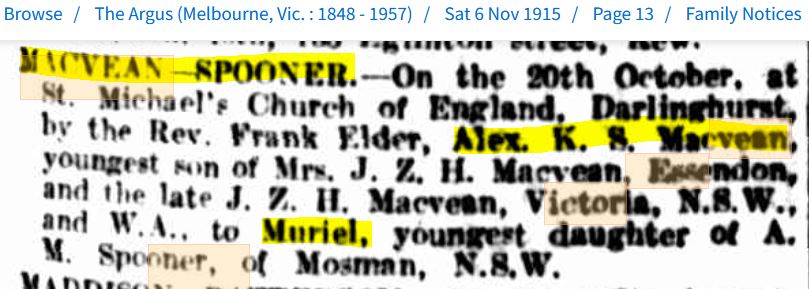
Thanks to the City of Sydney Archives, we have this photo of the Church taken just 10 months after Muriel and Alick’s big day, in August 1916.

Figure 17b: Courtesy of the City of Sydney Archives
https://archives.cityofsydney.nsw.gov.au/nodes/view/680848
The church, now known as The Vine Church, underwent historic restoration and conservation work back in 2022 and happily still stands today. https://www.instagram.com/lloydgroup/p/CkHM4MQgn-m/?img_index=1
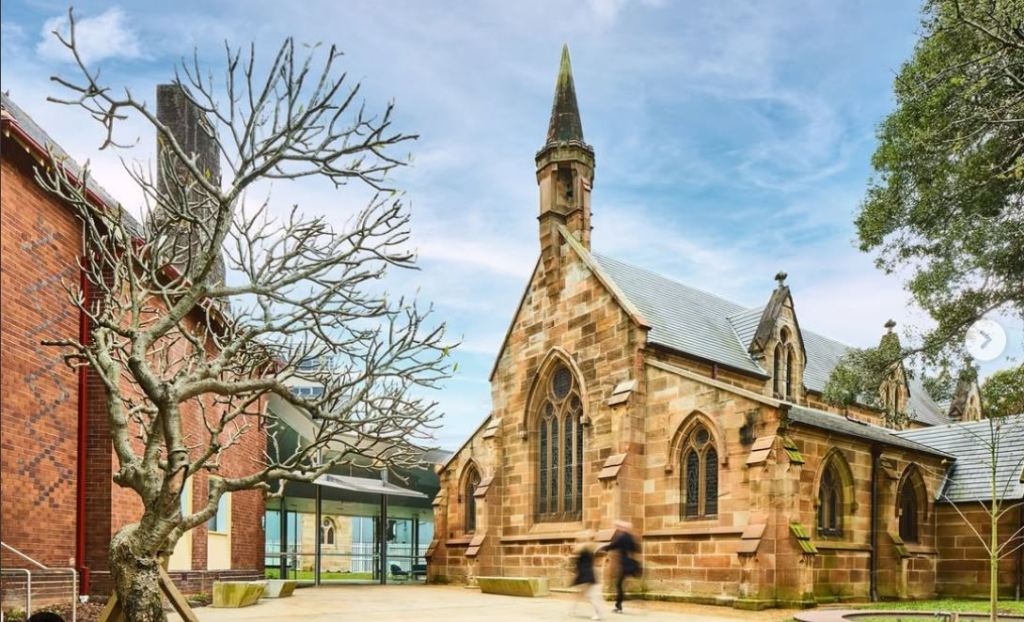
Figure 17c: Courtesy of Lloyd Group Instagram
https://www.instagram.com/lloydgroup/p/CkHM4MQgn-m/?img_index=1
I’m sad to admit that this is all I know of Muriel and Alick’s story so far. Hopefully, more will turn up as I keep digging.
The other golfing mention was concerning William Armstrong Macvean, my grandfather’s 1st cousin, 2x removed. William is the son of my 3x great-grand uncle, John Macvean and his wife Jemima Armstrong.

I found a photo of William in an amazing resource on the history of Queensland, published in 1923, “Foxs History of Queensland“. From what I have read so far, William was a bit of a mover and shaker in the pastoral world in south central Queensland at the time.
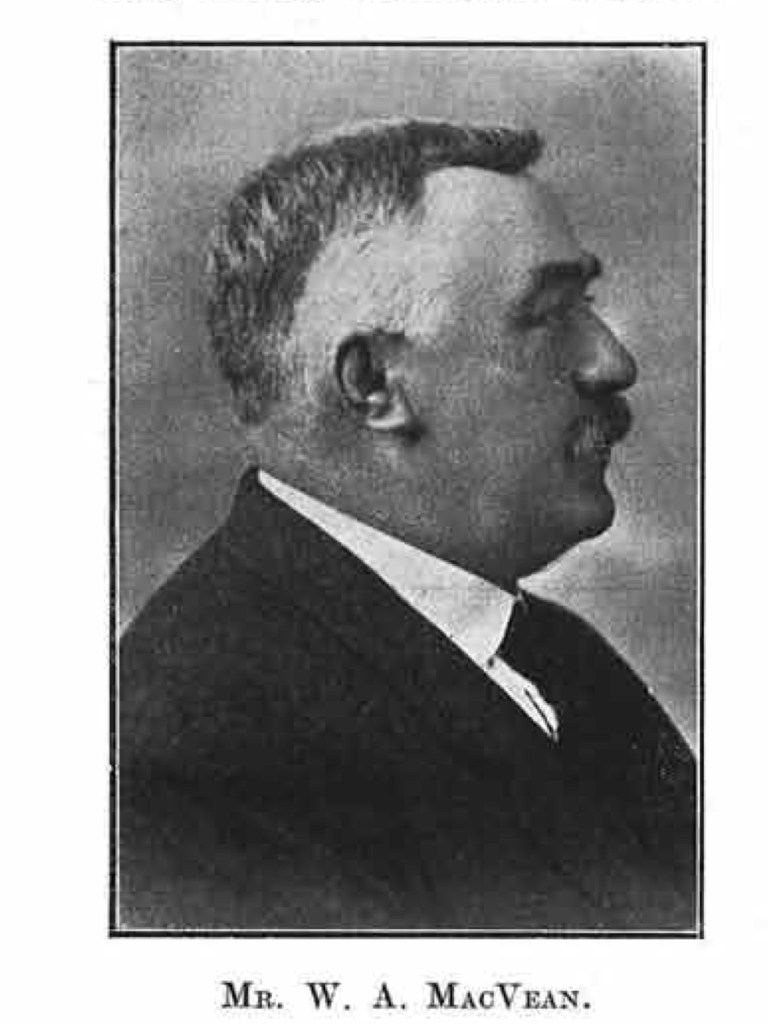
Figure 19: Courtesy of the University of Queensland
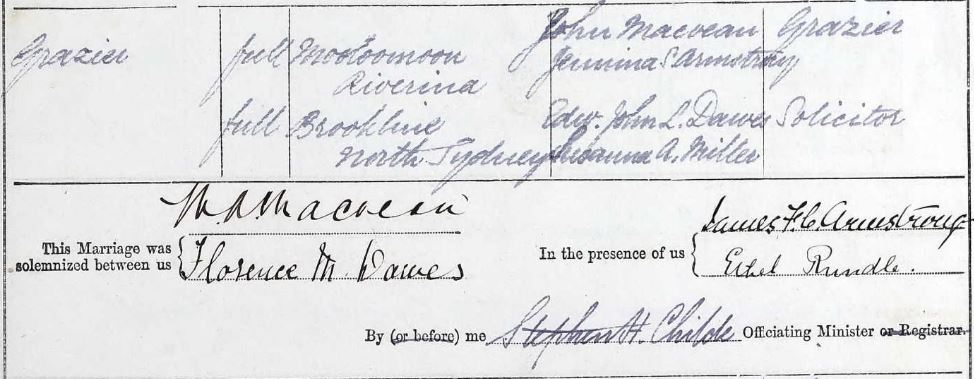
William was married to Florence (Flo) Mary Dawes in December 1893.
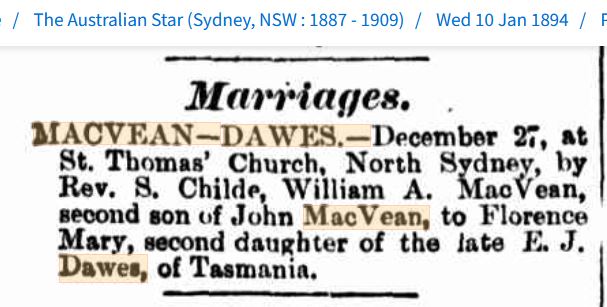
Ancestry.com.au had a copy of their original handwritten marriage registration. It is just amazing the random stuff you can find.

This 1910 photo of St Thomas’ church below is probably what it would have looked like on Flo and William’s big day.

https://files02.sl.nsw.gov.au/fotoweb/pdf/1555/155571380.pdf
I even managed to find a photo of Rev. Childe, who married Flo and William.

copied from “St Thomas’ Church, North Sydney: a short history”.
https://nla.gov.au/nla.obj-2685469984/view?partId=nla.obj-2685473131#page/n18/mode/1up/search/childe
And amazingly, I had two photos of Flo in my archives thanks to a trove of family history information that my cousin Anne shared with me.


Florence Macvean née Dawes, undated
Figure 23 & 24: Courtesy of the Macvean Family Archives (Generously shared by Anne M (Cousin))
Flo and William were living in central Queensland at the end of 1927, and I found a couple of notices stating that they were actually spending the Christmas-New Year holidays at the Pacific Hotel in Southport.

Tiled Gallery 2: Courtesy of Trove, National Library of Australia
The State Library of Queensland had a fantastic photo of the hotel in its archives from just five years earlier than Flo and William’s visit.

Figure 25: Courtesy of the State Library of Queensland
https://collections.slq.qld.gov.au/viewer/IE1384936

The hotel was located at 42 Marine Parade, Southport. This is the site today, 103 years after Flo and William’s visit.

Figure 26a: Courtesy of Google Maps
Now, unsurprisingly, I didn’t know anything about William and Flo’s story, but I started digging on Trove and managed to uncover a few details.
Not long after Flo and William were married, they ended up on Thurulgoona Station near Cunnamulla, southern interior Queensland.
I found this map on the Australian National University site of the station. It is unfortunately undated, but I could imagine the station being set out like this in the early 1900s. Note all the named paddocks.

(Undated), by Alfred Henry, Draughtsman
Figure 27: Courtesy of the Australian National University
http://hdl.handle.net/1885/199933
The station is still operating today. I was able to find it on Google Maps thanks to the details shared on the Aloeus.com website. It had the station listed as a farmstead property. https://www.aloeus.com/thurulgoona-station-thurulgoona-station-farm-farmstead-homestead-ranch/

Figure 28: Courtesy of Google Maps
While digging through the online information, I came across this amazing set of historic magazines called “The Pastoralists’ Review,” and it contained a fantastic article written in 1906 about a particular unnamed journalist’s journey out to the station, and what their impressions were of the operation. It also had a photo of the actual homestead accompanying it.
Flow and William were living here at the time this photo was taken.
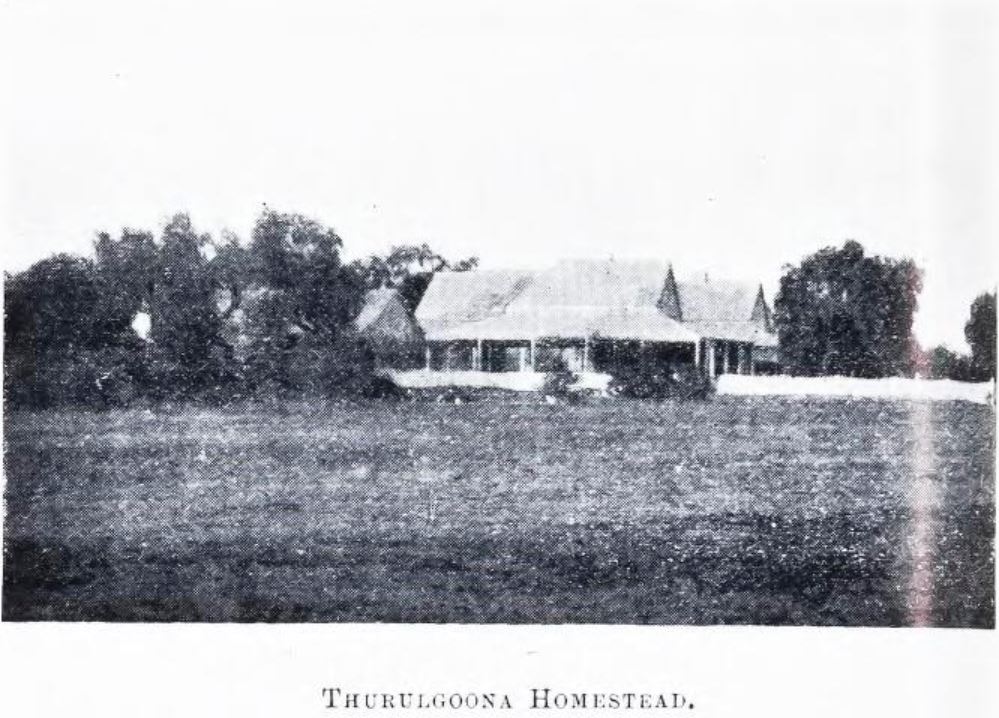
Figure 29: Courtesy of Trove, National Library of Australia
There is no mention of Flo in the article, which is disappointing but not unexpected, but there is a mention of William.

I would imagine the “…first-rate luncheon…” was actually Flo’s work.
The station was actually owned by the Australian Squatting Investment Company, one of its co-owners being Sir Simon Fraser, father of William’s sister-in-law, Marion Macvean, wife of his elder brother John Macvean. https://images.app.goo.gl/FM2o1Y48eQcZmrQ28

This nugget of family history confirms that Flo and William moved out to Thurulgoona four years after they married. William had actually been working at the station in 1893 before he and Flo married, as a specialist consultant on rabbit eradication. https://images.app.goo.gl/FM2o1Y48eQcZmrQ28
This is one of the bores on the property at the time that was discussed in the article.
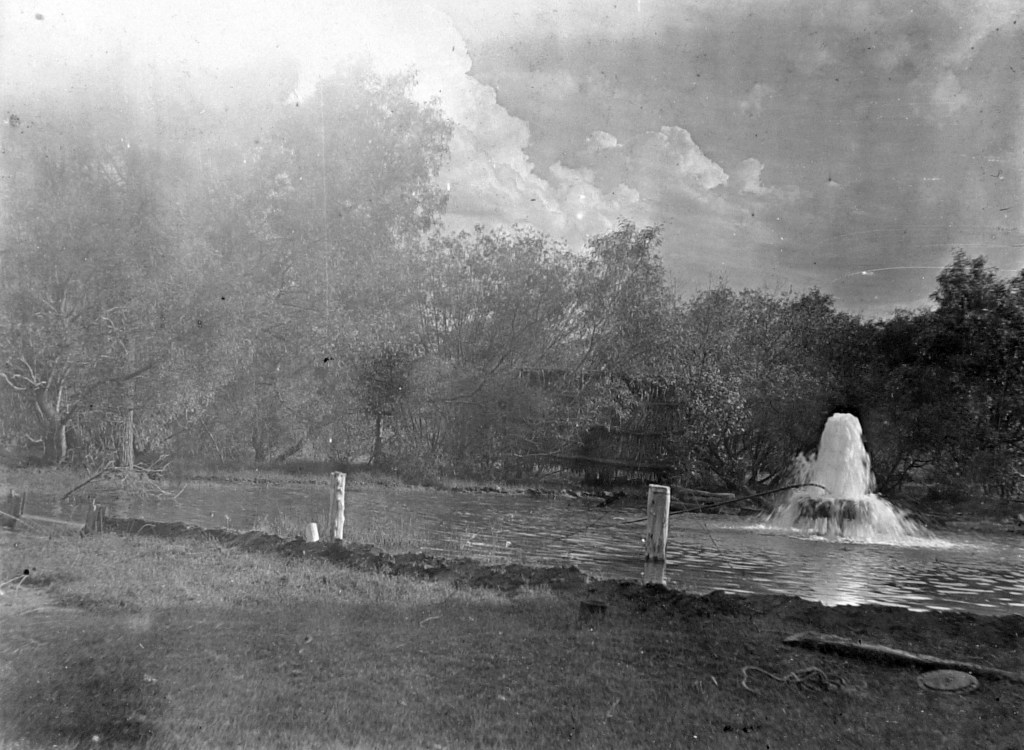
Figure 32: Courtesy of Queensland State Archives
https://www.archivessearch.qld.gov.au/items/ITM1176019
Thurulgoona boasted thirteen bores fed by 400 miles of water courses running through the whole property. The Australian Squatting Investment Company was the pioneer of artesian boring in Queensland. https://nla.gov.au/nla.obj-491292964/view?partId=nla.obj-491296952#page/n25/mode/1up
Here are the remainder of the notices I found for 1927.
A notice of Marion Macvean, her daughter Kathleen and her sister-in-law, Elizabeth Macvean attending a wedding together. The notice gives us a wonderful insight into one of the talents Marion had; she was a singer.

Elizabeth, who never married, was actually living with Marion and Kathleen at Quirindi and would remain there until her death in June 1931.

I found “Euraba”, the property they were living on, thanks to a site called “Satellites.pro” with some help from Google Maps. It sits on the traditional lands of the Kamilaroi people, about 300 km west of Port Macquarie on the Mid North Coast of New South Wales. https://aiatsis.gov.au/explore/map-indigenous-australia
The property is situated at the end of Munro Street in Quirindi, and it still has the same name.

Figure 35: Courtesy of Google Maps

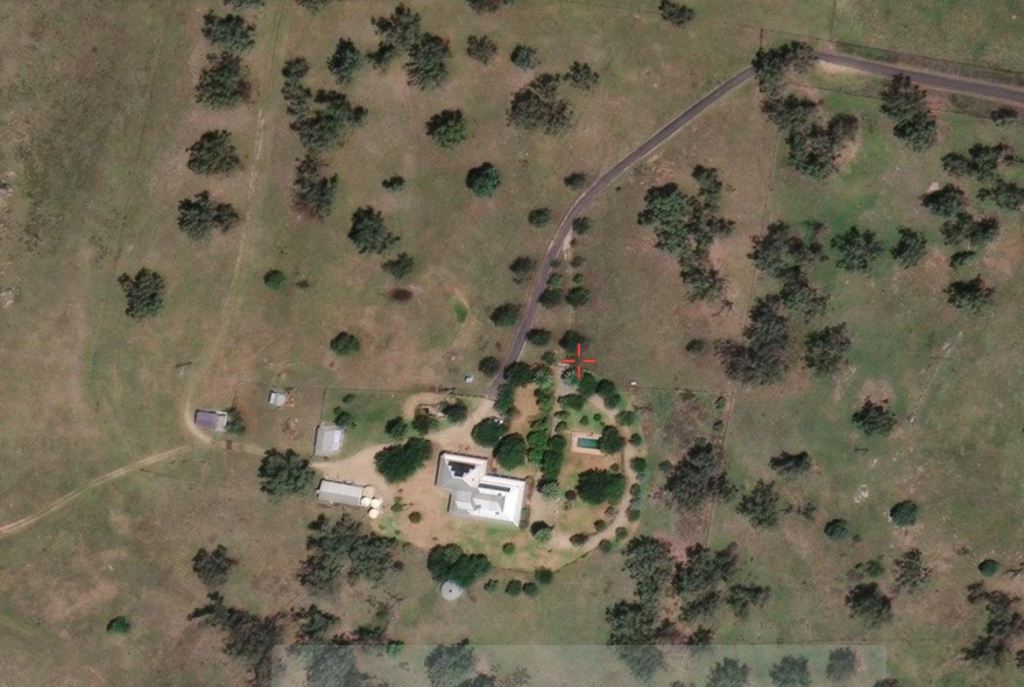
Figure 37: Courtesy of Satellites.pro
https://satellites.pro/Australia_map#-31.498534,150.670205,18
Back to Flo and William, before they went for their end-of-year break at Southport, they were at Cunnamulla in July, 1927 for the Diggers’ Races.

It was a two-day event where all the races were named after battles of the First World War, and both nights culminated in a huge diggers’ dance. https://trove.nla.gov.au/newspaper/article/21860764?searchTerm=%22cunnamulla%20diggers%27%20racing%22
Next, a notice that Captain Jack Macvean had a great result with the sale of his property.

I shared in part one of this post the advert for the clearing out sale of all the farm and household items from “Concudgery”, and now we have the confirmation notice of the sale of the actual property. Sold to Mr S. H. Baker.
Borambola sits just to the east of Wagga Wagga and north of Tarcutta and Ladysmith, where Jack’s cousins, John Hugh Macvean and William Hill Macvean, lived with their families.
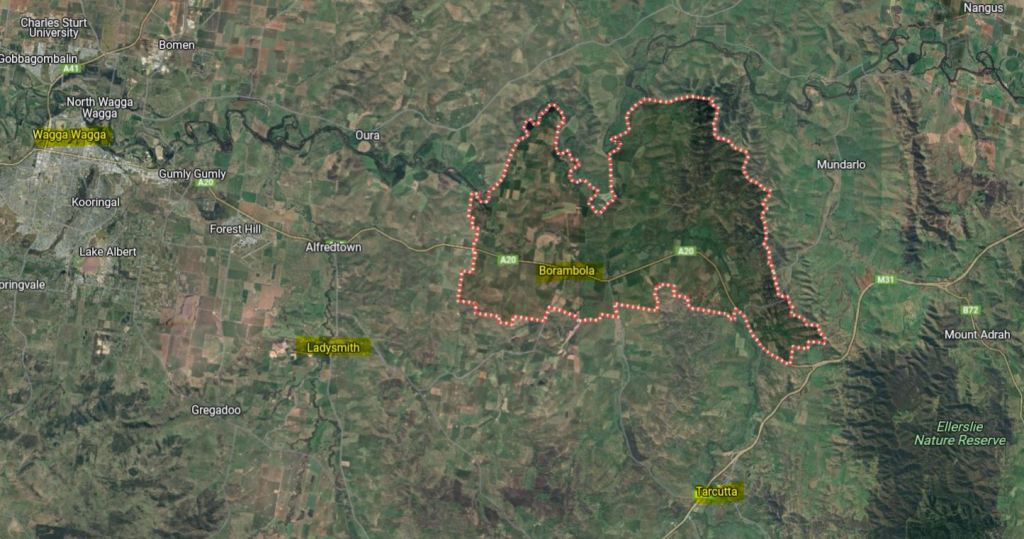
Figure 40: Courtesy of Google Maps
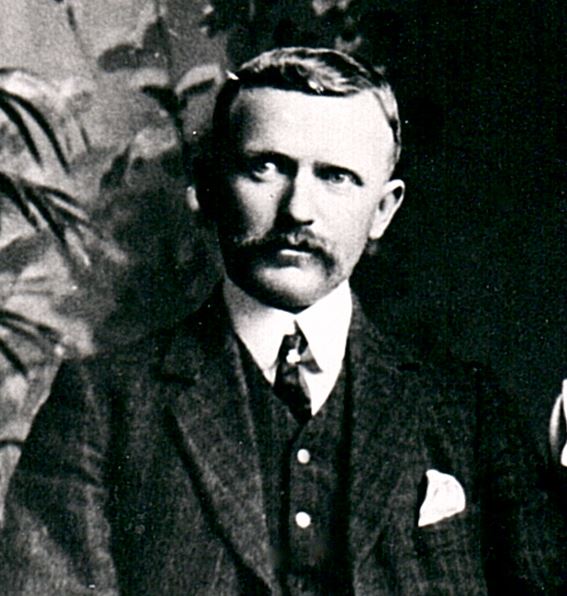
Ladysmith, New South Wales, undated
Figure 40a: Courtesy of the Macvean Family Archives

Tarcutta, New South Wales, 1915
Figure 40b: Courtesy of the Macvean Family Archives
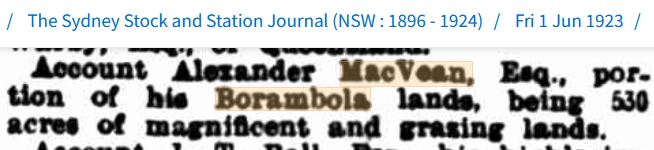
I just stumbled onto this next notice about Jack’s uncle, Alexander Macvean, (father of John and William above and my great-grandfather, Alexander) having property at Borambola. I wonder if Jack bought the land from him?
At the end of July, we find my grandfather’s aunt, Isabel Macvean, married to John Hugh Macvean, pictured above, selling Pomeranian puppies.

On leaving the family property, “Strathvean”, in Tarcutta and moving to Ladysmith, Isabel develops her animal husbandry skills and becomes a bit of an expert in the industry winning multiple awards at different agricultural shows around the Riverina. But again, getting ahead of ourselves, more on this in the next post.
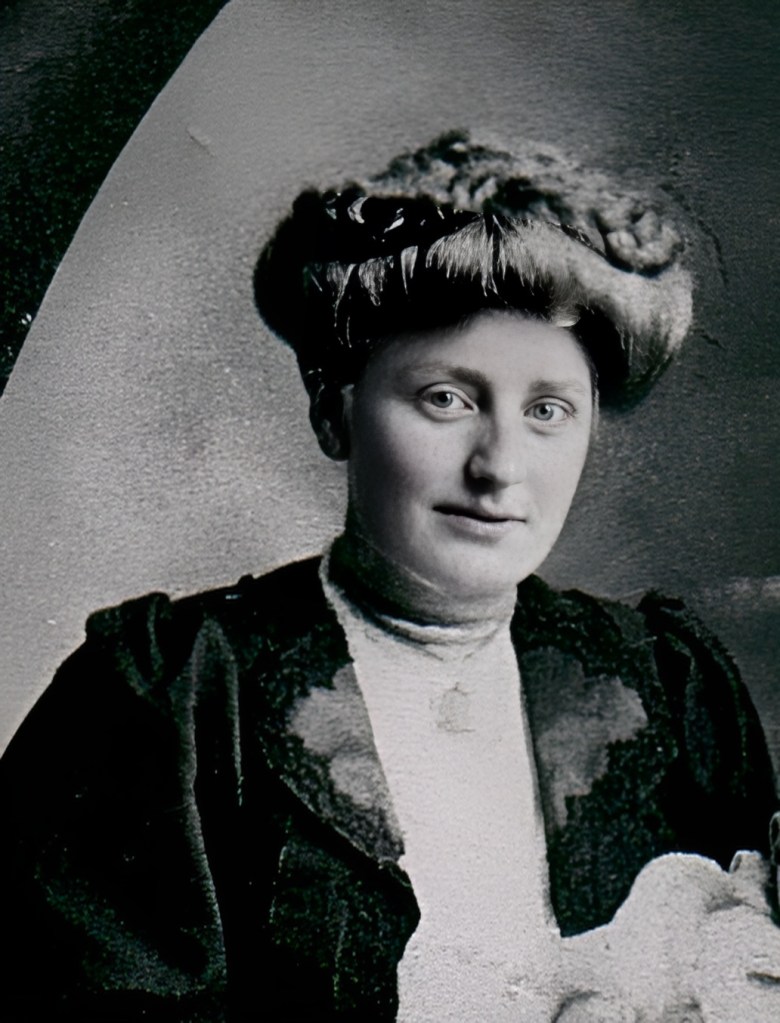
Figure 43: Courtesy of the Macvean Family Archives
August sees William and I can only assume Flo too, still on the road. What is interesting about these two notices below is that they mention another couple of properties that William and Flo might have been living on or at least potentially running.


Tiled Gallery 3: Courtesy of Trove, National Library of Australia
I found both Ardgour and Offham listed on the Bonzle map site. It looks like they might have been part of the same land holding, considering their location.
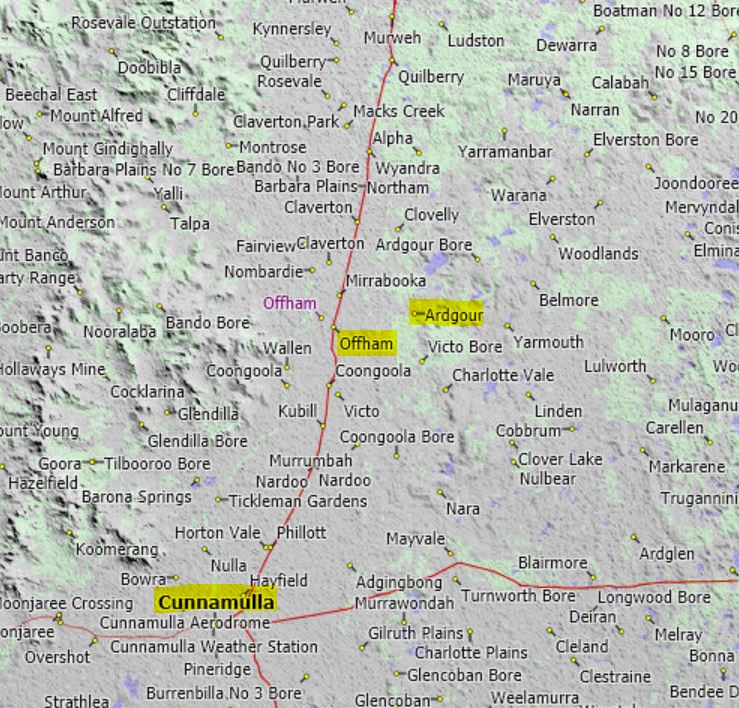
http://maps.bonzle.com/c/a?a=p&p=252433&cmd=sp
I just did a bit of a dive on Ardgour, and it is still going too, although it is not a sheep station any longer. It was de-stocked in 2016, and then in 2022, the Queensland Government, in conjunction with its current owners, Paniri Ventures, converted it into a Nature Refuge. https://www.qld.gov.au/environment/parks/protected-areas/private/natureassist

Figure 45: Courtesy of Queensland Government
https://www.qld.gov.au/environment/parks/protected-areas/private/natureassist
Both properties sit on the traditional lands of the Kunja people. https://cunnamullatourism.com.au/visitor-information/cunnamulla-history/
That amazing resource I found on the Uni of Queensland’s site, “Foxs History of Queensland“, which I mentioned earlier in this post, had a photo of Ardgour Homestead. I wonder if it is still standing there in the 2024 photo above.

Figure 45a: Courtesy of the University of Queensland
I know you might be thinking, we are a long way from my grandfather’s journey to his wedding in 1937, but as I often say, you get more bang for your buck with my posts. Also, the opportunities are just too good to miss, those being the chance to get to know my family better.
The next articles relate to Marion Macvean again. Just a reminder, Marion is the wife of my grandfather’s 1st cousin 2x removed, John Macvean.

Marion obviously had a certain financial stability that enabled her to hire a “…competent Lady Help…” It is a big assumption, but I think she needed the help as she had her elderly sister-in-law, Elizabeth, living with her as well as her 32-year-old daughter, Kathleen. At the same time, she was the President of two of the local Country Women’s Associations (C.W.A.), President of the Red Cross Association and was about to become the Director of the local hospital board.
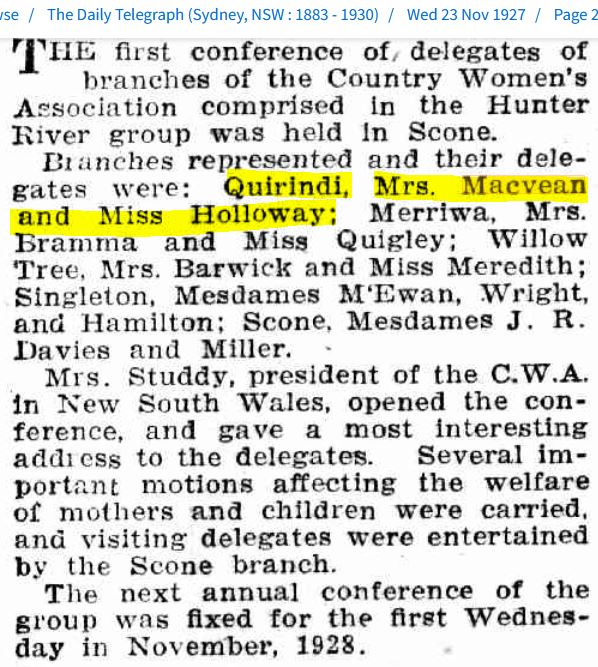
I thought there might have been a photo of this inaugural conference of the Hunter River Group of the C.W.A. hiding somewhere online, but no luck. I did, however, manage to find this one below of the 1939 conference, and I’m sure if Marion attended, she would be in this photo somewhere.
I’m making this claim based on the fact that I found an article stating that she would be attending the state conference in Sydney in 1940, representing the Hunter River Group.

(And how is that? The month before the CWA conference, Marion is also attending the Red Cross conference as President.)
So my thinking is that she would be here at the local conference the year before, in 1939 and might be pictured somewhere below.
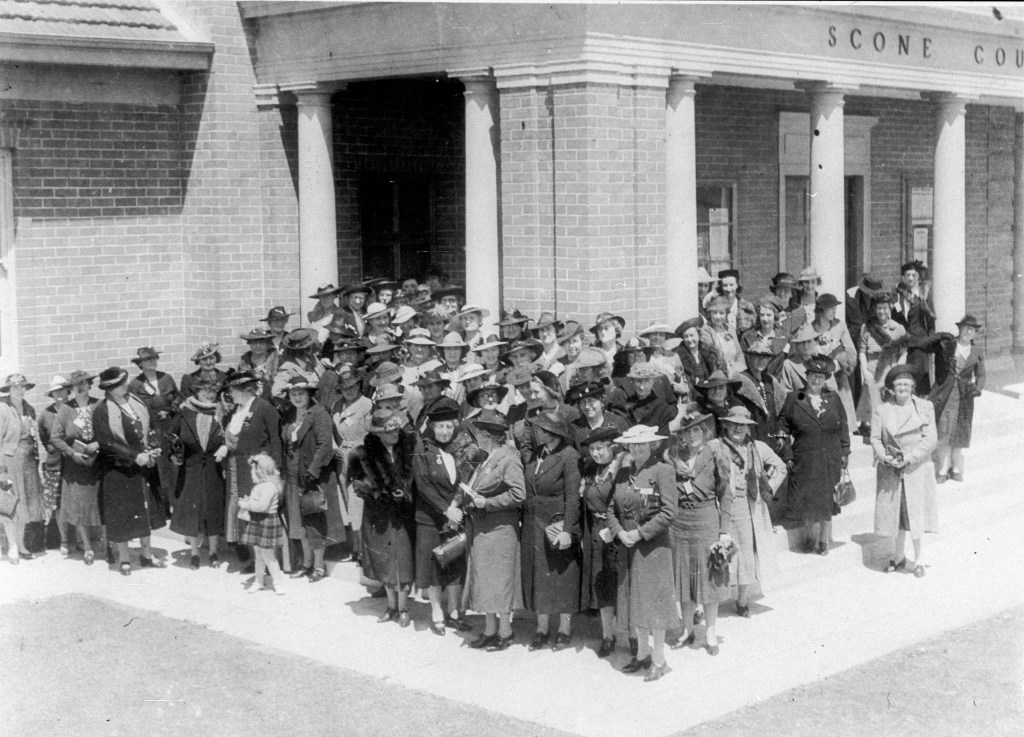
Figure 49: Courtesy of the State Library of New South Wales
https://collection.sl.nsw.gov.au/record/92e0j5bY
What a photo, I love the hats and the thing that really stands out for me is the number of fox fur stoles. My Nan had one in her wardrobe that always fascinated and at the same time repulsed me as a kid. The mouth of the fox clipped onto one of its legs to keep it around the shoulders, just as they are being worn above. My Nan would have loved this photo.
And now for the final notice for 1927, advising of a tennis singles championship being held at Kooyong and featuring a new family member for me, Hugh Leslie Macvean.

Hugh was my grandfather’s 1st cousin 1x removed. Hugh was the son of William Macvean, my 2x great-grand uncle and his wife, Jessie Robertson Leslie.
I don’t have a photo of Hugh or his mum, Jessie, but I am lucky enough to have one of William.

Figure 51: Courtesy of the Macvean Family Archives,
Generously shared by Sally M (Cousin)
So, onto 1928, and it starts off with a bang. We know already that William and Flo leave Southport in February as I have already shared that above but before they leave they attended a few other social events.
The first, a New Year’s Day Tennis Tournament and Kentucky Afternoon Tea, whatever that was.
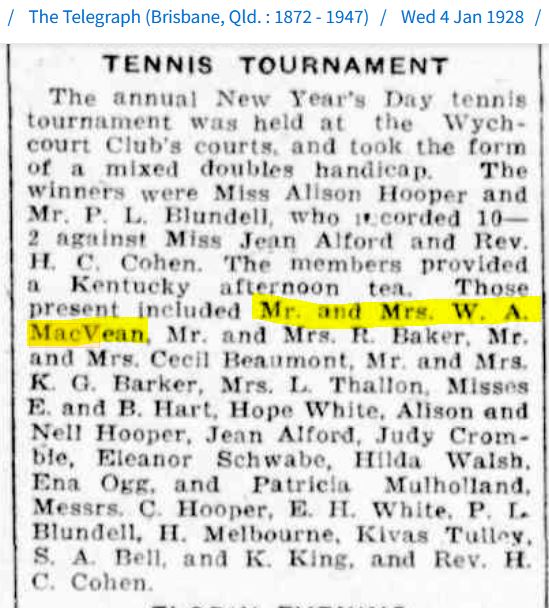
Google provided a few answers to the Kentucky Afternoon Tea question.

There are no hits coming up in a Google search for the “Wych-court Tennis Courts” But Trove had a couple of mentions.
The earliest mention I can find is in 1915, the club held a tournament at “Warrabey”, a house and estate owned by Mr and Mrs Western Walsh. I was able to confirm that “Warrabey” was next door to the Pacific Hotel in Southport, mentioned above as the hotel that Flo and William were staying at.

I wonder if Warrabey might be pictured here, below. Could it be that corner of the building on the right of this fantastic photo of the Pacific Hotel?

Figure 54: Courtesy of the State Library Queensland
https://collections.slq.qld.gov.au/viewer/IE1384251
And the last mention of “Wych-court Tennis Courts” was April 1936, when the courts were advertised at auction.
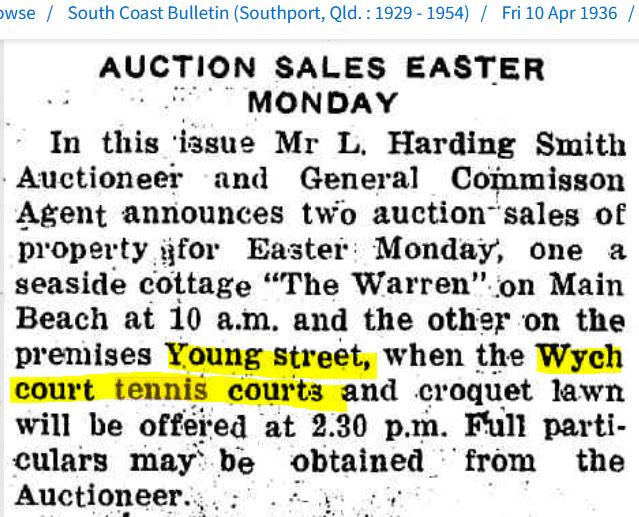
Here pictured below is Young Street, Southport today, right behind the site of the Pacific Hotel and Warrabey (marked in yellow at the top right).

Again, this has nothing to do with my grandfather and Flo and William probably never gave the courts a second thought, but I love the fact that we now know exactly where they were when this was all happening and getting to see it in photos, well, that is gold!
Next, it was a golfing afternoon tea at the Southport Golfing Club for Flo.

Here is the clubhouse or links that Flo was at. It was built in 1926 and used until 1956. https://southportgolfclub.com.au/our-centenary/growth-of-the-club/

https://southportgolfclub.com.au/our-centenary/growth-of-the-club/
And here is a nice extra bit of history for us, just seven months after Flo was enjoying Mrs C. G. Barnes’s afternoon tea this happened.
https://southportgolfclub.com.au/our-centenary/growth-of-the-club/
One final event for Flo and William before they departed Southport, and it looks like they did give the tennis club a second thought.

And one final photo of Southport that Flo and William would recognise straight away. This would have been very similar to the view from the Pacific Hotel, looking down the Esplanade, towards the old Jubilee Bridge in the distance.

Figure 59: Courtesy of Queensland Places
https://queenslandplaces.com.au/exhibit/book/ps038
Next, I came across a mention of Dr Charles Battandier Macvean’s medical registration for 1928, and it also noted his home address, so we now know where he was living at the time.

It looks like 139 doesn’t exist any longer. Google Maps places it here at 45 Bunyala Road.

In March of 1928, we find Ewen Macvean back on stage. Ewen is my grandfather, John’s 1st cousin, 2x removed. This time, he is performing in “The Family Man,” another John Galsworthy play. I mentioned in part one of this post that Ewen had appeared in another Galsworthy play, “Loyalties.”


Figure 61a: Courtesy of the Macvean Family Archives,
Generously shared by Anne M (Cousin)
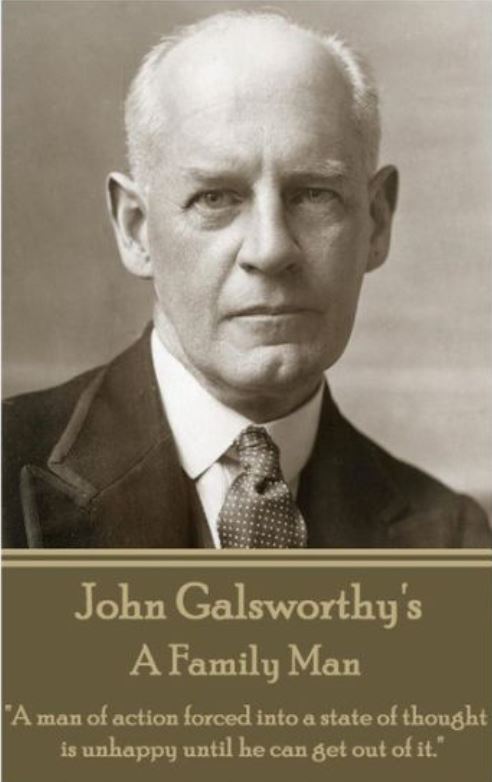
https://www.barnesandnoble.com/w/john-galsworthy-a-family-man-john-galsworthy/1125935209
There was no advertising poster for this play, and I think the reason for that was that the run of the play was too short. The Little Art Theatre was known for attempting a new play a week and then repeating them every couple of weeks, as the article above and below show.

I went looking to see if the Queen’s Hall was still standing. First, I had to find where it actually was. This next ad gives us a clue, opposite the Athenaeum in Melbourne city.

Here is the Athenaeum, which was built in 1842 as the original Melbourne Mechanics Institute. It sits at 188 Collins Street, right next door to the Melbourne Town Hall. This version of the building is what Ewen would have known; this facade was added to the original building in 1886. https://vhd.heritagecouncil.vic.gov.au/places/726
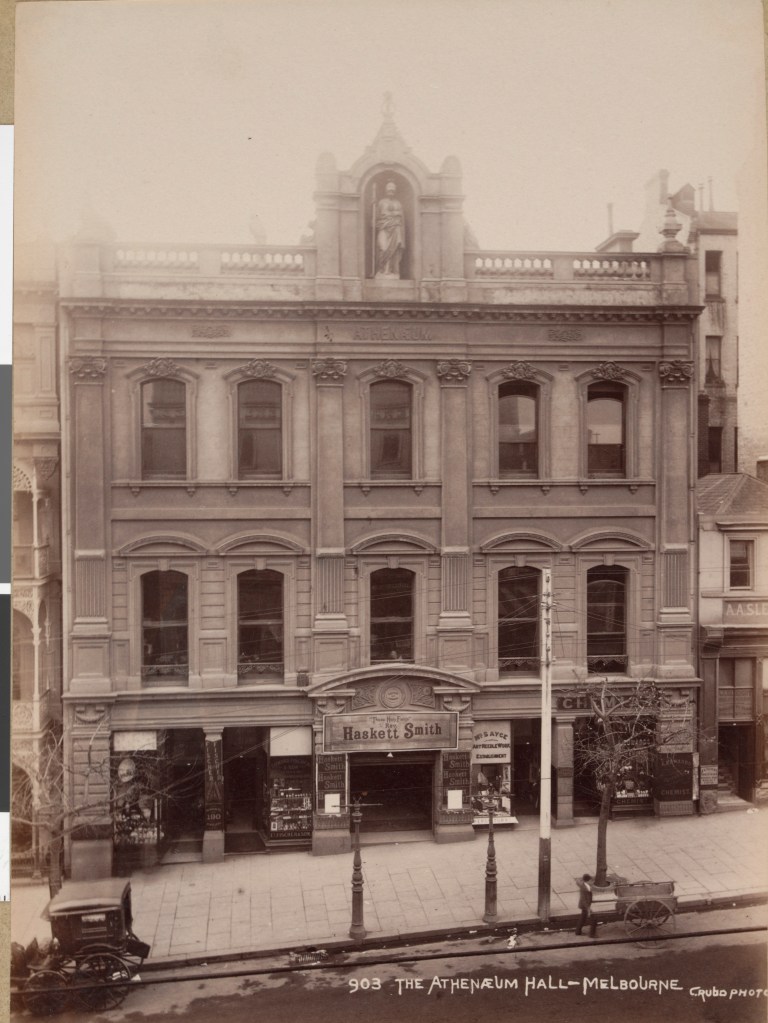
Figure 64: Courtesy of the State Library Victoria
http://handle.slv.vic.gov.au/10381/74117
The Athenaeum still stands today.

Figure 65: Courtesy of Google Maps
Next, I found this ad with the actual street address of the Queen’s Hall. From what I have read so far on Trove, apparently, lots of different organisations hired the hall for public lectures and events in the 1920s and early 1930s.

When I checked Google Maps, it showed that 181 Collins Street sits diagonally opposite the Athenaeum. This is 181 Collins Street today.

181-187 Collins Street, Melbourne, 2022
Figure 67: Courtesy of Google Maps
It is the Balenciaga building, the building is actually numbered 181-187 Collins Street, running left to right. This building was built and originally named for the Melbourne Theosophical Society in 1937.

Figure 68: Courtesy of the State Library Victoria
http://handle.slv.vic.gov.au/10381/4178508
The Theosophical Society actually purchased the site in 1920, and there was an old warehouse at the rear of the property that they remodelled and turned into the Queen’s Hall. https://trove.nla.gov.au/newspaper/article/246765065
I found this section of Collins Street on the good old Melbourne and Metropolitan Board of Works maps, which I have accessed many times before and look what I found at the back of 181-183.

Figure 68a: Courtesy of the State Library Victoria
1: http://handle.slv.vic.gov.au/10381/115975
2: http://handle.slv.vic.gov.au/10381/115984
That looks like a building to me, with steps going into it. I think that will be the Queen’s Hall sitting there.
Before we move on, something really interesting to note here, the Athenaeum did not sit right next door to the Town Hall, as I mentioned above. Initially, it was the “Victoria Coffee Palace” that it sat next to. If you look at (Figure 64), you will notice a sliver of a glimpse of a building with ornate balconies. Here it is in all its glory, pictured around 1883.
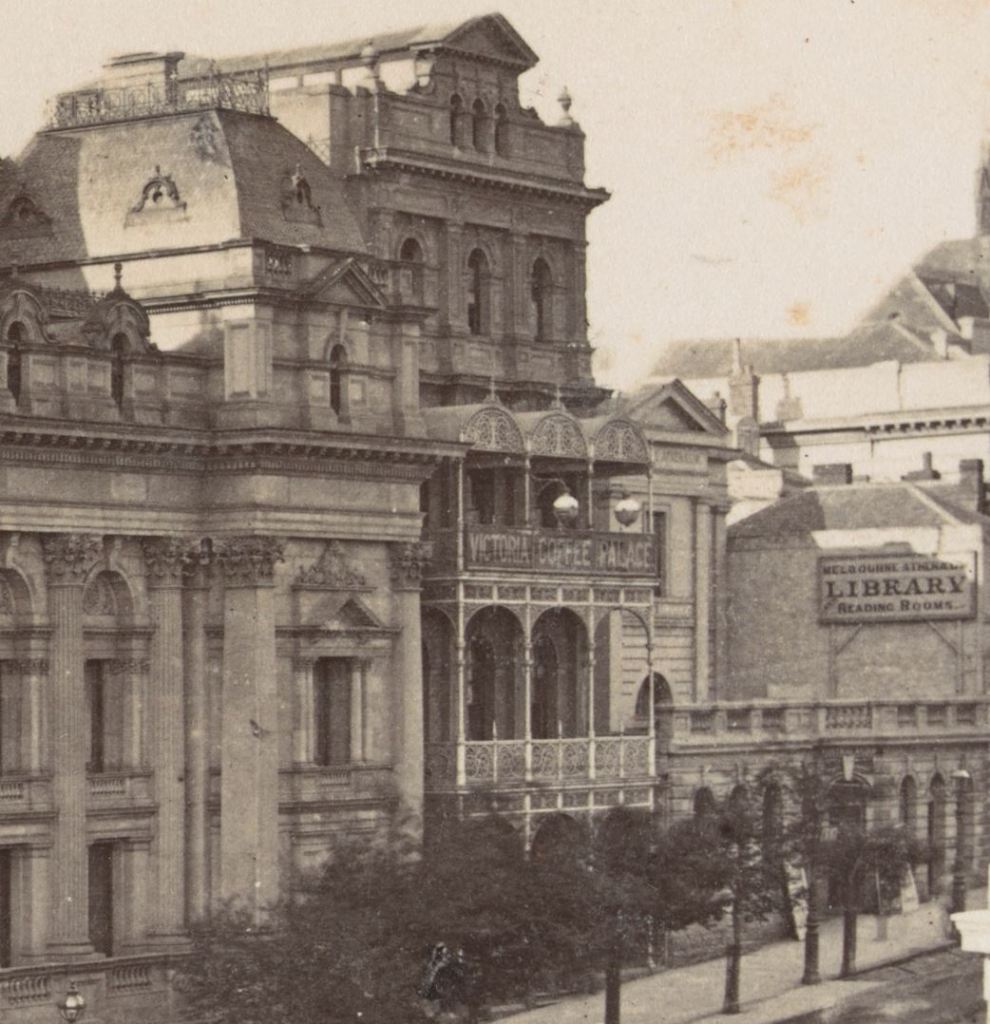
Figure 68b: Courtesy of the State Library Victoria
http://handle.slv.vic.gov.au/10381/4217414
This building was built in 1877 and opened as the “Victoria Club House“. It operated until 1880, when it was refurbished and opened as the Coffee Palace. The Palace was demolished in the early 1920s when the Town Hall was expanded. https://en.wikipedia.org/wiki/Coffee_palace#cite_note-19
Back to the Queen’s Hall where Ewen performed. I searched and searched for a photo of that original building in the hopes it would show the hall at the rear, but again, nothing.
I did find this photo below of the actual site cleared, presumably not long after the building was demolished, and construction of the building above in (Figure 68) was underway.

Figure 69: Courtesy of the State Library Victoria
http://handle.slv.vic.gov.au/10381/4294624
Thanks to Google Maps we now know that the building was next door to the Regent Theatre, so I turned the focus on to that building.
Construction on the theatre commenced in the mid-1920s, and it officially opened on the 15th March 1929. I started searching for photos of the Regent in the hopes that the Queen’s Hall site might be visible on the side.
After 10 minutes searching through the 220 results the library has for the “Regent Theatre” (I know, how lucky are we?) This gem appeared.
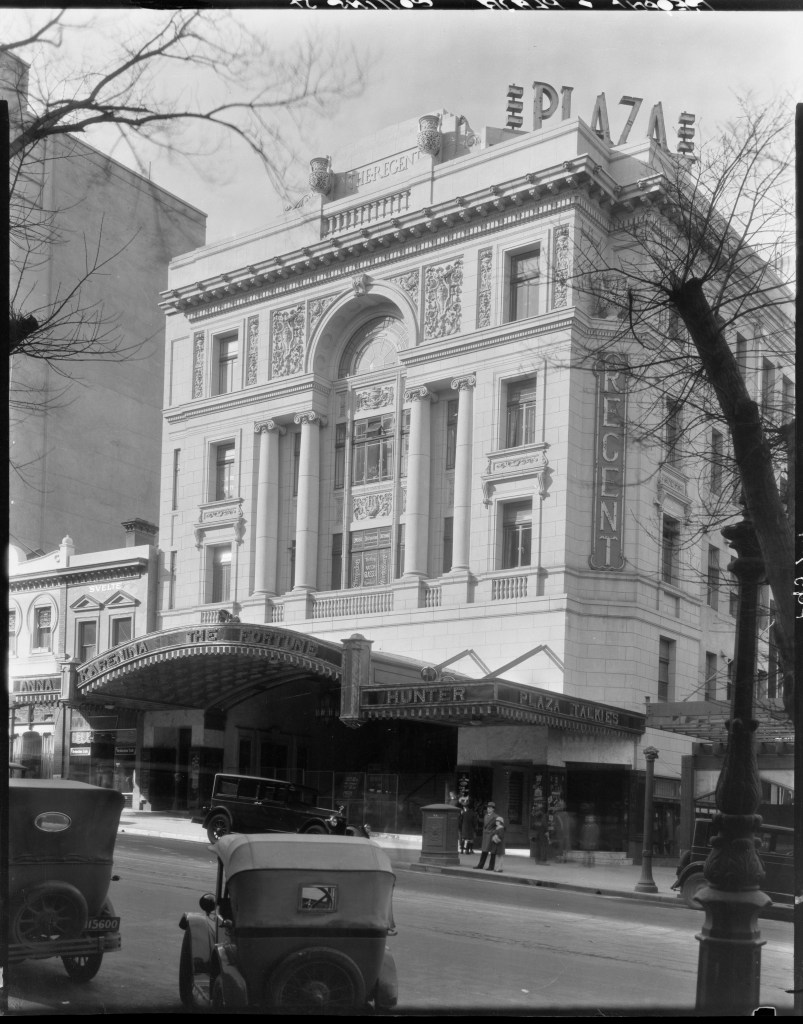
Figure 70: Courtesy of the State Library Victoria
https://find.slv.vic.gov.au/permalink/61SLV_INST/1sev8ar/alma9939656793707636
First off, the Regent, what a stunner of a building but no Queen’s Hall. Still, there is No. 189 and next to that is the edge of the original building 181-187, that the hall sat behind. So we know the hall that Ewen performed in is right behind there in this photo.
Just to finish off, the Regent has a very impressive story itself, from near total destruction from fire in 1945 to the threat of demolition in the mid-1970s. Check out this link if you want to know more. https://marrinergroup.com.au/regent-theatre-history
Oh, and one last thing, I just stumbled onto this phenomenal photo in the State Library collection, and I’m pretty sure it shows the original building on 181-187 Collins Street, but from 1866, yes, sixty years before Ewen’s time.

Figure 71: Courtesy of the State Library Victoria
http://handle.slv.vic.gov.au/10381/184153
As you can see from the title, Prince Alfred, the Duke of Edinburgh, was laying the foundation stone of the new Town Hall building on this occasion.

Figure 71a: Courtesy of the National Portrait Gallery
https://www.npg.org.uk/collections/search/portrait/mw205485/Prince-Alfred-Duke-of-Edinburgh-and-Saxe-Coburg-and-Gotha
Prince Alfred was the second son of Queen Victoria and Prince Albert and the first member of the British Royal Family to visit Australia. He was here for 6 months, many key events and incidents happened over that time, not least of them being an assassination attempt at a picnic in Sydney. https://collections.museumsvictoria.com.au/items/76013
The building that will eventually be numbered 181-187 is shown below as the building with the awning that has the row of people sitting atop it and “Furniture” painted on the side.
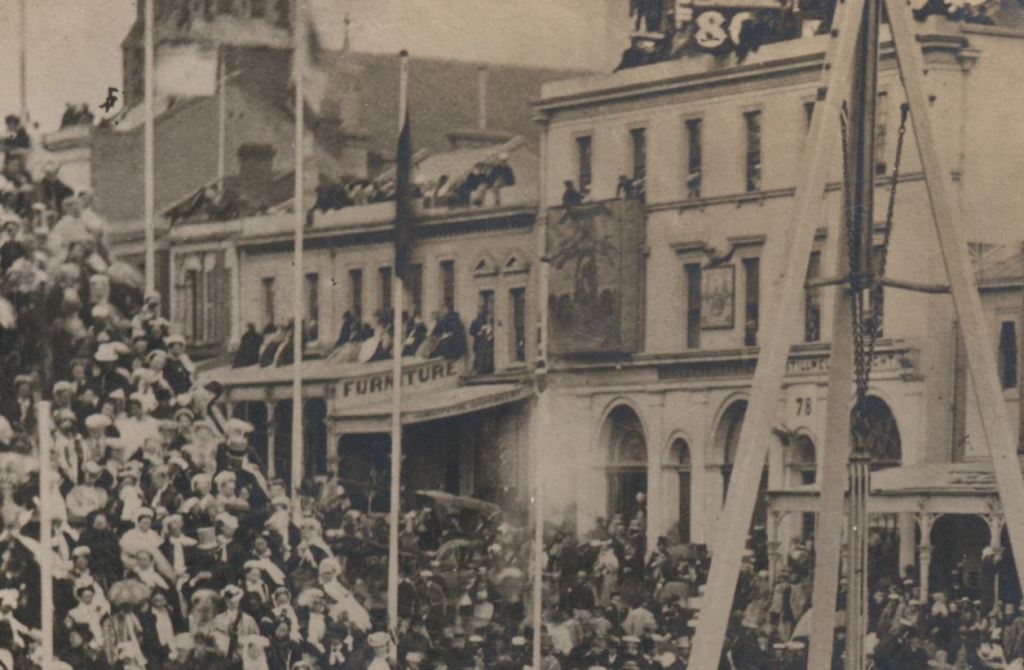
(It is the building with the awning that has “Furniture” painted on the edge.)
Laying the foundation stone of the Melbourne Town Hall by Prince Alfred, 1867
Figure 72: Courtesy of the State Library Victoria
You can see that the next two windows with the triangle decoration above them, to the right of the furniture sign, match perfectly with those shown in (Figure 70).
At the time this building was numbered, 82, and this is who had the tenancy.

The next section of the building to the left was housing a Homeopathic Dispensary. If you squint, that bit of writing on the lower awning of No. 82 could be the words, Homeopathic Dispensary.

Then, at No. 86, this is who the furniture sign was referring to.

By 1926, at No. 82, the Victoria Life and General was just a dim memory. It had become the home of Miss McAviney’s artistically arranged new showroom, “Svelte,” and was renumbered 189 Collins Street.

You can see in (Figure 70) that “Svelte” is clearly visible on the top of the building.
Now, after sharing that I couldn’t find any photos of the original building that sat in front of the Queen’s Hall, I have just found another two.
Unfortunately, no Queen’s Hall, but they still show the spot where Ewen and the rest of the family would have been, admittedly 50 odd years later but what the hell, what a window into the past.

Figure 75: Courtesy of the State Library Victoria
http://handle.slv.vic.gov.au/10381/69685
This amazing photograph above shows this section of Collins Street, but from the opposite direction to the one in (Figure 71). It is from 150 years ago, which means the Victoria Coffee Palace building has not even been built yet. 181-187 Collins St is the building on the left that has “White” painted on the trim of the awning. This is the awning everyone was sitting on in (Figures 71 &72)

Figure 76: Courtesy of the State Library Victoria
http://handle.slv.vic.gov.au/10381/69526
In this second photo, which is eight years later, the Coffee Palace building has appeared, of course, at this stage it is the “Victoria Club House”, it doesn’t become the Coffee Palace for another forty years. Also, you can see that Mr White is still operating from the site of our building 181-187 Collins St.

I just realised that I didn’t really make it clear that there was a number change that occurred on the buildings. At this time in 1883, 181-187 was actually 88-84 Collins Street.
What a dive that was down that rabbit hole on the history of the Queen’s Hall, and in all that amazing information we uncovered, we still don’t know what the hell it looked like.
I will finish the subject off with this one last find on the Little Art Theatre. A wonderful little article explaining exactly what the conditions were that Ewen and the rest of the company were performing under.

There is no room for scenery, “…but enthusiasm and energy go a long way…“—I mean, that is brilliant. I can just imagine it from those few words, and in terms of reviews, wow, that is pretty good as far as I’m concerned. The cast knows their source material and can pass it on to the audience. That is my understanding of great acting.
What a ride so far, we have traversed from Queensland, New South Wales and down to Victoria and we are only three months into 1928. We still have nine years to go to reach John and Margaret’s wedding in February of 1937.
I’ve done the usual check, and we are already up to 26 minutes reading time for this post. So let us take a break here, and hopefully you can join me in part three when we will continue this amazing family history journey.

 JOHN'S FAMILY HISTORY
Hi Anne, fantastic response thanks for all the information. Cheers John
LikeLike